





 Portuguese
  English
  Spanish
  3 min of reading
  0 comments


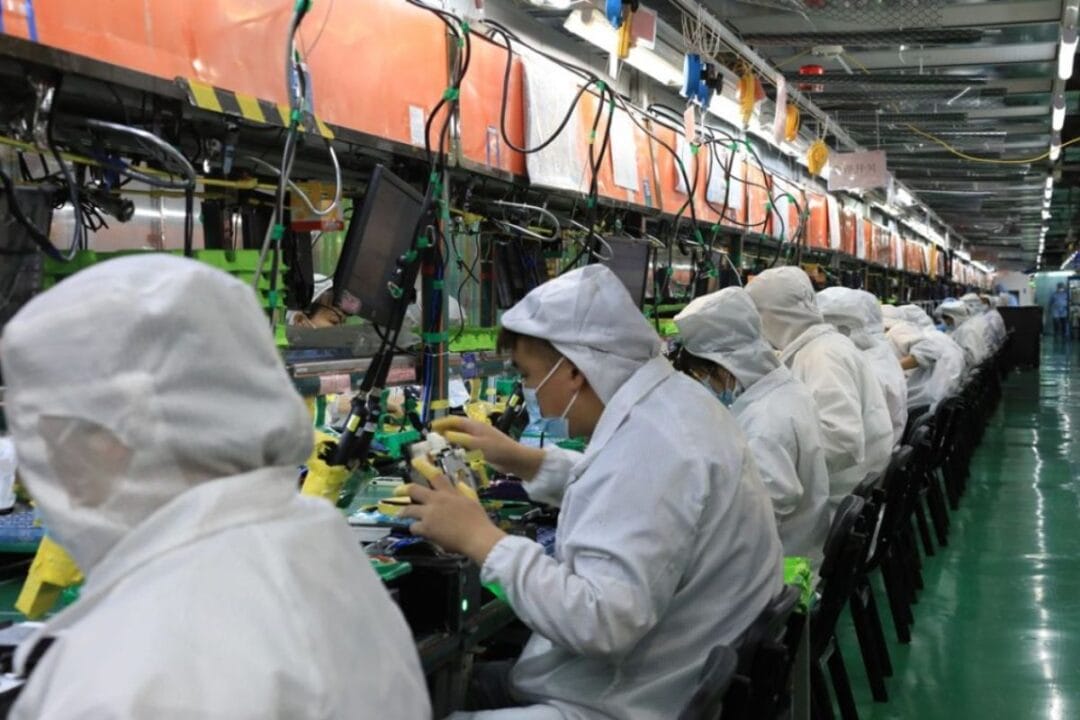
Produced in Jundiaí (SP), iPhone in Brazil Enters the Global Radar Amid Customs Tariffs Against China and Crisis in Supply Chains
The trade war between the United States and China is heating up again — and in the midst of this battle of giants, an unlikely name emerges in the game: the iPhone in Brazil. That’s right. The local production of the most coveted cell phone in the world, made in Jundiaí (SP), has entered the center of a conversation that goes far beyond Brazilian borders.
Brazilian Production Is Exclusive to the Domestic Market, for Now
Currently, the models of the iPhone in Brazil are assembled by Foxconn, a Taiwanese giant with a unit in the São Paulo countryside. The versions produced here are the iPhone 14, 15, and 16 — always in the “regular” versions, without the Pro label. The more sophisticated models continue to be imported.
-
Brazilian city bets on the business environment to generate jobs and attract investments in the energy sector — secretary reveals strategy at Macaé Energy 2026.

-
50 viaducts, 4 tunnels, 28 bridges, and 40 kilometers of bike paths: BR-262 in Espírito Santo will receive 8.6 billion reais for the largest engineering project in the state’s history, inspired by the Immigrant Highway in São Paulo.

-
Brazil produces too much clean energy and doesn’t know what to do with it: over 20% of solar and wind capacity was wasted in 2025 while investors flee and 509 renewable generation projects were abandoned in the last year.

-
Piauí will produce a new fuel that replaces diesel without needing to change anything in the truck’s engine and reduces pollutant gas emissions by half: truck drivers from all over the Northeast are already celebrating the news that will arrive later this decade.


Since it opened in 2011, the Brazilian factory has supplied only the domestic market. And according to Apple, this isn’t expected to change anytime soon. The company stated that there are no plans to increase production and that it does not comment on speculation regarding exports.
Meanwhile, China Remains Dominant
Despite the advances of India and Vietnam in global production, China is still responsible for 80% of iPhone and iPad manufacturing, according to data from Evercore ISI. However, with the new tariffs imposed by the U.S. government, this dominance is beginning to be questioned.
Only China will continue with the 125% tariff rate. Brazil, India, and Vietnam will temporarily have a reduced tariff of 10%. This new scenario has generated buzz about the feasibility of using the iPhone in Brazil as a strategic alternative amid pressure on the Asian countries.
Producing iPhones in the U.S.? Beware of the Price
Trump’s team even dreams of assembling the iPhone on American soil, but experts warn: the price could skyrocket. According to Bank of America, the final price of the device could rise by up to 90% if it were manufactured in the United States.
“Labor costs alone would increase the price by 25%,” explained Wamsi Mohan, a bank analyst. In other words, the iPhone in Brazil remains a balanced option between cost and scale, at least for now.
Brazil in the Global Game, but with the Handbrake Pulled
Even in the face of this promising scenario, Apple remains cautious. The production of the iPhone in Brazil remains limited and without ambitions for export. But the simple fact that the country is being considered as part of the solution is already a sign of how the global landscape is changing.
Meanwhile, Brazilian consumers continue to pay dearly. Just in March, the price of the iPhone surged here, driven by a high dollar, strong demand, and international adjustments.
What to Expect for the Future?
If the crisis between the U.S. and China continues to escalate, and if Apple decides to diversify its assembly hubs even further, the iPhone in Brazil might move out of the “market reserve” category and finally gain exporter status.
But until then, we continue with limited local production and much speculation. In the midst of this tariff war, Brazil may be a supporting player… but it’s on the scene. And the iPhone in Brazil, which seemed to be just a retail issue, has turned into a geopolitical topic.








-

Uma pessoa reagiu a isso.