





 Portuguese
  English
  Spanish
  4 min of reading
  0 comments


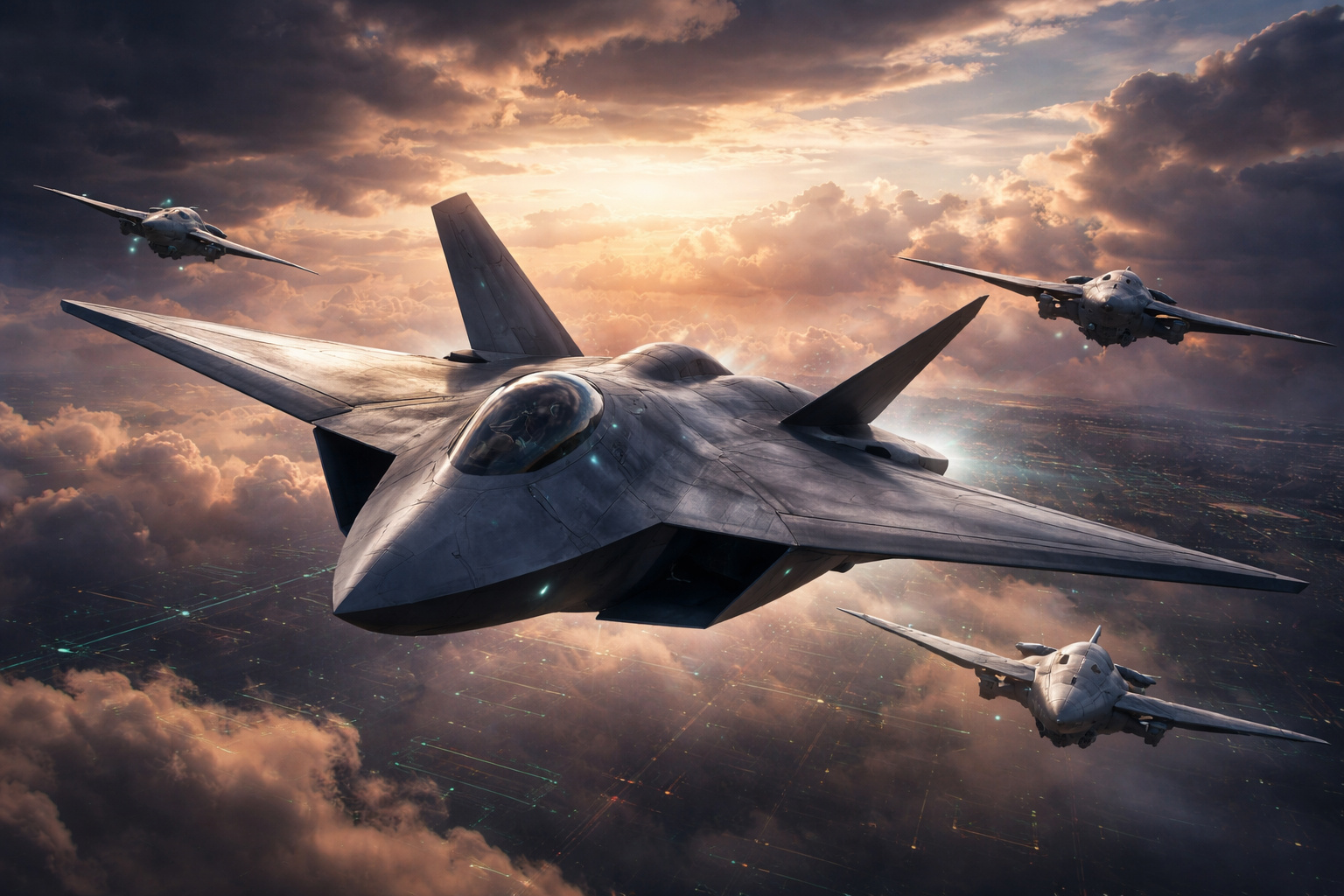
International New Generation Project Aims to Replace Aircraft Such as Eurofighter Typhoon and Mitsubishi F-2 Starting in the 2030s Faces Significant Cost Increases and Provokes Political and Strategic Debates
The development program for a sixth-generation fighter jointly led by the United Kingdom, Italy, and Japan is already facing a significant challenge in its early stages: the rapid increase in development costs. Although the project is considered one of the most ambitious in contemporary military aviation, the latest estimates indicate that the projected costs for the program’s initial stages have practically tripled compared to the original projections.
Initially conceived as a strategic initiative to ensure air superiority in the coming decades, the project is part of the Global Combat Air Programme (GCAP), officially launched in 2022. Since then, the three countries involved have been working together to develop an advanced air combat system that will replace aircraft such as the Eurofighter Typhoon and the Mitsubishi F-2 starting in the mid-2030s.
However, as the project progresses, the technological and financial challenges become increasingly evident. As revealed by documents presented to the Italian parliament, the initial cost estimates for the early phases of development have seen a significant escalation. This information was disclosed by the Forças de Defesa website, which reported the updated investment estimates provided by Italian authorities.
-
Brazilian city bets on the business environment to generate jobs and attract investments in the energy sector — secretary reveals strategy at Macaé Energy 2026.

-
50 viaducts, 4 tunnels, 28 bridges, and 40 kilometers of bike paths: BR-262 in Espírito Santo will receive 8.6 billion reais for the largest engineering project in the state’s history, inspired by the Immigrant Highway in São Paulo.

-
Brazil produces too much clean energy and doesn’t know what to do with it: over 20% of solar and wind capacity was wasted in 2025 while investors flee and 509 renewable generation projects were abandoned in the last year.

-
Piauí will produce a new fuel that replaces diesel without needing to change anything in the truck’s engine and reduces pollutant gas emissions by half: truck drivers from all over the Northeast are already celebrating the news that will arrive later this decade.



GCAP Program Costs Jump From €6 Billion to €18.6 Billion
According to documents reviewed by Italian authorities, the initial estimated costs for research, design, and development rose from about €6 billion to approximately €18.6 billion. This significant increase mainly reflects the technological complexity of the project, which involves highly advanced systems and integration of multiple platforms.
Despite the substantial increase in estimates, the Italian parliament has already approved an initial funding of €8.77 billion, which will support the country’s participation in the program’s early phases until 2037. Nonetheless, experts point out that new financial contributions will be inevitable in the coming decades, as the project evolves into more advanced phases of development.
Several factors explain this cost escalation. Among the key elements pointed out by authorities and analysts are:
- maturation of advanced technologies, still in experimental phase;
- complex testing and development of new military systems;
- design and integration of sophisticated sensors and digital networks;
- development of combat drones that will operate alongside the manned fighter.
Consequently, GCAP has become a clear example of how new generation military programs tend to require ever-increasing investments, especially when involving disruptive technologies.
Air Combat Ecosystem Includes Artificial Intelligence, Drones, and Digital Networks
Unlike past military programs, the GCAP is not limited to developing a single aircraft. In fact, the project envisions the creation of a complete next-generation air combat ecosystem, in which multiple technologies will work together seamlessly.
In this context, the system will include a sixth-generation stealth manned fighter, accompanied by “wingman” combat drones, advanced sensors, systems based on artificial intelligence, and a complex data network capable of connecting different platforms in real-time.
This digital architecture will allow the aircraft to share information instantaneously, creating a highly connected and adaptable combat environment. In this way, pilots will have access to data from sensors, drones, and satellites, significantly enhancing decision-making capabilities on the battlefield.
The industrial development of the program is being led by major aerospace companies, including BAE Systems from the United Kingdom, Leonardo from Italy, and Mitsubishi Heavy Industries from Japan. Together, these companies are leading the engineering and technology efforts necessary to bring the project to fruition.
According to the current GCAP timeline, a technology demonstrator is expected to be presented within this decade, while the entry into service of the operational fighter is scheduled for around 2035.
Cost Increases Spark Political and Strategic Debate
However, the significant increase in costs has already begun to generate political debates, especially in Italy, where some analysts and parliamentarians highlight that the current development estimate for GCAP already exceeds the amount spent by the country on the F-35 fighter program.
This figure has fueled discussions about the financial viability of large-scale military projects. Nevertheless, the governments involved continue to advocate for investment in the program, arguing that it is essential for ensuring technological sovereignty and strategic autonomy.
According to authorities from the three countries, relying solely on technologies developed by other powers could limit military operational capacity in the future. Therefore, investing in GCAP also represents a way to maintain industrial independence and competitiveness in the defense sector.
Moreover, the project comes at a time of increasing global competition in advanced military technologies. The United States, China, and Russia are also developing their own sixth-generation aircraft programs, intensifying the pressure for Europe and Japan to advance quickly in their initiatives.
For this reason, experts assert that high costs are virtually inevitable in programs of this type. After all, the integration of artificial intelligence, state-of-the-art sensors, autonomous drones, and networked warfare systems requires unprecedented levels of investment in research and development.
Thus, although the increase in costs has raised initial concerns, the countries participating in GCAP appear determined to continue the project, betting that the program could define the future of combat aviation in the coming decades.
With information from: Poder Aéreo







-

-

2 pessoas reagiram a isso.