





 Portuguese
  English
  Spanish
  5 min of reading
  0 comments


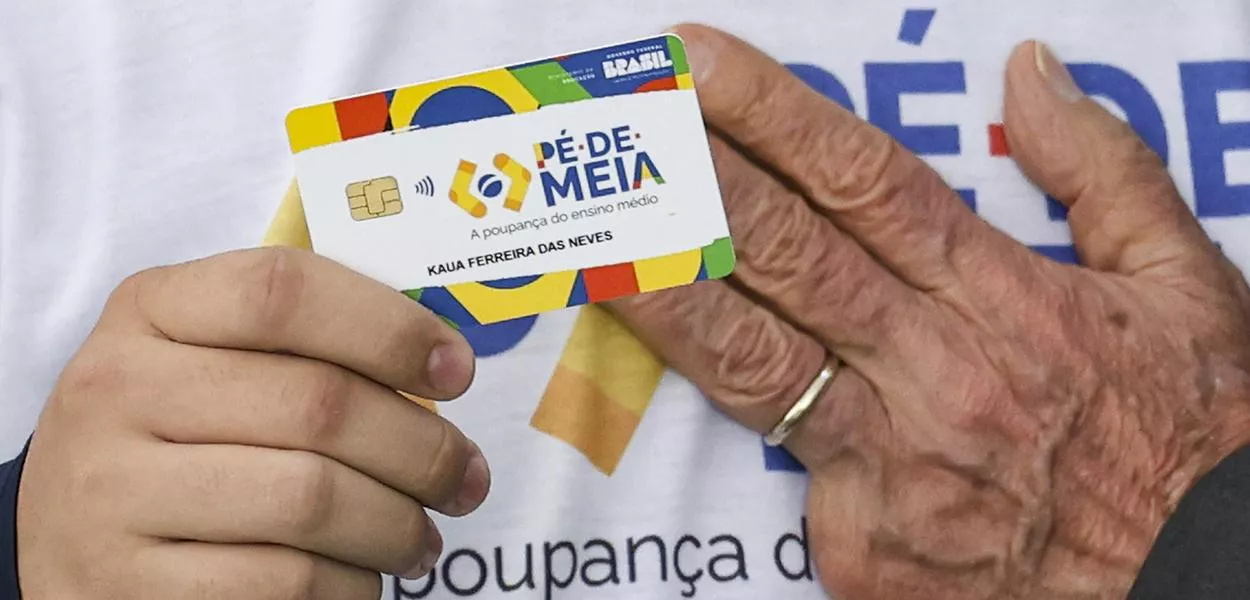
Study Projects Impact of Pé-de-Meia on School Dropout and Indicates Difference Between States, as Well as Points Out How Financial Incentives Can Influence the Continuation of Vulnerable Students in High School.
A study by the Center for Evidence in Comprehensive Education indicates that the federal program Pé-de-Meia reduces dropout rates in high school among students from vulnerable families.
According to the research, one in four young people who would leave school remain enrolled due to the financial incentive.
The analysis was conducted through an ex-ante impact evaluation, a methodology used to estimate the effects of a relatively new public policy based on previous evidence and simulations applied to the Brazilian case.
-
Brazilian city bets on the business environment to generate jobs and attract investments in the energy sector — secretary reveals strategy at Macaé Energy 2026.

-
50 viaducts, 4 tunnels, 28 bridges, and 40 kilometers of bike paths: BR-262 in Espírito Santo will receive 8.6 billion reais for the largest engineering project in the state’s history, inspired by the Immigrant Highway in São Paulo.

-
Brazil produces too much clean energy and doesn’t know what to do with it: over 20% of solar and wind capacity was wasted in 2025 while investors flee and 509 renewable generation projects were abandoned in the last year.

-
Piauí will produce a new fuel that replaces diesel without needing to change anything in the truck’s engine and reduces pollutant gas emissions by half: truck drivers from all over the Northeast are already celebrating the news that will arrive later this decade.


The survey was produced by an initiative formed by Insper, Instituto Sonho Grande and Instituto Natura.
According to the researchers, without the program, the dropout rate among vulnerable high school students would reach 26.4%.
With the Pé-de-Meia, this rate would drop to 19.9%, which represents an average decrease of 6.5 percentage points in the country.
The research also points out differences between states.
The Ceará shows the highest estimated reduction in dropout rates, at 10 percentage points.
In contrast, Paraná records the lowest impact among the analyzed units, with a decrease of 4.4 percentage points.
According to the authors, the effect tends to be greater in contexts of higher social vulnerability.
Nonetheless, the study notes that states that already had higher school dropout rates before the program were not necessarily the ones that experienced the largest reductions after the creation of the benefit.
The analysis also informs that all the assessed federative units exceeded the minimum threshold deemed sufficient to economically justify the policy.
According to the researchers’ calculations, a reduction of 2.5 percentage points in dropout rates would already be sufficient to offset the cost of the program.
Evaluation of Pé-de-Meia and School Dropout
As Pé-de-Meia is a recent policy, there is still no complete historical series about its effects throughout high school.
Therefore, researchers resorted to ex-ante evaluation, a method that projects outcomes before the policy’s consolidation based on evidence about students’ behavior in response to financial incentives.
This type of modeling seeks to estimate the likely impact of the program on school retention.
In the case of the study, the focus was on students from vulnerable families, a group that accounts for a significant portion of high school dropout cases.
The authors state that the results indicate potential for reducing dropout rates, but they issue a caveat.
According to the research, financial incentives do not act in isolation on the decision to continue or leave school, as factors such as work, family income, and social context also interfere in this trajectory.
How the Pé-de-Meia Program Works
Created by Law No. 14,818, of January 16, 2024, Pé-de-Meia provides financial incentives for high school students in public education enrolled in CadÚnico.
The aim is to stimulate enrollment, attendance, and completion of studies.
In its current design, regular high school students receive R$ 200 upon enrollment and installments of R$ 200 for attendance, provided they maintain a minimum attendance of 80% of classes.
Additionally, the program provides an annual deposit of R$ 1,000 at the end of each completed year, a sum that can be withdrawn after completing high school.
There is also an additional R$ 200 for those who participate in Enem in the last year.
Under official rules, the total amount a student can accumulate throughout high school reaches R$ 9,200, provided all requirements are met.
Data released by the Ministry of Education indicate that the program reaches approximately 4 million students and is estimated to have an annual investment of R$ 12.5 billion.
In previous versions of the policy, the cost appeared rounded to R$ 12 billion.
What the Authors of the Study Say
One of the authors of the study, Laura Muller Machado, states that the data indicates a positive effect of financial incentive programs, but they do not authorize treating this type of policy as the sole solution to the problem of dropout.
In the research’s dissemination material, the authors maintain that the results depend on the design of the policy, the context of implementation, and the profile of beneficiaries.
In the original text, the researcher summarizes the finding as follows: “for every four young people who would drop out, one of them does not drop out because of Pé-de-Meia”.
She also states that there is a second group that merely postpones dropping out, which, according to the author, suggests the need for complementary actions aimed at students who remain at risk.
In another statement reproduced in the original text, Laura Muller Machado says that the program “is not a silver bullet”.
This assertion reinforces the researchers’ evaluation that while financial incentives can reduce a portion of the dropout rate, they do not eliminate the other factors associated with school abandonment on their own.
This point appears throughout the entire research.
According to the authors, a student’s retention in high school is also influenced by issues such as the need to work, family responsibilities, and living conditions outside of school.
Suggested Changes for High School
The study also presents simulations on changes that could enhance the program’s effect.
One of the analyzed hypotheses is to concentrate a larger portion of payments in the third year of high school, a stage where, according to the researchers, the incentive appears to have a greater impact on retention.
Currently, 56% of the total program value is already concentrated in this phase.
According to the simulation conducted by the authors, if this share were to increase to 75%, the reduction in dropout rates could advance by almost one additional percentage point.
The proposal appears as a possibility for improving the policy’s design, rather than as a measure already adopted.
The researchers argue that the third year represents a significant portion of the risk of abandonment, at a time when many young people face greater pressure to balance study, work, and income.
Book Gathers Analysis on School Retention
The results were compiled in the book “Scholarships and Dropout: Ex-Ante Impact Evaluation”, authored by Ricardo Paes de Barros, Laura Muller Machado, Samuel Franco, and Laura de Abreu.
The publication addresses the relationship between scholarship programs and school retention in Brazil, focusing on the case of Pé-de-Meia.
The central conclusion of the study is that the program has the potential to reduce dropout rates among vulnerable high school students.
At the same time, the authors note that financial benefits, when isolated, do not resolve the entire problem and need to be analyzed alongside other factors affecting young people’s retention in school.








Seja o primeiro a reagir!