





 Portuguese
  English
  Spanish
  5 min of reading
  0 comments


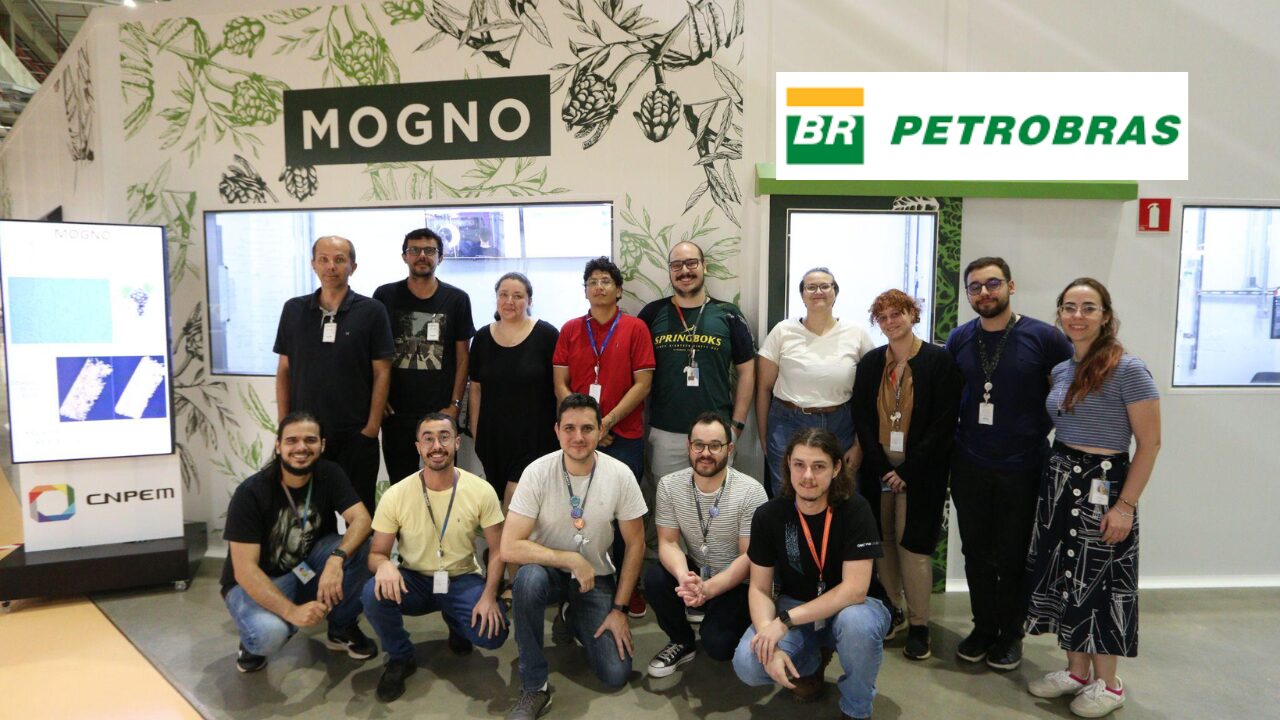
Petrobras And CNPEM Advance Partnership To Explore The Pre-Salt Using 3D Technology From Sirius To Study Rocks, Creating A Database And Driving Research In The Petrochemical Industry.
Petrobras and the National Center for Energy and Materials Research (CNPEM) took an important step in advancing research on the pre-salt. In a groundbreaking partnership, they concluded the first phase of a project that uses state-of-the-art technology for oil and gas exploration.
The collaboration aims to develop more effective and automated methods to study the pre-salt rocks, using Sirius, Brazil’s largest scientific infrastructure. The initial phase of the project was completed in 2024 and promises to open new horizons for the petrochemical and energy industry in the country.
Technological Advances In The Study Of Pre-Salt Rocks
Started in 2021, the project’s main goal is to create a digital database of pre-salt rocks, using high-resolution three-dimensional images.
-
The rise in oil prices could ensure an extra revenue of R$ 100 billion for the Federal Government, indicates a recent economic study.

-
Naturgy begins an investment of R$ 1.6 million to expand the gas network in Niterói and benefit thousands of new residences and businesses.
-
A major turn in the Justice system suspends tax increases and directly impacts oil and gas companies in Brazil by affecting costs, contracts, and financial planning, leaving uncertain what could happen to the sector if these costs had increased.

-
Brava Energia begins drilling in Papa-Terra and Atlanta and could change the game by reducing costs in oil while increasing production and strengthening competitiveness in the offshore market.


The proposal is to carry out a detailed mapping of the internal structures of the rocks through an automated process capable of generating large volumes of data quickly.

To achieve this, Petrobras and CNPEM utilized the Mogno research station, located within Sirius, to carry out the analyses.
The Mogno light beam, a fundamental part of the infrastructure, has the capacity to generate 3D tomographic images with micro and nanometric resolution, revealing details of the rocks that contain oil and gas, which opens new possibilities for research in the petrochemical area.
About Sirius
Sirius, one of the largest research centers in Brazil, is the foundation for the development of new research methodologies for the pre-salt.
It is equipped with state-of-the-art electron accelerators that emit light capable of observing the microstructure of materials.
With this technology, scientists can non-invasively investigate the pre-salt rocks at different scales, ranging from macro to micro levels.
The resolution achieved can be up to 200 nanometers, allowing for extremely detailed analyses.
The Mogno light beam, responsible for these high-quality images, aims to conduct scientific research focused on oil, as explained by Nathaly Archilha, a researcher at the National Synchrotron Light Laboratory:
“One of the main scientific goals for which the Mogno beam was designed is precisely to conduct research related to oil.”
The pre-salt rocks, formed over 100 million years ago, are located at great depths beneath saline layers on the seabed, making the analyses even more complex and challenging.
New Possibilities For Pre-Salt Exploration By Petrobras
The project in partnership with Petrobras is not limited to obtaining images. One of the major innovations lies in the ability to simulate different conditions, such as mechanical, thermal, and chemical, on the pre-salt rocks.
This will allow scientists to monitor changes in real-time, providing a deeper understanding of the phenomena occurring within these rocks.
In the near future, scientists will be able to study, for example, how fluids behave as they pass through the pores of the rocks, simulating the real conditions found in the pre-salt layers.
Nathaly Archilha underscores that this type of analysis is unique in the world: “These developments will enable detailed studies of complex phenomena such as, for example, the passage of fluids through the pores of the rocks, simulating the same conditions in which they are found in the pre-salt layer. This set of experimental possibilities does not exist anywhere else in the world.”
Challenges For The Future Of Oil Exploration
According to Gabriel Moreno, an engineer at the laboratory who coordinated the implementation of the Mogno beam’s infrastructure, the upcoming challenges are even more complex:
“The next developments offer an even higher level of complexity, with exciting challenges in the areas of dynamics, fluid-thermal aspects, and systems engineering.”
The partnership with Petrobras not only facilitated the installation of the Mogno microstation but also enabled the creation of a 3D microm tomography system capable of conducting experiments with up to 88 samples simultaneously, including pre-salt rocks.
This innovative system can be operated remotely, allowing for low-complexity experiments to be conducted without the need for constant on-site presence.
Petrobras, in collaboration with CNPEM, seeks to generate a digital database of pre-salt rocks, which, along with artificial intelligence algorithms, will enable a more precise characterization of geological structures and numerical simulations of the oil recovery process.
Petrobras Project Aims At Artificial Intelligence And Simulations For Oil Recovery
The central idea of the project is to integrate the 3D images of the rocks with artificial intelligence algorithms, which will allow predicting the dynamics of oil reservoir exploration.
The use of advanced computational models will help to optimize extraction processes, making them more efficient and sustainable.
Petrobras, with this technological advancement, seeks not only to improve its exploration practices but also to contribute to the advancement of science in Brazil and the world.
Additionally, the project envisions the development of data post-processing methods that will be utilized by external researchers visiting Sirius.
The collaboration with LNLS and the use of supercomputers, such as Tepui and Santos Dumont, will be fundamental in supporting these studies.
Phase Of Experiments And Next Steps Of The Project
In November 2024, the first cycle of experiments in the Mogno beam was conducted with samples from different pre-salt wells. Since then, these samples have been analyzed and post-processed to generate detailed 3D images of the rocks.
With the success of the first phase, the Mogno beam microstation is now open to the scientific community. Interested researchers will be able to submit their research proposals in the next call for projects from Sirius, with experiments scheduled for 2026.
This opening for the scientific community provides a unique opportunity for further studies, in addition to strengthening Brazil’s position in the global technological research landscape in the area of oil and gas.
Source: National Center for Energy and Materials Research (CNPEM)







Seja o primeiro a reagir!