





 Portuguese
  English
  Spanish
 5 min of reading
  0 comments


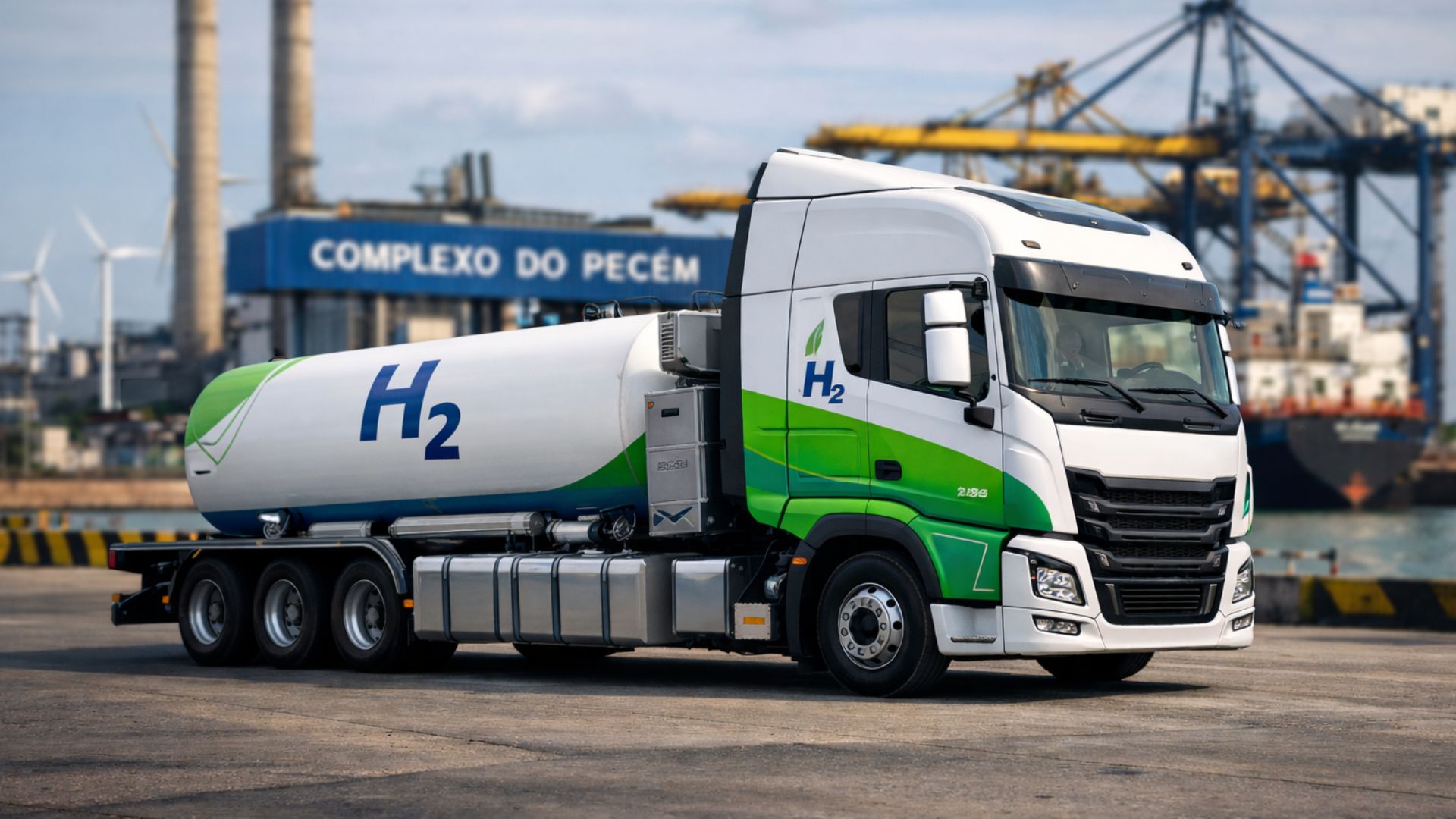
Funded by Sudene, Project in Ceará Tests Green Hydrogen in Heavy Transport, with Sustainable Trucks Operating at Pecém Complex and Focus on Low-Carbon Logistics
A pioneering project aimed at the use of green hydrogen in heavy transport has received approval for R$ 33 million in funding through the Northeast Call from Sudene (Superintendence of the Development of the Northeast). According to a report published by Diário do Nordeste this Monday (22), the initiative, called H2Mover-Pecém, aims to structure a micro-logistics chain based on sustainable trucks, with circulation restricted to the Pecém Complex on the coast of Ceará.
Green Hydrogen Boosts New Transport Model in Ceará
The project combines technological innovation, applied research, and real operation, with the potential to reduce emissions in industrial transport and strengthen the state’s position in Brazil’s energy transition. The proposal is considered strategic as it integrates local clean fuel production, supply, and digital monitoring in one of the country’s main industrial hubs.
The funding approved on December 22, 2025 represents a concrete advance for the development of green hydrogen in Ceará, especially in the heavy transport sector, traditionally dependent on diesel. The resources will be used for the implementation of a pilot plant, adaptation of vehicles, acquisition of equipment, and development of digital operational control systems.
-
Itaipu receives proposals in the renewable energy tender and reinforces the role of public universities in the energy transition with projects that can reduce costs, increase academic investments, and accelerate sustainable innovation in the country.

-
Claro operator reveals a silent change with hundreds of clean energy plants and shows how sustainability is impacting over 80% of its operations in Brazil.
-
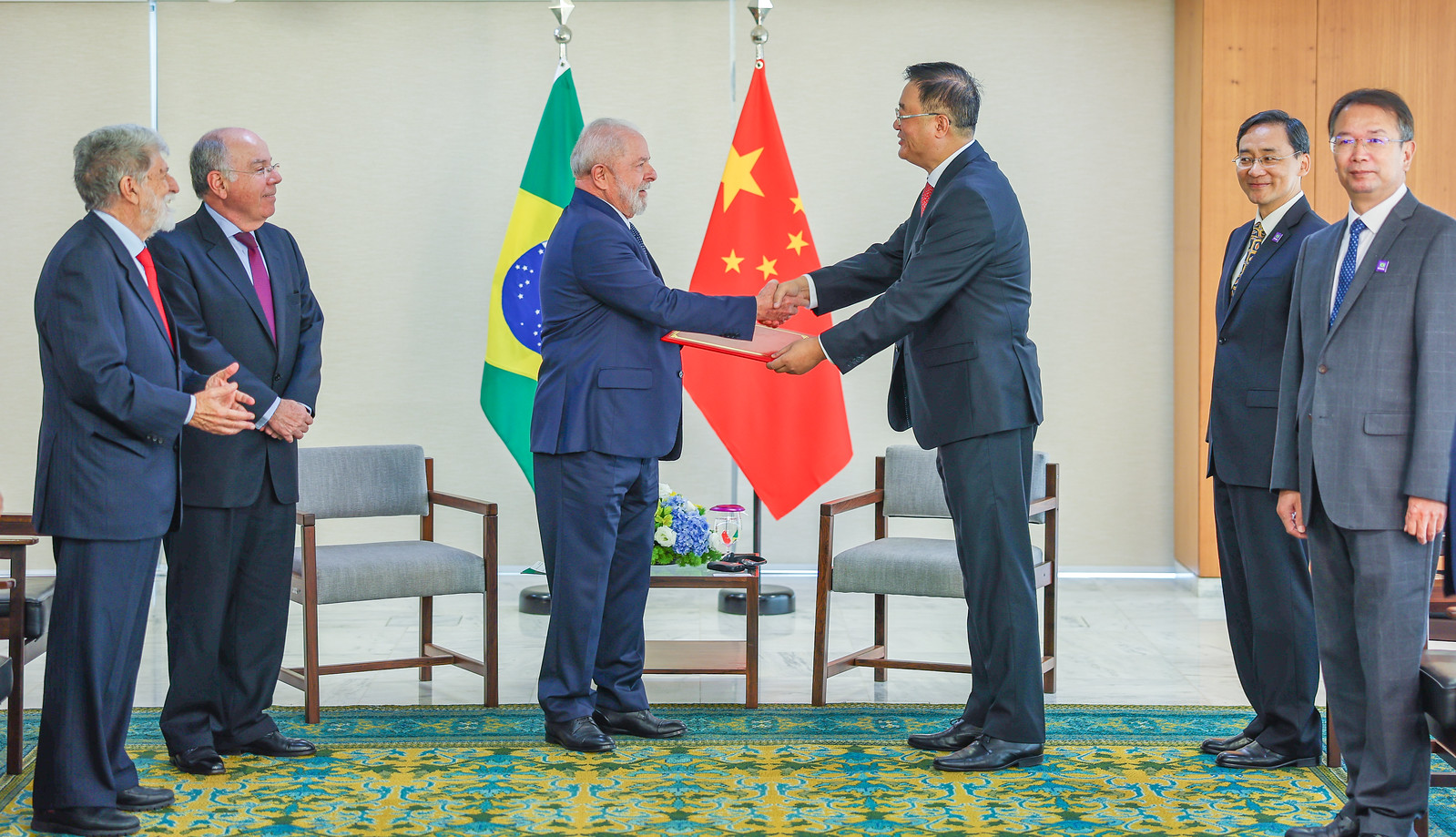
Billion-dollar strategic alliance: Brazil and China join forces in infrastructure and technology projects to lead the creation of a global green corridor in the energy transition.
-
Research reveals that the vast majority of national consumers are not willing to pay more for renewable energy despite their support for sustainability.
The initiative stands out for moving from a theoretical field to practical application, allowing tests in a real industrial environment. This enhances the reliability of the generated data and facilitates decision-making for future technology expansions in the state and other regions of the country.
Pecém Complex as Clean Logistics Laboratory
The Pecém Complex was chosen as an operating area for having ideal characteristics for energy innovation projects. The site concentrates intensive industrial activities, a high flow of heavy vehicles, and robust logistics infrastructure, in addition to being at the center of state strategies for hydrogen development.
The H2Mover-Pecém proposal aims to create a closed transportation microchain, with controlled circulation of sustainable trucks, reducing operational risks and facilitating data collection. This model allows the technology to be validated before its expansion to highways and open logistics corridors.
Integrated Structure for Production and Supply of Green Hydrogen
The project plans to implement a pilot plant for green hydrogen with a daily production capacity of up to 100 kilograms of fuel. The structure includes compression and storage systems, along with a mobile unit capable of directly fueling the heavy vehicles operating in the industrial complex.
Local production reduces logistical costs and energy losses, critical factors for the economic viability of hydrogen in heavy transport. By concentrating all stages in the Pecém Complex, the project creates an efficient environment for performance and safety testing.
Sustainable Trucks at the Center of the Energy Strategy
The initial fleet will consist of five heavy vehicles, including trucks adapted with hydrogen combustion engines and electric models equipped with fuel cells. This technological diversity will allow the evaluation of different solutions within the same operational context.
The sustainable trucks are the focus of the initiative as they represent one of the largest challenges in logistics decarbonization. According to various sector studies, heavy road transport accounts for a significant share of sector emissions, despite representing a smaller fraction of the total fleet.
Reducing emissions in this segment has relevant environmental impact, especially in industrial areas with high traffic, such as the Pecém Complex.
Digital Platform Ensures Environmental Control and Traceability
The project will have a digital platform developed with the participation of the Federal Institute of Ceará (IFCE). The system will allow real-time monitoring of vehicle performance, green hydrogen consumption, emissions prevented, and logistical integration of operations.
Traceability is a key element for clean energy projects, as it ensures transparency and reliability of environmental data. This information is essential for both technical adjustments and attracting investors interested in sustainable productive chains in Ceará.
Technology Development Timeline until 2029
The H2Mover-Pecém timeline foresees 36 months of technological development, including applied research, operational testing, and optimization of the pilot plant. The expectation is that the first vehicles will enter operation in 2028, while the commercial phase is projected for 2029.
Gradual validation reduces technical and financial risks, as well as allowing team training and regulatory adjustments throughout the process initiated after the official approval in December 2025.
Integration with the Future Green Hydrogen Hub of Ceará
According to Eduardo Amaral, president of the Association of Companies of the Industrial and Port Complex of Pecém (AECIPP), the project aligns with the strategies of the future green hydrogen hub of the state.
The proposal allows companies to test the technology in a real environment, creating operational learning and technical basis for larger scale projects. This integration reinforces the role of Pecém Complex as a strategic hub of the green economy, connecting industry, logistics, and energy innovation.
Private Partnerships Strengthen Project Viability
The H2Mover-Pecém is led by a partnership between Unilink Transportes and Grupo Cordeiro, companies with established operations in the logistics sector. The presence of the private sector is essential to ensure economic viability, operational efficiency, and future expansion possibilities.
The combination of private capital, public support, and technical knowledge creates a replicable model, especially relevant for structuring projects launched from 2025 in the Northeast.
A Decisive Step for the Energy Transition in Heavy Transport
The adoption of sustainable trucks powered by green hydrogen can generate impacts that go beyond emission reductions. The project contributes to gains in logistical efficiency, development of specialized labor, and attraction of new investments for Ceará.
By transforming innovation into real operation within the Pecém Complex, H2Mover-Pecém consolidates a relevant advance initiated in December 2025, reinforcing the state’s role in building a cleaner industrial logistics aligned with future energy demands.









Seja o primeiro a reagir!