





 Portuguese
  English
  Spanish
  5 min of reading
  1 comment


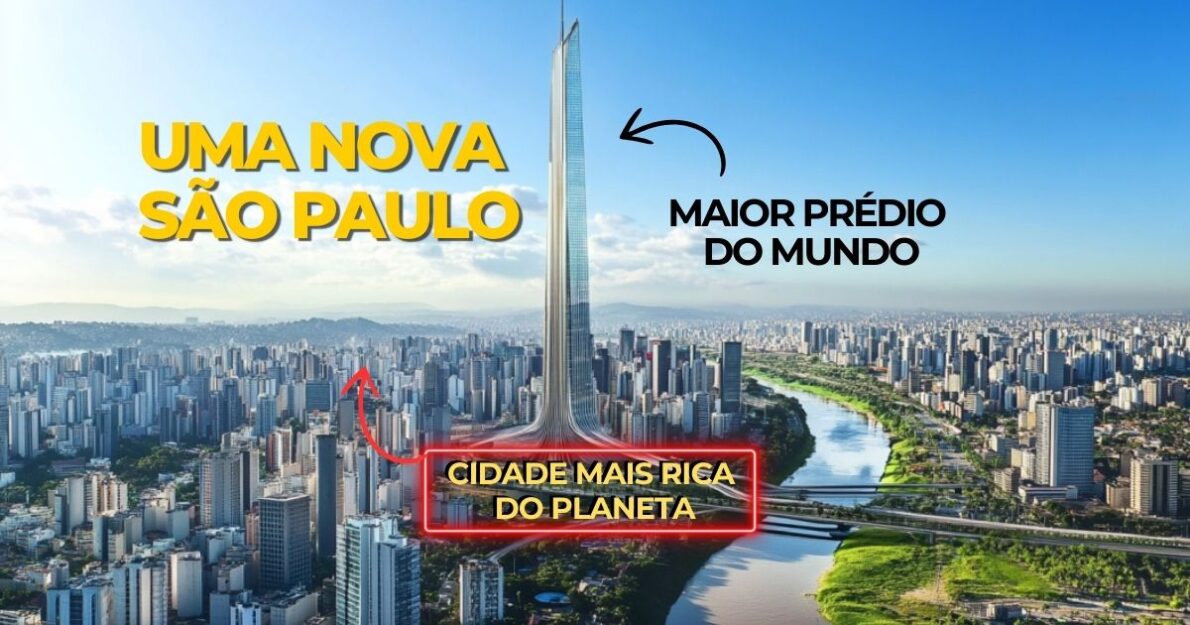

The Promise to Revolutionize São Paulo with Large-Scale Projects, Including the Construction of the World’s Tallest Building. Discover How the Candidate Intends to Change the Paulista Capital and Make the City a Global Reference!
When thinking of wealthy cities, perhaps New York, Tokyo, or London come to mind. But what if we say that São Paulo, the largest Brazilian metropolis, may be on its way to surpassing these global giants?
A revolutionary project aims to transform the Paulista capital into one of the most prosperous cities on the planet. Behind this promise is the controversial mayoral candidate, Pablo Marçal.
With proposals ranging from public safety to the construction of a monumental building, he promises nothing less than an unprecedented future for São Paulo. Can these ideas become reality?
-
A new Brazilian shopping center worth R$ 400 million will be built in an area equivalent to more than 4 football fields, featuring 90 stores, 5 cinemas, a supermarket, a college, and parking for 1,700 cars, potentially generating 3,000 jobs.

-
Larger than entire cities in Brazil: BYD is building a 4.6 km² complex in Bahia with a capacity for 600,000 vehicles per year, but the discovery of 163 workers in conditions analogous to slavery has shaken the entire project.

-
With an investment of R$ 612 million, a capacity to process 1.2 million liters of milk per day, Piracanjuba inaugurates a mega cheese factory that increases national production, reduces dependence on imports, and repositions Brazil on the global dairy map.

-
Brazilian city gains industrial hub for 85 companies that is equivalent to 55 football fields.


In the second paragraph, it is already possible to better understand Marçal’s bold plan. He intends to resume unfinished works, improve urban mobility, and revitalize the Tietê River, in addition to investing in education focused on future professions.
According to Ricardo Clipes, who commented on the proposals on his YouTube channel, these ideas could redefine the city’s fate. But are these projects realistic or just electoral promises?
Unfinished Works and Public Safety Inspired by the US
Pablo Marçal emphasizes as a priority the completion of works that have long been stalled in São Paulo.
For him, the resumption of these unfinished projects could boost the economy and generate thousands of jobs.
According to Marçal, many of these works are stuck for simple, easily solvable reasons.
Additionally, public safety is among the central themes of his campaign. Inspired by the American model, he proposes a new municipal security force.
This structure would operate under the model of US sheriffs, with intensive patrolling and specialized vehicles, with the goal of regaining the trust and respect of the population for the police.
Traffic Changes and Revised Tolls
In terms of urban mobility, Marçal proposes controversial changes to the Brazilian Traffic Code, allowing vehicles to advance through the right lane at traffic lights, which could improve flow by up to 15%, according to his statements.
Additionally, he suggests a reformulation of the city’s toll system.
Inspired by European models, the candidate proposes that drivers only pay for the kilometers actually traveled, creating a fairer charge.
The Difficult Revitalization of the Tietê River
Another point that deserves attention is Marçal’s plan to revitalize the Tietê River, one of São Paulo’s greatest historical challenges.
As explained by YouTuber Ricardo Clipes, Marçal wants to organize the largest cleanup effort in Brazil’s history, involving NGOs, private companies, and the population to clean the river.
The goal? To transform it into a watercourse of crystal-clear waters, without imposing high costs on the public authorities.
But of course, the project faces skepticism, as many similar initiatives have failed in the past.
Sky Cars in the City: Private Partnerships in Focus
Among Marçal’s most creative proposals is the construction of a cable car network extending 33 km around the city.
Utilizing public-private partnerships, companies would be responsible for building and operating these lines, while the population would use the service for free.
According to the candidate, this solution would exemplify how the private sector can collaborate with the public sector without overloading the city’s budget.
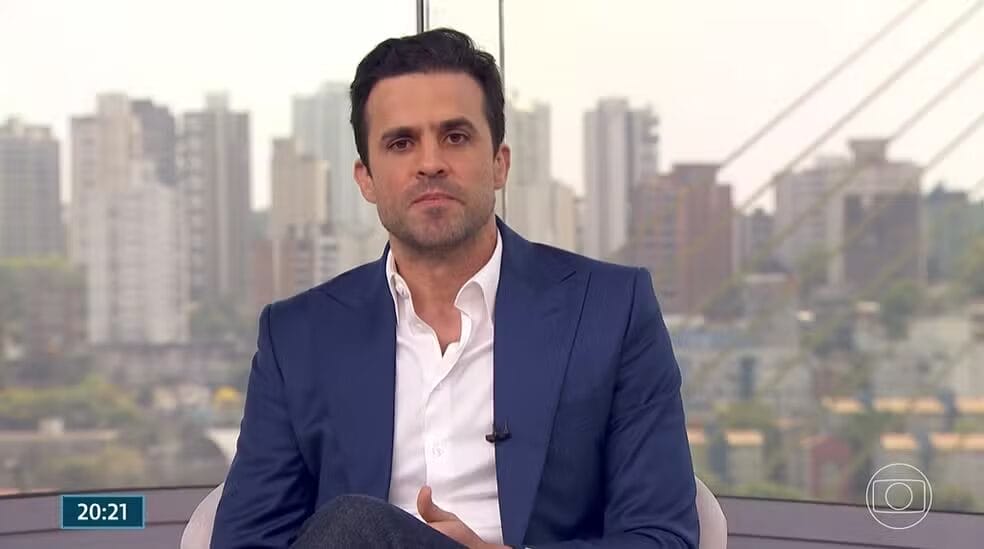
Combating Homelessness and Innovative Education
The issue of homelessness is also on the candidate’s radar.
He points out that the number of homeless individuals has been rising, and he believes that many of them are being sent to São Paulo by managers from other cities.
To solve the problem, Marçal proposes a plan that combines education and punitive measures, holding mayors accountable who contribute to exacerbating this situation.
In terms of education, Marçal wants to transform schools in the periphery.
Starting in 2025, he proposes to enroll children in programs focused on the “professions of the future,” teaching technological and innovative skills to prevent young people from ending up on the streets or engaging in illicit activities.
The World’s Tallest Building in São Paulo: A New Landmark?
One of Marçal’s most audacious and eye-catching proposals involves the construction of the world’s tallest skyscraper in São Paulo.
Inspired by the Burj Khalifa in Dubai, the project would feature a tower over 1 km tall, financed entirely by private capital.
According to Clipes, this monumental structure would attract millions of tourists and put São Paulo on the global map as a reference city.
Marçal views the project as a way to reverse the perception that Rio de Janeiro is the capital of Brazil, making São Paulo a landmark of international recognition.
But as spectacular as the idea may be, many question whether it is genuinely feasible or merely another marketing stunt.
Can São Paulo Become the Richest City in the World?
Pablo Marçal’s proposals are undoubtedly of impressive magnitude. He draws inspiration from international models to transform São Paulo into a leading global city.
But the crucial question remains: can these promises be fulfilled?
Although surveys indicate a growing popularity for the candidate, what remains to be seen is whether he can truly put into practice such innovative ideas without depleting public resources.
Are we facing a new landmark in São Paulo’s future or just another fantastical campaign plan? Share your thoughts in the comments and join this debate!







Melhor deixar ele tentar ao novo, do que mais do mesmo