





 Portuguese
  English
  Spanish
  4 min of reading
  0 comments


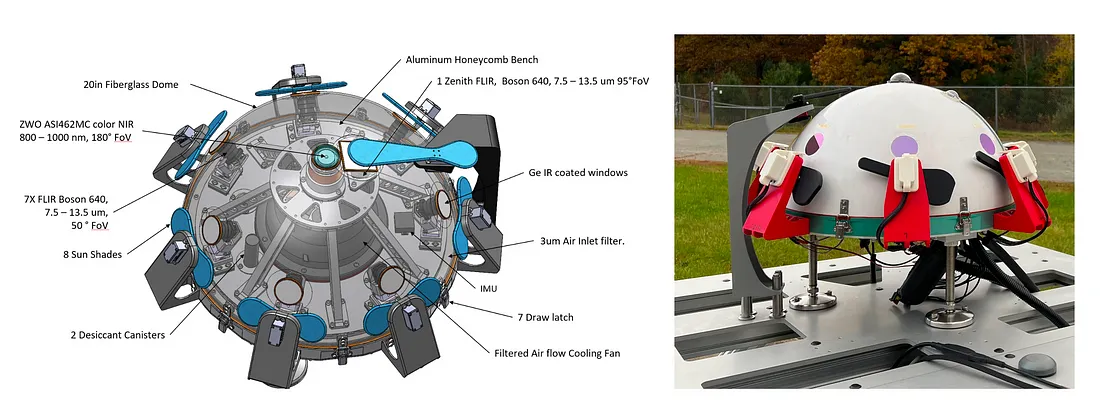
Combined Technology: Thermal Sensing and Machine Learning Algorithms to Identify Visual and Behavioral Anomalies in the Terrestrial Airspace
In recent years, interest in unidentified aerial phenomena (UAPs) has grown. Since the Office of the Director of National Intelligence (ODNI) of the United States released a report with declassified information in 2021, new initiatives have emerged to investigate these phenomena more accurately.
Among them is a new study led by the Harvard-Smithsonian Center for Astrophysics (CfA) and the Galileo Project.
The study proposes the use of a Full-Sky Infrared Camera, called Dalek, aimed at recording evidence of anomalous objects in the sky. The proposal was presented at the 2025 Lunar and Planetary Science Conference, held from March 10 to 14 in The Woodlands, Texas.
-
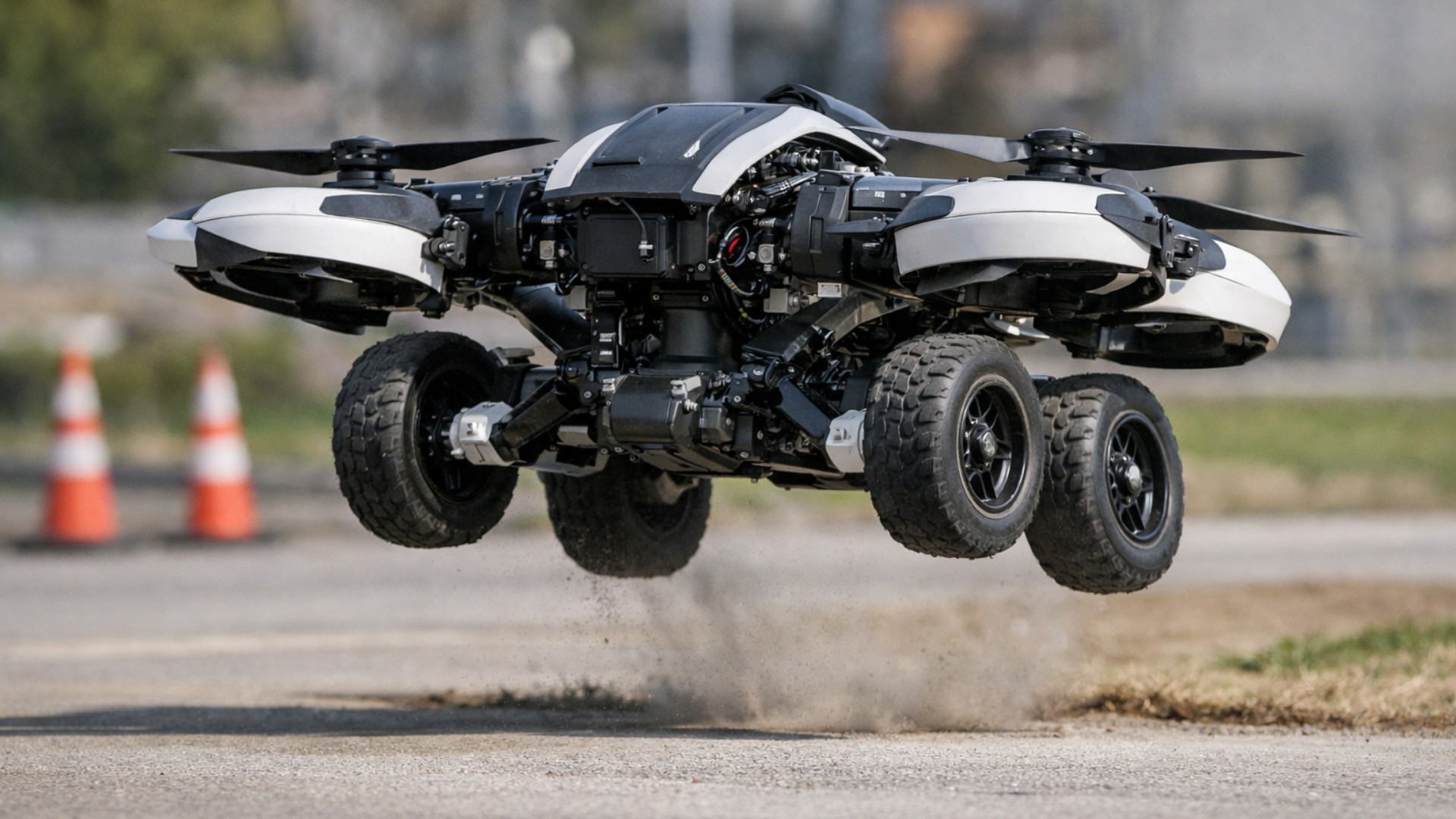
Researchers in the U.S. have created a flying robot that transforms into a land vehicle while still in the air. The technology, based on aerodynamic transition, converts landing into a scene worthy of Transformers and redefines mobility between sky and ground.
-
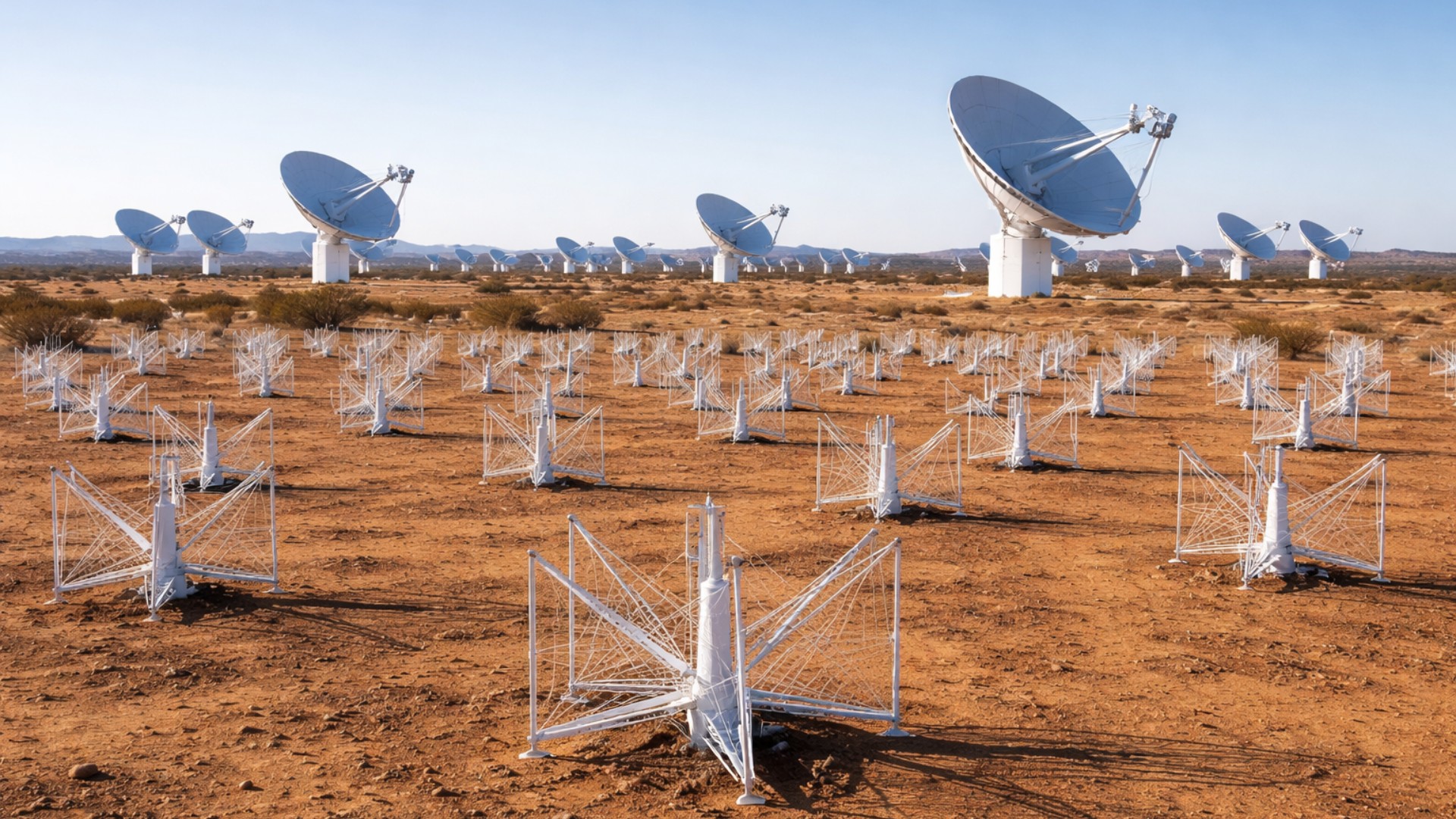
Spread across two continents, with 197 parabolic antennas in South Africa, 131,000 2-meter antennas in Australia, and a range of up to 150 km, the SKA begins to “listen” to the Universe on an unprecedented scale and accelerates the search for black holes, primitive galaxies, and nearly invisible radio signals.
-
Goodbye batteries: a new sensor created by Japanese scientists uses sweat as an energy source and points to a promising path for more sustainable devices, with greater autonomy and less need for frequent recharging.

-
The Brazilian Army inaugurated the assembly line for the Guaicurus armored vehicle with a contract for 420 units by 2033, and the same vehicle has already been tested in combat in Afghanistan and Lebanon by European armies.


The Creation of Dalek
The instrument, nicknamed Dalek for its resemblance to mechanical characters from the Doctor Who series, is part of a broader technical effort to obtain reliable data on UAPs. The study leader is Laura Domine, a postdoctoral researcher at Harvard University and a researcher at the Galileo Project.
She worked alongside colleagues from CfA, the Whitin Observatory, the Scientific Coalition for UAP Studies, and Atlas Lens Co. The proposal follows recommendations made by NASA in 2023, which guided the development of sensors aimed at detecting these aerial phenomena.
According to this NASA study, sensors should capture data on millisecond time scales. Additionally, they should be able to record the movement, shape, color, sounds, and other characteristics of observed objects.
A New Type of Observatory
The article presented at the conference describes Dalek as a multimodal and multispectral ground-based observatory. It is the first instrument commissioned at the Galileo Institute, where it also underwent a calibration process.
Professor Avi Loeb, director of the CfA’s Institute for Theory and Computation and head of the Galileo Project, explained by email to Universe Today that Dalek is part of a network of three observatories.
One of them is located at Harvard University, while the other two are under construction in Pennsylvania and Nevada.
These observatories analyze the sky across the infrared, optical, radio, and audio spectrums. The goal is to identify objects that exhibit unusual behaviors or characteristics inconsistent with known human technologies.
According to Loeb, one of the advantages of the Galileo Project is the transparency of the data, unlike information kept secret by government agencies. As he emphasized: “The sky is not classified.”
Database with 1 Million Objects
Loeb stated that each observatory detects about 100,000 objects per month. This has resulted in a database of approximately 1 million analyzed objects. It is the largest systematically gathered collection of near-Earth objects (NEOs).
To process this data, the Galileo Project uses artificial intelligence. The systems apply the “You Only Look Once” (YOLO) model to detect objects and the “Simple Online and Realtime Tracking” (SORT) algorithm to track their trajectories.
These algorithms are trained to recognize common objects such as airplanes, drones, satellites, balloons, and birds. From this, they can identify out-of-pattern behaviors and classify the observed aerial phenomena, distinguishing what is known from what still requires investigation.
Results of the First Five Months of the Observatory
The article also presents a summary of the first five months of the observatory’s operation. During this period, approximately 500,000 objects were detected.
About 16% of the trajectories (~80,000) were flagged as discrepant with 95% confidence. These were then manually reviewed using infrared images.
Of these, 144 trajectories remained ambiguous. According to the team, these are likely common objects that could not be identified due to a lack of data on distance or other technical information.
Loeb explained that the goal now is to measure distances through triangulation between multiple detectors. This will allow for a more accurate determination of the speed and acceleration of the objects. With this, it will be possible to confirm if any of them exhibit truly anomalous behavior.
Comparison with Government Data
The data from the Galileo Project contrasts with reports from the All-domain Anomaly Resolution Office (AARO), associated with the U.S. Department of Defense. The AARO states that about 3% of the cases it reviews remain ambiguous, even using classified sensors and radar estimates.
Meanwhile, the Galileo Project, despite having more limited access to certain data, has managed to create an alternative and independent investigative model.
For Loeb, the ultimate goal of the project is to find among millions of records some object that exhibits technological properties not created by human beings. According to him, such a discovery could indicate the existence of an extraterrestrial civilization.
“Even if one in a million showed capabilities beyond human-created technologies, it would constitute the greatest scientific discovery ever made,” he stated. The team believes that with this approach, it will be possible to deepen human knowledge about potential forms of life or technology beyond Earth.
With information from Science Alert.







Seja o primeiro a reagir!