





 English
  Francês
  Alemão
  Italiano
  Japonês
  Norueguês
  Portuguese
  Spanish
  3 min of reading


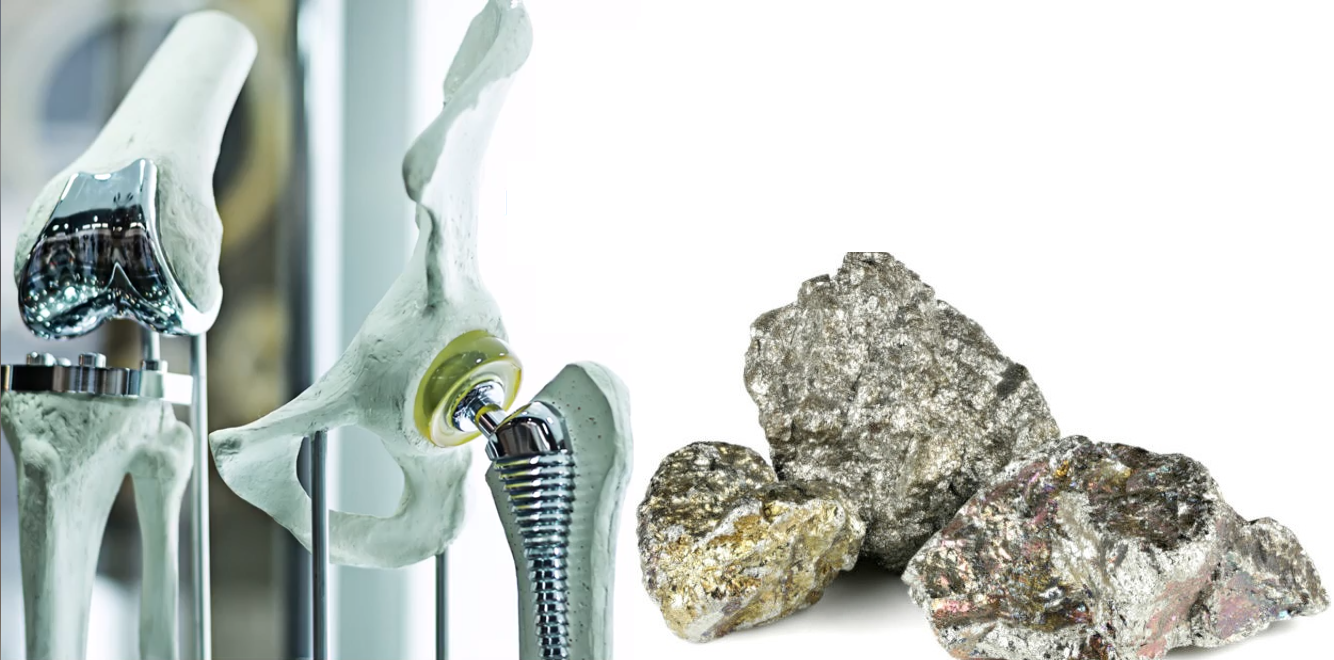
New Models Are Being Produced with Niobium Alloy That Promises to Revolutionize the Prosthetics Industry with A Lighter and More Versatile Material
CBMM (Brazilian Company of Metallurgy and Mining), an expert in niobium-based products and which recently initiated studies in the field of graphene, announced on Tuesday (26) that the first orthopedic prostheses made with this metal, which have been produced since February using 3D printers, have shown good results. New models using niobium-titanium and titanium-niobium-zirconium alloys are already being studied, designed for the total comfort of the patient.
See Also
- Baru Offshore Has Just Announced IMMEDIATE Job Openings for Tugboat Positions in Rio de Janeiro
- URGENT Job Openings for Helpers, Welders, and Boilermakers for Work at a Metallurgical Company
- Investments in the Chemical Pole of R$ 200 Million Will Generate New Jobs
“This innovation was created by IPT – Institute of Technological Research, in partnership with CBMM and AACDO. The results are impressive in terms of lightness, cost, strength, and malleability, since they are 3D printed parts, made to measure for each patient,” CBMM stated in an official note.
The first project results were presented at an international conference on materials science and technology in the USA.
-
Government unlocks R$ 554 million for a highway that has been requested for decades and accelerates the duplication of BR.

-
Without bricks, without cement, and without endless construction: the cardboard house that is assembled in modules and can be moved.

-
Billions of barrels on the equatorial margin could lead Amapá to double its oil production in Brazil — the state aims to enter the route of companies in the Campos Basin, attract investments, and boost jobs and businesses in the oil and gas sector.
-
Without bricks, without cement, and without endless construction: the cardboard house that is assembled in modules and can be moved.

“Professors and researchers commented that they are looking for alternatives to replace the titanium-aluminum-vanadium alloy with other materials. They do not want to use this alloy anymore due to its implications on the human body; we were the only ones at the conference to present a study on the niobium-titanium alloy,” said Professor Daniel Leal Bayerlein in February of this year.
The project is scheduled to be completed in the first half of 2020.
Below, you can check out a demonstration slideshow video of the prostheses:
But What Is Niobium?
According to the website Oficina da Net, niobium was discovered in 1801 by Englishman Charles Hatchett and is the lightest of the refractory metals. It is primarily used in ferrous alloys (so powerful that it is used in the ratio of 100 grams for every ton of iron), creating very strong steels that are used in gas pipeline tubes, aircraft engines, rocket propulsion, and other so-called superconductors, as well as welding, the nuclear industry, electronics, optical lenses, tomography, etc. With 99% of the world’s reserves and over 90% of global commercialization, Brazil explores very little compared to the available capacity.
WHAT IS GRAPHENE?
Graphene, the thinnest material in the world, has a single atom thickness and was the first two-dimensional material discovered. Graphene (derived from graphite) exists as a hexagonal honeycomb structure made of six segments of carbon atoms and has been scientifically proven to possess incredible properties. For over 100 years, this material was dreamed of, but only in 2004 was a layer of graphene separated from graphite simply using adhesive tape.
The two researchers Sir Andre Geim and Sir Kostantin Novoselov, who worked at the University of Manchester, won the Nobel Prize in 2010 for this discovery. Since then, graphene has been seen as one of the most promising new materials for commercial applications. Billions of dollars have been invested in research, and thousands of scientists are discovering the incredible wonders that can be created. Current applications of graphene include long-lasting batteries, anti-friction coatings, more durable materials, water filters, anti-corrosive coatings, and faster computer chips. The future holds much more in store with ideas like flexible electronics, electronic inks and paints, robotic skin, and even space elevators.
The channel Fatos Desconhecidos produced an interesting video about graphene, check it out:










Seja o primeiro a reagir!