





 Portuguese
  English
  Spanish
  4 min of reading
  2 comments


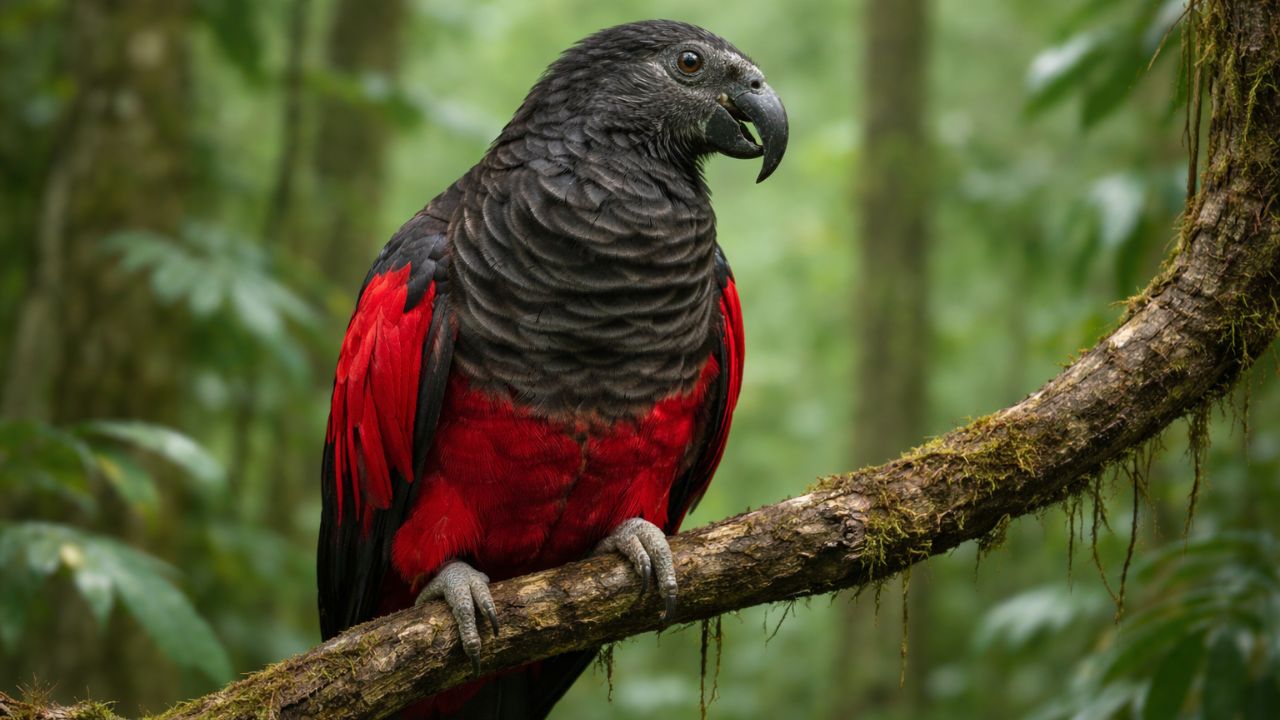


The Dracula Parrot, a Rare Bird with Black and Red Plumage, Charms with Its Unique Appearance and Faces Threats in New Guinea. Discover Its History, Behavior, and Ecological Importance.
The Dracula Parrot, a rare species with a striking appearance, has been in the spotlight in scientific research and the media in 2024 and 2025 due to its unusual color combination and ecological context.
Native to the forested slopes of northern New Guinea in the Pacific Ocean, the Dracula Parrot (Psittrichas fulgidus) became popularly known for its predominantly black plumage with red details that resemble the iconic fictional vampire Dracula, although this bird has no relation to blood or dangerous habits.
Despite its unique beauty, the species is classified as vulnerable due to threats such as hunting for its feathers and habitat loss.
-
A simple stitch in wood with nylon thread can reduce adhesives, speed up production, and make sheets up to 4 times stronger and 14 times more difficult to break.

-
The gigantic steel shell built to contain Chernobyl for a century has been pierced by a drone, exposing a critical system and creating a hole that could cost over 500 million euros to repair.

-
Brazilian Navy reaches a new level by taking over an airport with a 1,600-meter runway used by 1,800 military personnel and autonomous attack drone testing.

-
The Himalayas continue to grow to this day, with tectonic plates advancing 5 cm per year, mountains rising up to 10 mm annually, and the 2015 earthquake that killed 9,000 people may have increased the risk of an even larger seismic mega-event.


What Makes the Dracula Parrot So Impressive?
The Dracula Parrot catches attention for its “gothic” appearance: the upper body and wings are covered in black feathers, while the chest and underside display a deep red hue.
Its head has featherless areas, and males may display a small red spot behind their eyes, traits that reinforce the association with dark figures in popular culture.
Measuring about 50 centimeters, this parrot is relatively large compared to others in its family (Psittacidae), with a robust shape and a striking look that fascinates observers and researchers.
Where It Lives and What Its Habitat Is Like
The Dracula Parrot is endemic to New Guinea, meaning it does not occur naturally in other parts of the world.
It inhabits the tropical forests of the mountain slopes to the north of the island, dense environments that provide shelter and food continuously.
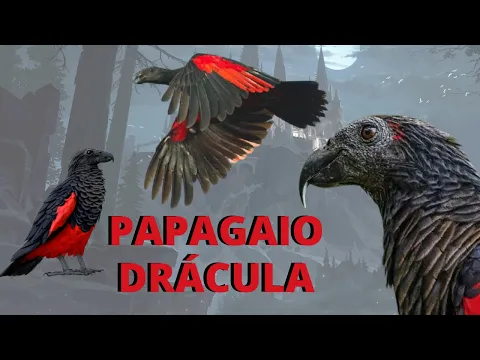

These ecosystems are extremely rich in biodiversity but also vulnerable to human pressures such as habitat destruction and illegal hunting.
The parrot’s dependence on this specific environment makes its survival particularly sensitive to changes.
Diet and Behavior of the Dracula Parrot
Contrary to what the popular name might suggest, the Dracula Parrot does not suck blood or display predatory behavior.
It is a frugivorous bird that primarily feeds on figs and other fruits, flowers, and nectar, according to studies related to its diet.
This dietary pattern—centered on specific fruits—is directly linked to adaptations in its anatomy, including a strong beak that facilitates access to seeds and pulps that other birds would find difficult to exploit.
Threats and Conservation Status
Despite its stunning appearance, the Dracula Parrot faces an uncertain future.
The species has been listed as vulnerable by the IUCN (International Union for Conservation of Nature) since 2017, primarily due to hunting for its feathers, which are valued in traditional ornaments in Papua New Guinea.

Research indicates that an annual significant proportion of the population is killed to meet this demand, placing additional pressure on a group that already has a limited geographic distribution.
The Common Name and Its Relationship with Human Culture
The nickname “Dracula Parrot” is directly derived from the comparison with the literary character Dracula and not from any behavioral similarity with vampiric creatures.
The association is exclusively due to aesthetics—the black and red plumage and intense gaze evoke the classic image of the vampire in fiction and film, creating an immediate link between nature and human cultural imagery.
This popular identification has helped draw international attention to the species, although this visibility has also contributed to illegal interest in its feathers.
Why the Dracula Parrot Matters to Biodiversity?
In addition to its visual uniqueness, the Dracula Parrot plays a role in seed dispersal within its forest habitat, contributing to the maintenance of the ecological balance of the tropical forests of New Guinea.
The preservation of this species is therefore connected not only to the protection of a natural icon but also to the conservation of a complex and life-rich ecosystem that sustains numerous other forms of fauna and flora.
The Dracula Parrot is more than a catchy name; it is one of the most remarkable birds in the global fauna, whose unique appearance and conservation challenges underscore the importance of protecting rare species and threatened habitats worldwide.
With information from National Geographic Brasil.







Pesquets Parrot not Dracula Parrot
Another species that will be extinct due to human intervention