





 Portuguese
  English
  Spanish
  6 min of reading
  0 comments


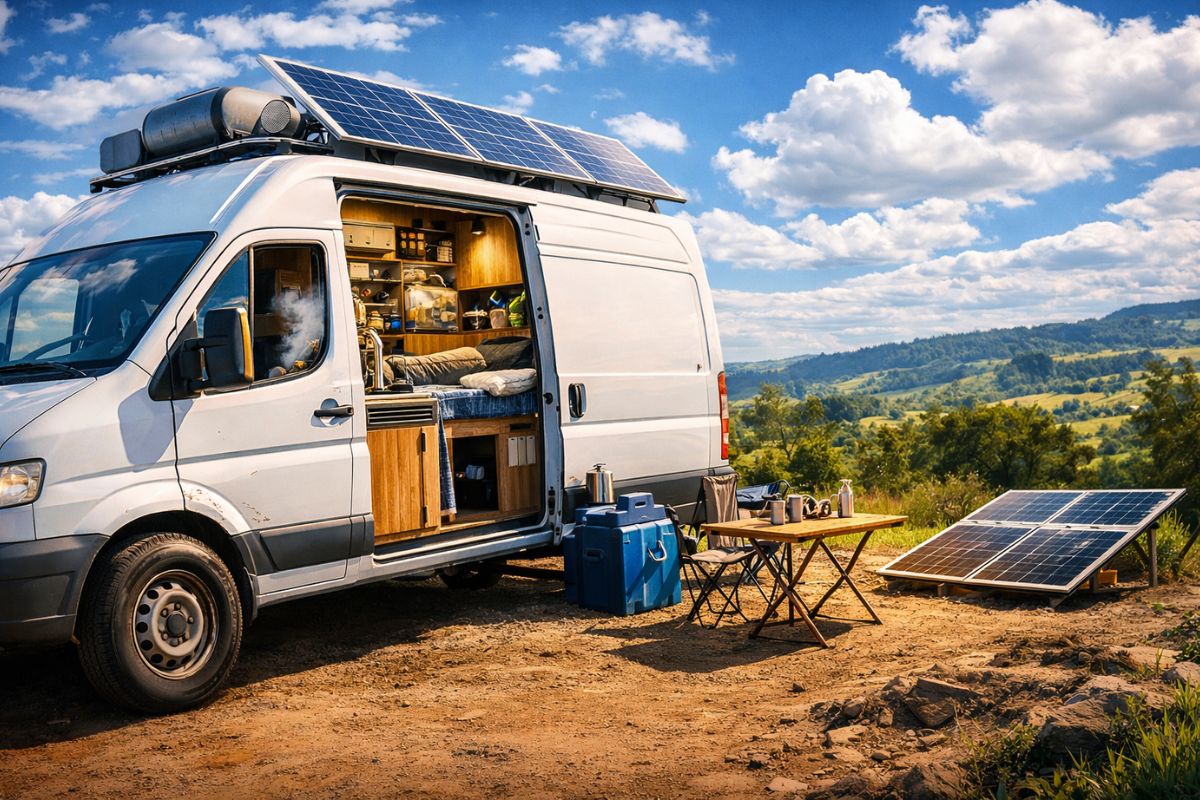
The off-grid house created in an old van combines solar energy, a compact kitchen, and foldable furniture to live on the road with autonomy, a bed, water, and comfort.
The idea of creating an off-grid house inside an old van seems unlikely at first glance. Purchased for just $3,000 and already at the end of its useful life for many, the delivery vehicle with nearly 200,000 miles became the basis for an ambitious project: to build a complete mobile home without giving up a bed, kitchen, water, energy, and comfort.
What makes this transformation so striking is not just the before and after. The focal point is the level of engineering and planning applied at each stage, from combating rust to installing solar panels, a water tank, cross ventilation, and foldable furniture that disappears when not in use.
From worn-out van to the base of an off-grid house

It all starts with an obvious problem: rust. In a vehicle with two decades of use, this is the first real enemy of the project. If not treated, it corrodes the metal from the inside, compromises the structure, and can gradually destroy the chassis.
-
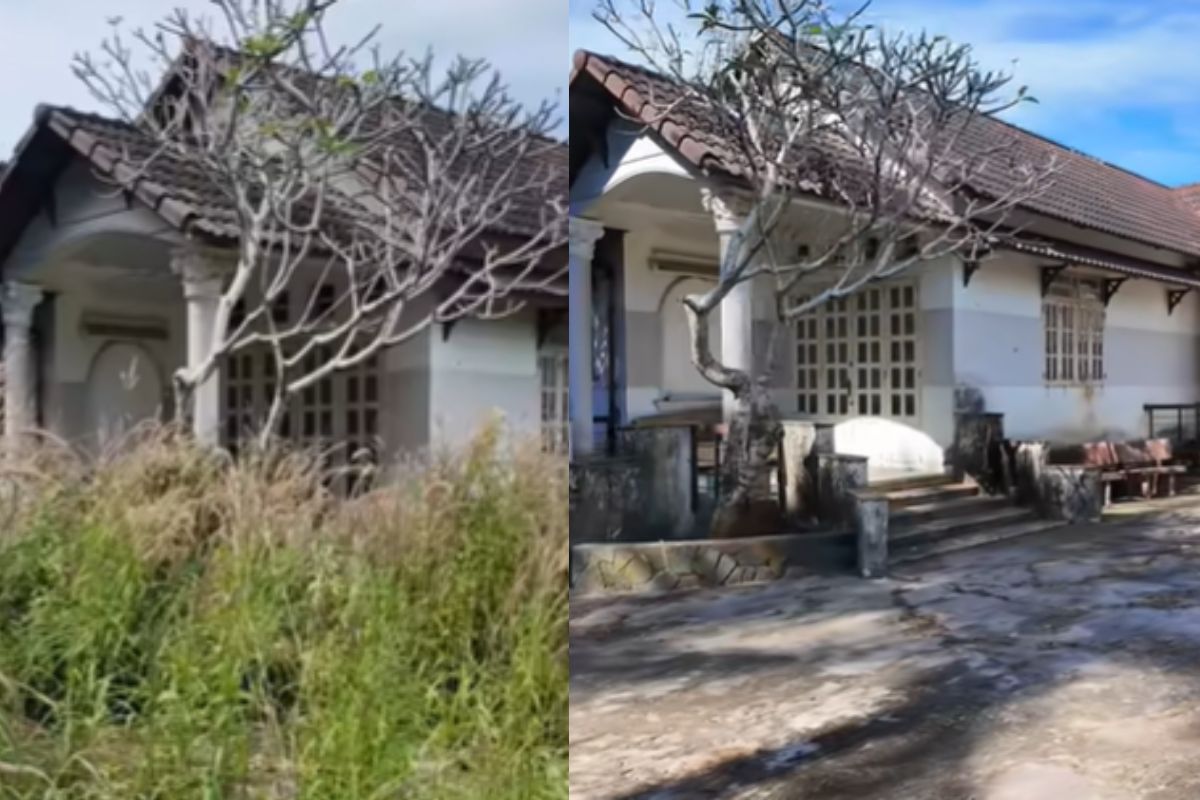
Abandoned house for 15 years disappears in the woods, shocks owner with unrecognizable scenery and is reborn in an intense transformation after almost 90 hours of work in just 10 days.
-
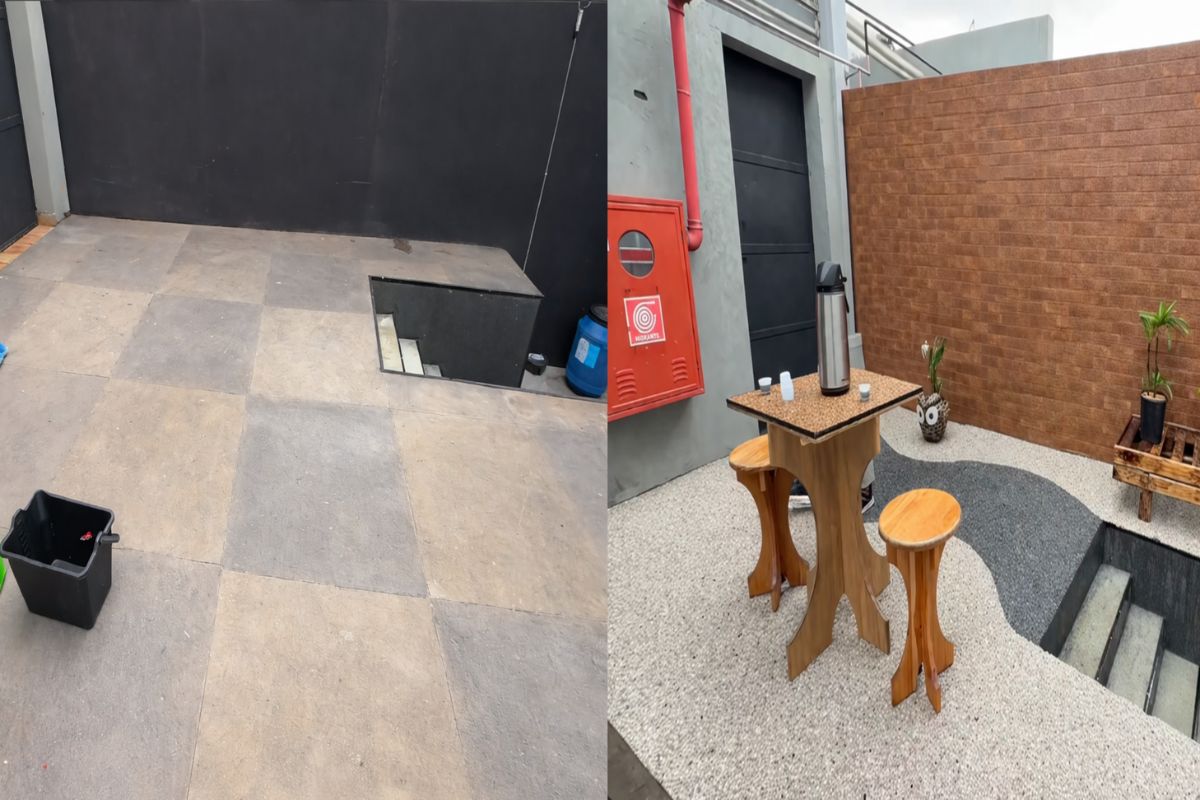
In just three hours, a natural stone floor transforms the entrance of the house with an organic effect, immediate drainage, and a sophisticated non-slip finish that doesn’t puddle water, dries quickly, and impresses with the final result.
-
‘Interlocking brick’ made of earth arrives in the construction industry with cost reductions of up to 40% on the project.

-
Espírito Santo will receive the largest engineering project in its history with the duplication of BR 262, which will have 50 viaducts, 28 bridges, and 2-kilometer tunnels cutting through the most challenging mountainous region of the entire state.


It was precisely this wear that helped explain the low price of the van. But instead of seeing the vehicle as scrap, the owner saw the potential to create an off-grid house on wheels.
The first step was to remove years of oxidation and apply anti-corrosive primer to block the advance of deterioration.
After that, the entire cargo area received a textured protective coating. This layer served not only to protect the steel but also to reduce vibration and improve internal silence during use on the road.
Windows, skylight, and ventilation without improvisation

The external structure of the van began to change when three side windows, a skylight in the ceiling, and two solar panels were added to the plan.
But nothing was done on the fly. Cutting the sheet metal to install windows is an irreversible step, and any measurement error would compromise sealing, fitting, and strength.
The skylight played a role that goes beyond natural lighting. It was designed to create cross ventilation, allowing fresh air to enter from the sides and hot air to exit through the ceiling.
This detail makes a direct difference in humidity control, helping to reduce condensation and, consequently, the risk of new rust.
In the installation of the windows, specific primer for glass and polyurethane was used. This material has an important function because it accommodates the vibration of the body during movement, reducing the risk of cracks and maintaining a watertight seal.
Thermal and acoustic insulation to make the off-grid house habitable

An off-grid house inside a van only truly works if the interior is habitable under different conditions. Therefore, thermal and acoustic insulation became one of the most important parts of the conversion.
In the cabin and internal areas, expanding foam was applied to prevent warm air from meeting cold metal. This avoids condensation, helps control temperature, and also acts as an acoustic barrier. After curing, the foam was trimmed to create flat surfaces for the internal panels.
On the floor, the strategy changed. Rigid foam boards were used, capable of providing insulation without yielding under the weight of the structure. In the wheel wells, a rubber mat helped contain vibration, external heat, and tire noise.
Next came the plywood base and the laminate finish with a click lock system, chosen for being lightweight, scratch-resistant, and easy to clean.
Nothing there was thought of solely for aesthetics. Each material had a function related to weight, durability, comfort, and adaptation to temperature variations.
Light wood, reinforced structure, and full-size bed
With the floor and insulation resolved, the interior began to take on the appearance of a dwelling. The walls were covered with cedar, chosen mainly for being lightweight.
In such a project, the legal weight limit of the vehicle influences all decisions, and heavier woods were avoided.
In addition to being lightweight, cedar also naturally resists rotting and tends to deform less. The finish was designed to stay clean, with hidden fastening techniques and manual correction of the few visible points. The result is an interior with a refined appearance, but built with a focus on function and weight.
In the resting area, the layout was adjusted to take advantage of the structural recesses of the van and gain enough width to fit a full-length bed.
The bed’s structure was made of welded steel, not wood, to better withstand the constant vibrations of the road.
Compact kitchen, foldable furniture, and space that transforms

The project only began to look like a real house when the furniture came into play. The internal layout prioritized flexibility, with two seats and a foldable table, a compact kitchen, and a sleeping area at the back.
The kitchen was positioned in front of the side door to favor the natural exit of steam and odors. This prevents heat from getting trapped inside the cabin and greatly improves daily use.
The upper cabinets took advantage of vertical space, while the lower areas were reserved for heavier items, preserving the vehicle’s stability on curves.
The cabinets were equipped with push lock latches to prevent opening during braking or on uneven terrain. In a moving van, every detail needs to consider inertia, including the refrigerator, drawers, and doors.
On the kitchen countertop, solid wood was chosen for its resistance to daily use. To avoid losing usable area, the sink cutout was repurposed as a lid, creating an extra work surface when the basin is not in use. The final finish received an epoxy coating, more resistant to moisture and heat.
Solar energy, pressurized water, and real autonomy on the road


The heart of the off-grid house lies in its autonomy. Under the bed, the van now houses the main tank of clean water, with a capacity of 66 gallons, as well as the energy storage system.
The electrical supply comes from two solar panels that deliver 460 W to the battery bank, enough to operate lighting, a water pump, and a refrigerator.
The hydraulic system was also logically divided. Clean water was kept protected inside, while the gray water tank was installed under the van.
This external reservoir, of 21 gallons, receives the discarded water from the sink by gravity. To support the weight of the liquid and the forces of movement, the fixation required robust anchoring and well-tensioned straps.
There was also a separation in the supply for consumption. Drinking water was kept in a separate gallon under the sink, with its own dispenser.
The main system now depends on a manually operated pump, avoiding unnecessary operation.
This combination of solar energy, water storage, and intelligent distribution transforms the van into a truly autonomous home, without relying on the electrical grid or fixed infrastructure for the basics.
The final result of an off-grid house made to disappear in the city and live well on the road
One of the most interesting concepts of the project was the proposal for discretion. On the outside, the van needed to continue looking like a common delivery vehicle. This allows parking in more places without drawing attention and reinforces the idea of low-profile mobility.
On the inside, however, the space changed completely. The passenger seat rotates 180 degrees and expands the living area. All the windows received blinds for privacy.
The refrigerator was secured with a reinforced latch. And the absence of an internal bathroom opened up space to store the main systems and maintain functional circulation.
In the end, what started as an old, worn-out van ended up as a complete off-grid house, with a bed, kitchen, solar energy, pressurized water, planned ventilation, insulation, storage, and retractable furniture. More than a renovation, the project became a total reconstruction of purpose, space, and use.
Would you live in an off-grid house like this, or do you still prefer a traditional fixed house?









Seja o primeiro a reagir!