





 Portuguese
  English
  Spanish
  3 min of reading
  1 comment


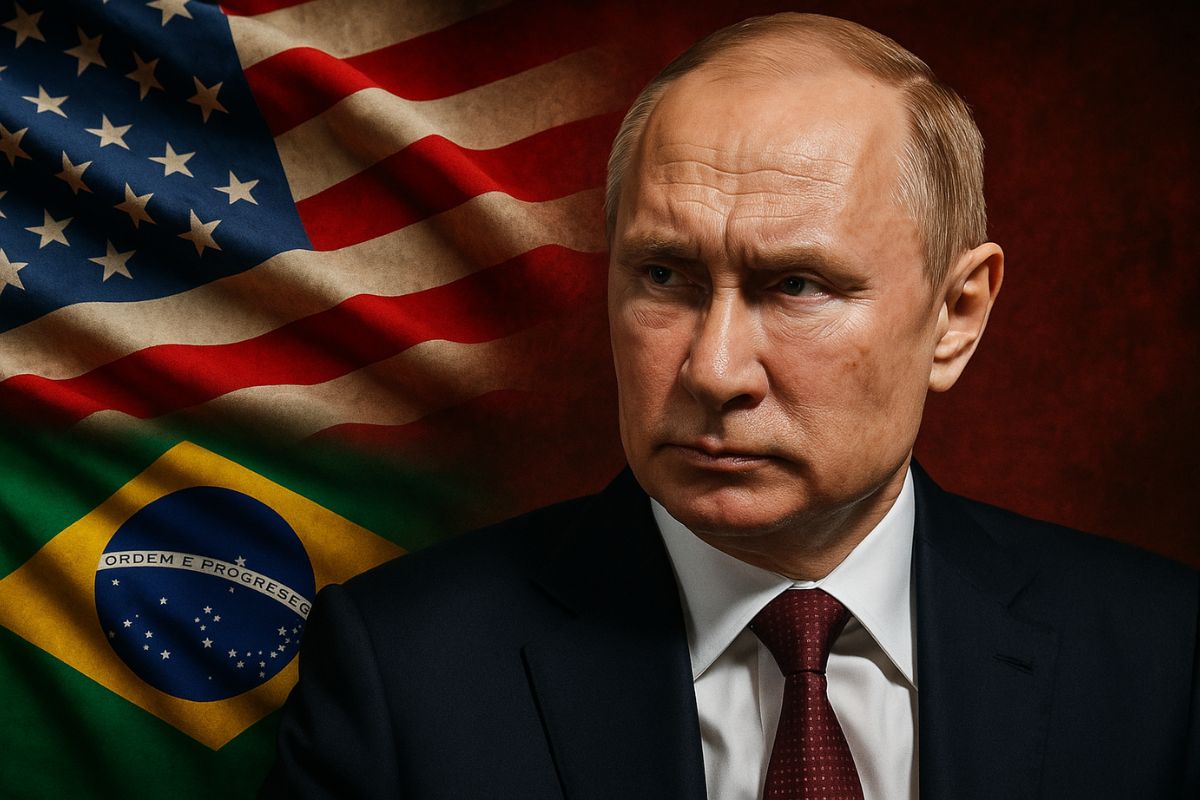


In Beijing (3), Putin Accuses US of Sanctioning Brazil Before Deadline and Denies Imbalance in Brazil-US Trade.
The President of Russia, Vladimir Putin, raised the stakes against Washington by stating that the United States unilaterally anticipated sanctions on Brazil, communicated on August 6, when the official negotiation deadline would only expire on August 8. The accusation was made on September 3, in Beijing, during the celebrations of the 80th anniversary of the end of World War II, according to the portal Terra.
Putin used the Brazilian example to illustrate the American stance of pressuring BRICS countries with economic measures that, in his view, exceed the argument of the war in Ukraine.
The Russian leader emphasized that, while there are evident trade imbalances between the US and powers like China and India, the same does not apply to Brazil.
-
A new Brazilian shopping center worth R$ 400 million will be built in an area equivalent to more than 4 football fields, featuring 90 stores, 5 cinemas, a supermarket, a college, and parking for 1,700 cars, potentially generating 3,000 jobs.

-
Larger than entire cities in Brazil: BYD is building a 4.6 km² complex in Bahia with a capacity for 600,000 vehicles per year, but the discovery of 163 workers in conditions analogous to slavery has shaken the entire project.

-
With an investment of R$ 612 million, a capacity to process 1.2 million liters of milk per day, Piracanjuba inaugurates a mega cheese factory that increases national production, reduces dependence on imports, and repositions Brazil on the global dairy map.
-
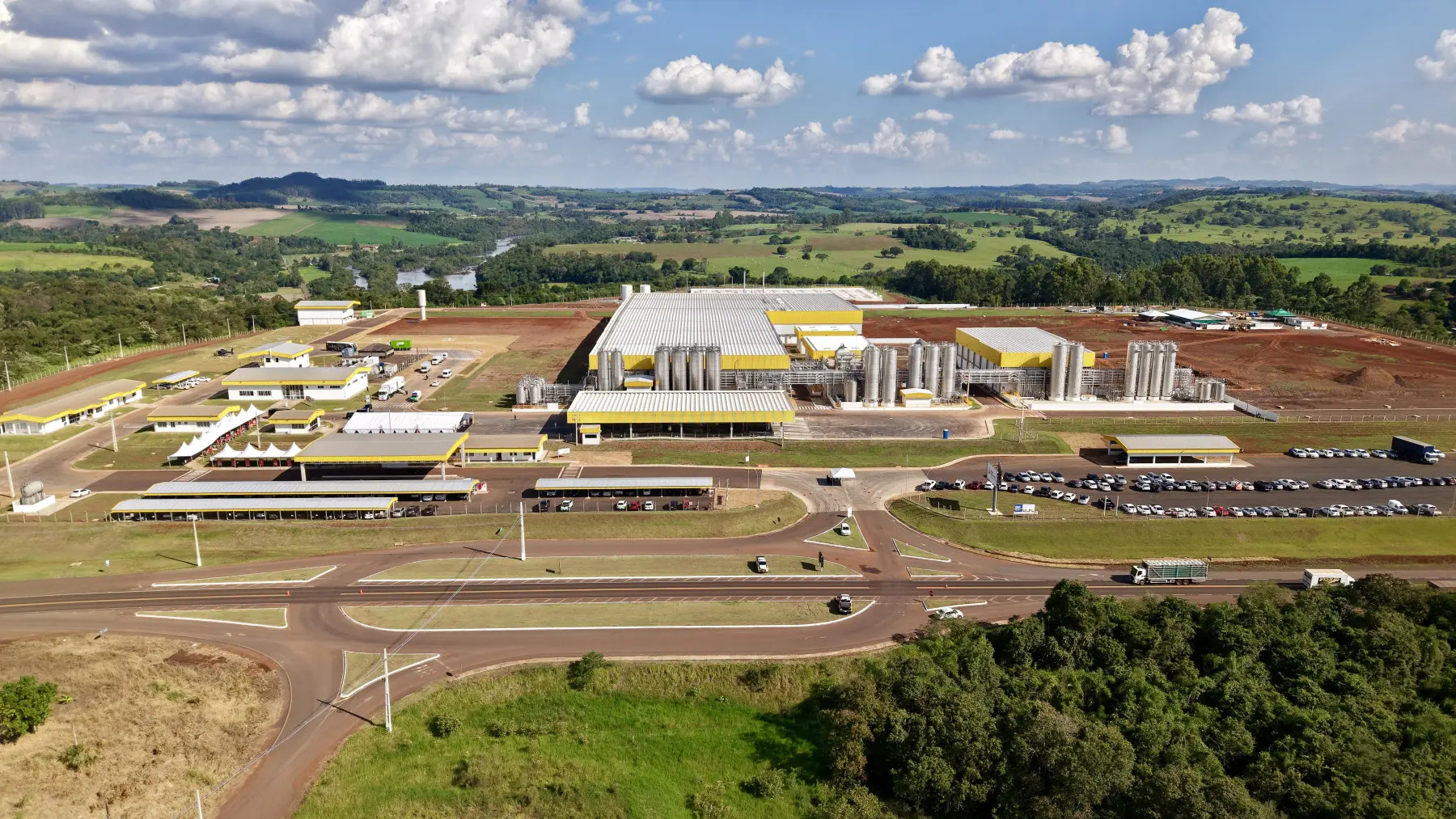
Brazilian city gains industrial hub for 85 companies that is equivalent to 55 football fields.

What Putin Said About Brazil at the Meeting in Beijing
According to the portal Terra, the Russian president highlighted that the four founding countries of BRICS: Brazil, Russia, India, and China face different forms of American economic pressure.
In the case of Brazil, however, Putin pointed out that there is no structural imbalance in trade with the US, contrary to Washington’s recurring narrative.
Nevertheless, he cited the imposition of sanctions on August 6, before the August 8 deadline, as an example of a premature and unilateral decision, made in a manner that disregards the terms previously agreed upon.
For Putin, this reinforces the view that Washington uses the war in Ukraine as justification in negotiations even with countries not directly involved in the conflict.
Why the Accusation Involves Domestic Politics in Brazil
Putin also linked the American stance to specific issues of Brazilian domestic politics, mentioning disputes involving local authorities and former President Jair Bolsonaro.
This reference suggests, according to his speech, that domestic factors were incorporated into the US foreign policy decisions, a move considered atypical in bilateral trade negotiations.
The criticism highlights the Russian argument that the sanctions against Brazil would not be technical, but political, opening room for diplomatic contestation within BRICS.
Who Was Present at the Leaders’ Meeting
In addition to Putin, the Prime Minister of India, Narendra Modi, and the President of China, Xi Jinping, participated in the agenda in Beijing.
A parallel meeting in Tianjin on September 1 also brought together the three leaders, reinforcing the symbolism of the joint action of BRICS in the face of American pressure.
The presence of these heads of state aimed to convey unity around a greater economic and diplomatic autonomy facing the US, consolidating the bloc as a significant player on the international stage.
Reaction in Brazil
Putin’s accusation was also echoed in Brazil. Organizations such as CNI (National Confederation of Industry) and CNA (Confederation of Agriculture and Livestock of Brazil) came to the defense of national interests.
CNI denied that the country acts in a way that deliberately harms American trade, while CNA highlighted, in a hearing in the US, the importance of the competitiveness of agribusiness and respect for the Brazilian forest code.
These statements demonstrate that, for the Brazilian productive sector, the debate transcends geopolitical boundaries and directly impacts exporters and workers linked to international trade.
By claiming that the US sanctioned Brazil before the official negotiation deadline, Putin sought to reinforce his narrative that Washington acts unilaterally and politically on trade issues.
His remarks also position Brazil as a central piece in the economic disputes between major powers, even though Moscow acknowledges that there is no structural imbalance in Brazil-US trade.
And you, do you believe that the anticipation of sanctions on Brazil was a political decision by the US? Could this type of measure affect Brazil’s position within BRICS?
Leave your opinion in the comments — we want to hear your thoughts on the impact of this episode.







Na realidade o objetivo dos EUA é se aproveitar da situação política entre o atual governo brasileiro e a extrema direita pra se beneficiar e usar como argumento pra que o Brasil fique de joelhos
Tá pouco se lixando pro ex presidente