





 Portuguese
  English
  Spanish
  3 min of reading
  0 comments


Entire Countries Would Disappear If a World War Started Today. According to AI, Only Nine Nations Would Be Safe — And Brazil Is Not On The List for a Serious Reason
Imagine a scenario where the world plunges into a global conflict again. Which countries would actually be prepared to escape the chaos? AI answered — and Brazil was left out.
AI Lists The Safest Countries If a New World War Explodes
With rising military and political tensions on the planet, curiosity grows: if a Third World War really started, where would one flee? AI-based platforms have already begun to outline likely scenarios — and the list of the safest countries may surprise you.
According to the tool ChatGPT, which analyzed geostrategic, historical, and logistical factors, there are at least nine countries with the potential to remain relatively protected if a global conflict reaches full scale.
-
The government will charge up to R$ 650 from pet owners in 2026, and tourists traveling with their dogs will have to pay a daily fee; the measure surprised thousands of pet ‘parents’ in Italy.
-
Man swaps his cellphone and modern life for a shelter in a tree to test the limits of mental sanity and physical preparedness.
-
In the USA, a city is considered the World Capital of the Horse due to having over 1,200 farms and around 75,000 horses. Understand how the soil of Ocala transforms horses into champions and generates over $190 million a year.
-
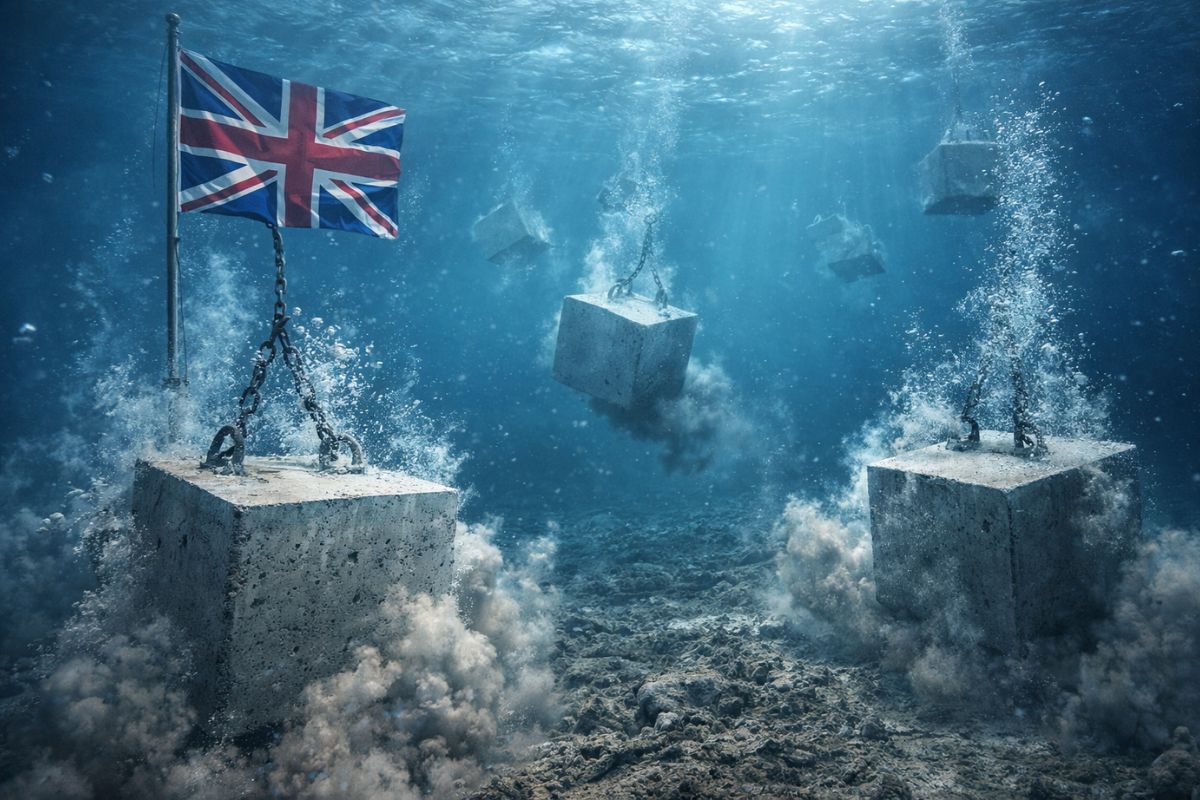
The United Kingdom is throwing six-ton concrete blocks to the bottom of the North Sea, and the reason is the opposite of what you might think, as each block carries 4,000 oysters capable of filtering millions of liters of water per day.

These countries were classified into three levels: very high security, high, and moderate, based on criteria such as:
- Tradition of historical neutrality
- Isolated geography
- Internal and political stability
- Self-sufficiency in food and energy
- Absence of active military alliances (like NATO)
Level 1: The Safest Countries in the World
1. Switzerland – Historical neutrality, civil infrastructure prepared for emergencies, mountainous terrain that is difficult to access, and absence of NATO bases.
2. New Zealand – Isolated in the South Pacific, far from geostrategic routes, and not involved in offensive military alliances.
3. Iceland – Although a NATO member, it has no army. Its remote location and renewable energy sources make it self-sufficient and strategic.
4. Bhutan – Small, mountainous, and politically neutral. Off the radar of geopolitical conflicts, it maintains a discreet foreign policy.
Level 2: Countries with High Security
5. Uruguay – Stable, democratic, and isolated from major powers. Its peaceful policy and lack of enemies make this South American country a possible refuge.
6. Finland – Recently joined NATO but maintains a robust civil defense and vast sparsely populated regions in the north, away from military tensions.
7. Costa Rica – Without an army since 1949, it bets on peace and biodiversity. It has strategic rural areas far from critical zones.
Level 3: Moderate Security
8. Canada – Too close to the U.S., it faces risks in case of a nuclear attack. On the other hand, its vast northern territories are less vulnerable.
9. Australia – A potential target in the Indo-Pacific, but it has interior regions with low population that could offer security.
And Brazil? Why Was It Left Out Of The List?
Despite its continental size and abundant resources, Brazil has not been listed among the safe countries by any AI so far — and this raises some important questions.
Favorable Geographical Position, But Unstable Geopolitical Involvement
Geographically, Brazil is far from major military tension hotspots like Eastern Europe, the Middle East, and the Asia-Pacific. This alone could place it among the moderately secure countries.
However, in recent years, the country has been involved in various international controversies, including:
- Accusations from Western countries that Brazil has exported refined uranium to Iran — something that, if confirmed, would place it at the center of nuclear proliferation disputes. Although the Brazilian government denies any wrongdoing, the suspicion has affected its international image.
- Diplomatic ambiguity in current conflicts, such as the Russian invasion of Ukraine, where Brazil avoids direct condemnations and maintains trade relations with both sides. This “neutral but involved” position distances it from countries like Costa Rica or Switzerland.
- Strong dependence on economic and energy alliances, including with countries in tension zones, which could compromise its energy and food security in the event of a global crisis.
Additionally, Brazil has not abolished its Armed Forces, nor does it remain completely outside military pacts — and although it is not part of NATO, it participates in joint operations with various countries.
Regional Power, But Without Recognized Neutrality
In the military field, Brazil does not pose an active threat nor does it engage in recent wars, but it also lacks an international image of historical neutrality like Switzerland, Uruguay, or Costa Rica. This reduces global confidence that the country would remain outside a world conflict.




-

-

-

4 pessoas reagiram a isso.