





 English
  Francês
  Alemão
  Italiano
  Japonês
  Norueguês
  Portuguese
  Spanish
  4 min of reading
  0 comments


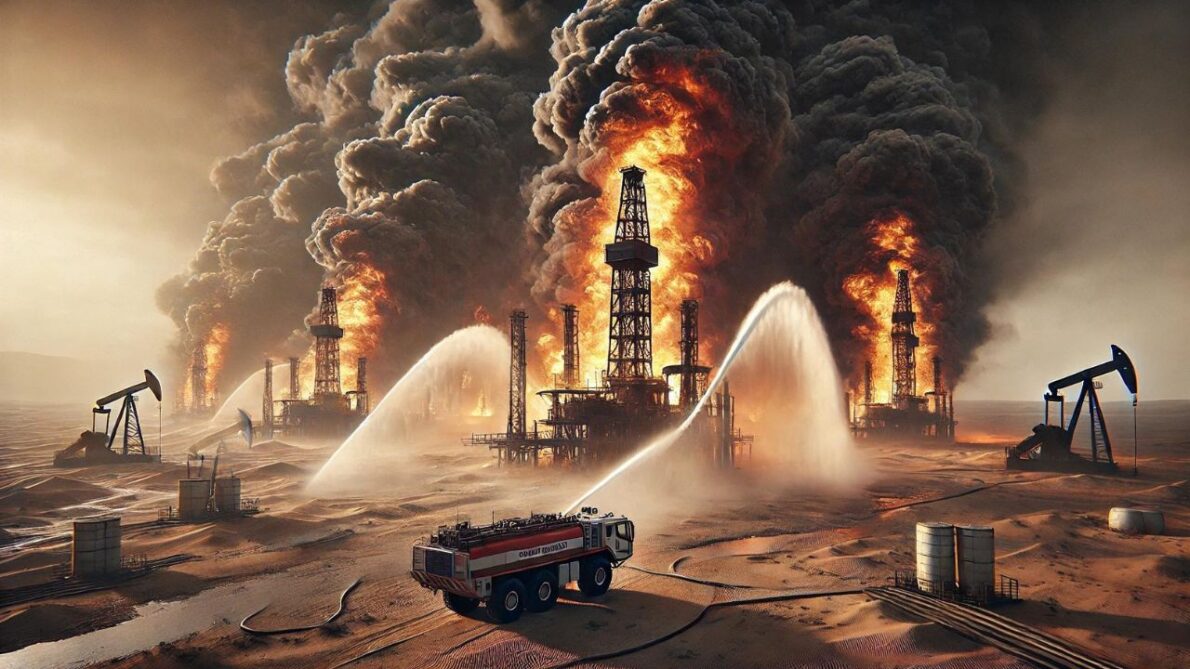
700 Oil Wells Burning And An Unusual Solution Called Big Wind.
In 1990, the world witnessed the collapse of one of the largest sources of wealth in the Middle East, when the Gulf conflict triggered a series of devastating fires in hundreds of oil wells in Kuwait. It was the beginning of one of the largest environmental disasters ever recorded, with experts predicting that the flames could last for years.
The Iraqi invasion of Kuwait not only resulted in a devastating conflict, but also triggered a scorched earth strategy. During the withdrawal in 1991, the Iraqi army set fire to more than 700 oil wells, turning the Kuwaiti desert into a dark hell. To give you an idea of the severity, the heat from the flames exceeded 350 degrees Celsius in the surrounding air, while the sand cooked at around 700 degrees, fed by the burning oil.
These Oil Wells Could Burn For Up To 100 Years
These fires released tons of pollution into the atmosphere, compromising the environment and raising concerns about a potential “nuclear winter”. More than 10 countries, including the United States, the Soviet Union, France, and China, joined forces to try to extinguish the flames. However, even with all these efforts, some experts believed it would take up to five years to control the situation, while the more optimistic predicted two years.
-
Brazilian giant expands borders in the Southeast: Petrobras confirms new oil discovery in ultra-deep waters in the pre-salt of the Campos Basin.
-
Alert in the global energy market: Severe tropical cyclone hits the coast and disrupts gas production at major plants in Australia, threatening global supply.
-
Petrobras finds high-quality oil in the pre-salt at 113 km from RJ and reignites expectations about strategic reserves in the Campos Basin.
-
Ocyan opens registrations for startups focused on innovation in the oil and gas sector and will select projects for Innovation Day with the support of Nexio.


But the reality was even harsher: if left unattended, these wells could burn for up to 100 years, releasing millions of barrels of oil daily. The costs were astronomical, with an estimated loss of 120 million dollars a day in oil turned to smoke. There was no doubt that something drastic needed to be done.
The Challenge Of Extinguishing The Oil Wells
Attempts to extinguish the oil well fires involved traditional methods and creative innovations. Water pumps, foam, dry chemicals, and even explosives were used to cut off the oxygen from the flames, but the situation required something more robust. It was then that a Hungarian team came up with an extreme and impressive solution: Big Wind.
Big Wind Was A True Machine
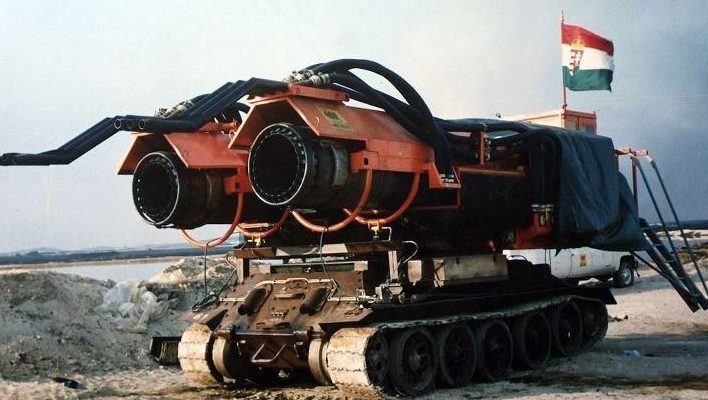
Big Wind was a true war machine adapted to fight fires. Imagine two MiG-21 fighter engines attached to a Soviet T-34 tank, replacing the tank’s turret with these gigantic jet engines. The idea was simple and brilliant: the engines expelled a combination of air and water at extremely high pressure, capable of “blowing” out the flames and cutting off the flow of oil that fed the fires. With this engineering monster, the Hungarian team managed to extinguish 9 oil wells in just 43 days – a remarkable achievement, considering the level of difficulty.
Oil And The Global Impact
The reason for this chaos began before the war, when Iraq accused Kuwait of drilling in oil fields beyond its borders. This field, Romaila, contained a massive oil reserve, crucial for the Iraqi economy that was already suffering after years of war against Iran. The Iraqi invasion of Kuwait, led by Saddam Hussein, was an aggressive response to the economic situation, culminating in the Gulf War and the massive burning of oil wells.
The magnitude of the disaster was so great that many feared that the environmental consequences would be irreversible. Fortunately, the rapid response of various nations and the use of innovative technologies like Big Wind prevented the disaster from being even worse.
A Controlled Disaster, But With Deep Scars


The fires in Kuwait’s oil wells were finally controlled in November 1991, nearly 10 months after the crisis began. More than 10,000 people worked tirelessly to extinguish the flames, and about 90% of the fires were extinguished using seawater. Ingenuity and international cooperation saved the day, but the environmental impact was immense and is still felt today.
Even with the success in extinguishing the fires, the areas around the wells remain severely contaminated. It is estimated that by 2021, only 10% of the polluted areas had been recovered. The legacy of Big Wind and the international efforts shows how technology and collaboration can face even the worst scenarios, but also serves as a reminder of the price humanity pays in times of war.
The fire in Kuwait’s oil wells was one of the largest environmental and economic tragedies in modern history, and the unusual solution of Big Wind marked its place in engineering history as an example of innovation in times of crisis.
And you, do you think we would be better prepared today to deal with an environmental catastrophe of this magnitude more efficiently?








Seja o primeiro a reagir!