





 Portuguese
  English
  Spanish
  6 min of reading
  0 comments


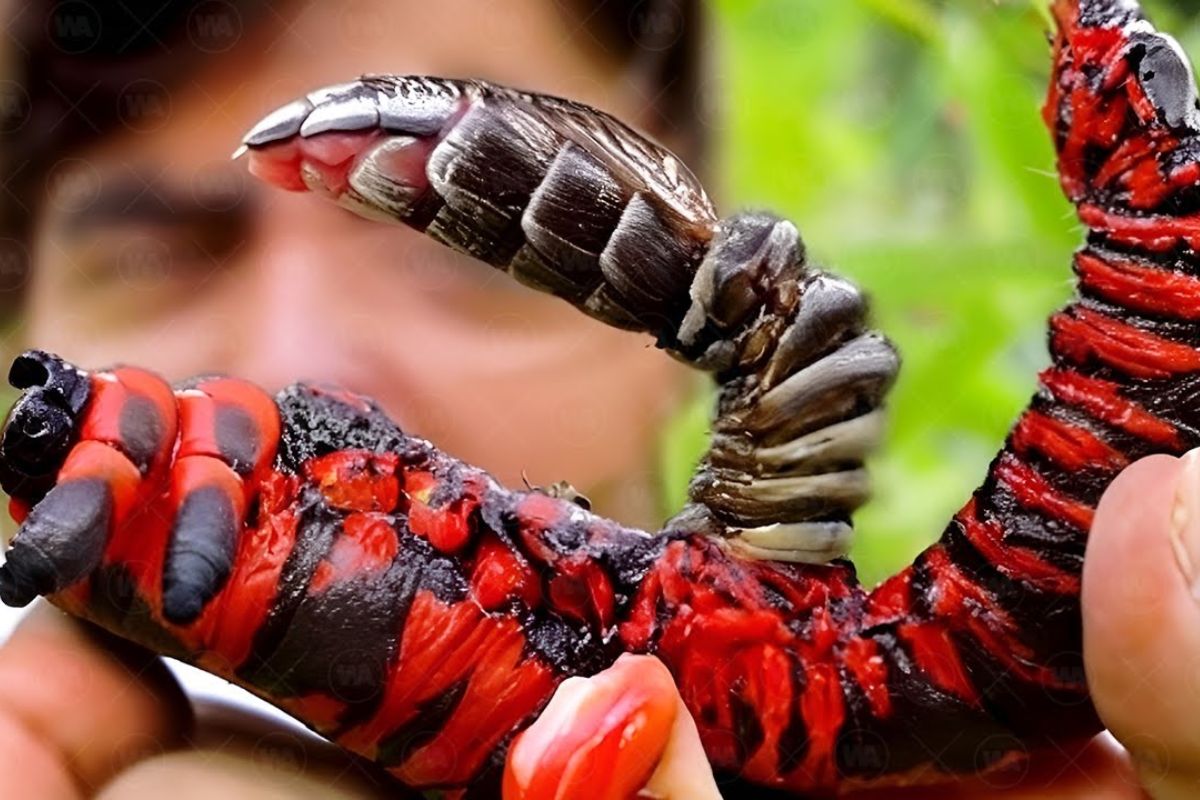
Not Every Caterpillar Completes The Metamorphosis: There Are Cases Where Viruses, Parasitic Wasps, Protozoa, And Nematodes Divert The Biological Cycle, Annul The Pupa, Create Zombie Hosts, And Transform The Journey Into Chemical, Genetic, And Ecological Survival Without A Natural Winged End
A caterpillar does not always reach the classic conclusion of a butterfly or moth. Instead of wings, some enter forced biological routes, where external agents interrupt the metamorphosis, alter genes, change behavior, and convert the body into a support for other organisms.
According to a study by the Microbiology Society, the story of the caterpillar includes invisible interferences that act on a molecular scale, such as wasps injecting eggs protected by viruses, viruses that force the insect to climb trees to die and spread contagion, and parasites that block the adult’s exit from the cocoon, leaving the cycle incomplete.
Metamorphosis And The Standard Path Of The Caterpillar

Metamorphosis is the post-birth transformation in which an animal changes to a different form than its previous stage.
-
The Arctic is shrinking and in March 2026 recorded only 14.3 million km² of ice at the peak of winter, one of the lowest levels since 1979, reducing the planet’s ability to reflect heat and accelerating global warming.

-
The waste that can double a household’s water bill is not in the faucet or the shower; it happens hidden within the walls and can go unnoticed for months, according to sanitation experts.

-
Darkness can surpass light in an optical phenomenon confirmed by scientists, which expands the understanding of relativity and reveals new behaviors of waves in the universe.

-
A Brazilian scientist created a pen that touches human tissue and identifies cancer cells in seconds using a drop of water and artificial intelligence, and Lívia Eberlin’s invention has already been used in over 400 surgeries in the United States and Brazil.


From the presented perspective, this process would have consolidated between 280 and 300 million years ago, when some insects stopped emerging from eggs resembling miniature adults and began to grow in very distinct stages.
The highlighted ecological logic is that caterpillar and butterfly do not compete for the same resources.
The caterpillar consumes leaves and accumulates energy for transformation, while butterflies drink nectar and sugary water.
Within this script, a gene called Broad is described as a central piece for guiding the caterpillar to the pupal stage and to complete metamorphosis.
When The Gene Fails And The Caterpillar Does Not Enter The Pupa

The study states that if the Broad gene is eliminated, the caterpillar does not go through the pupal stage and does not transform into a butterfly.
The main point is that a laboratory is not needed to break the natural sequence, as parasites and pathogens can also interfere with the host’s biology.
In this scenario, the caterpillar may remain stuck in a broken cycle, still alive for a time, but diverted to goals that are not its own, such as protecting wasp eggs or serving as a virus factory.
Parasitic Wasps And The Zombie Host That Protects The Enemy
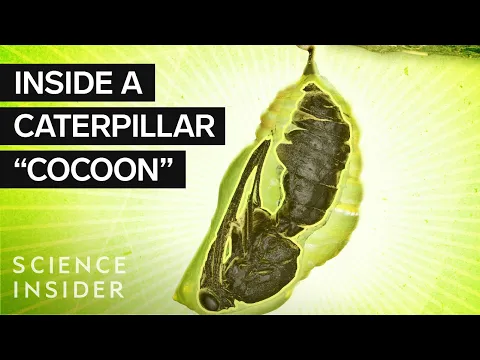

The dynamics of parasitic wasps appears as one of the most precise.
A wasp waits for the moment when the caterpillar is most vulnerable, immediately before metamorphosis, when it cannot fight and the upper layer of the cocoon has not yet hardened.
The wasp deposits 15 to 50 eggs, and each egg is coated with a virus called Braco, described as incorporated into the cells of the caterpillar to prevent the immune system from destroying the offspring.
After the wasps hatch, the manipulation continues: the caterpillar weaves a silk pad that favors the future wasps and becomes a kind of zombie guard for about 10 days, abandoning its destiny as a moth.
Plants And Chemical Signals That Guide The Attack On The Caterpillar
The study describes an unusual ecological link.
Cabbage and other family members, like black mustard, release stress chemical signals when attacked by pests or even cut, and these volatiles attract parasitic wasps.
In practice, the caterpillar that feeds on these plants activates an indirect defense system.
The plant does not reverse the damage already suffered but calls for a natural enemy that uses the caterpillar as a host, amplifying the parasitism cycle.
Viruses That Force The Caterpillar To Climb Trees And Turn Into Contagious Slime
There is a second type of manipulation without intermediaries.
A virus from the Baculovirus family is described as capable of reprogramming gypsy moth caterpillars, altering their routine of climbing trees at night to eat and descending in the morning for protection.
Under infection, the caterpillar loses interest in feeding and starts to remain at the top of the canopy until it dies.
It then liquefies into a contagious slime that drips onto leaves, contaminating the food of other insects and restarting the cycle.
Protozoan That Blocks The Exit Of The Butterfly And Destroys Wings
The study presents a protozoan known as OE. Ophryocystis elektroscirrha, which circulates when adult butterflies ingest spores present in plants or other butterflies, carry them in their abdomen, and leave eggs already compromised.
When the caterpillar hatches, the parasites multiply and the collapse occurs in the pupal stage.
About three days before the adult emerges, new parasites form and prevent the butterfly from exiting the cocoon.
Some manage to escape, but with damaged wings and incapacity to fly, which makes migration and survival unfeasible.
The Caterpillar Also Faces Common Metamorphosis Failures
In addition to pathogens, there are non-infectious causes cited.
The caterpillar may not complete metamorphosis due to lack of food, congenital defects, or inadequate conditions.
The study emphasizes that this is not a conscious decision, as prolonging the larval stage increases the risk of hunger, exposure to predators, and loss of the reproductive window.
The seasonal calendar emerges as biological pressure.
At the end of summer and beginning of autumn, caterpillars thrive with abundant food; as autumn arrives, food becomes scarce and many butterflies breed. Insects that delay metamorphosis may die from the cold before completing the cycle.
The Extreme Case Of The Arctic: Caterpillar That Takes Seven Years
There is an important counterpoint.
The Arctic wooly bear moth is described as a moth that lives above the Arctic Circle, in Greenland and Canada.
In this environment, summers are so short that there is almost no vegetation, and the caterpillar needs to extend its development.
The study indicates that it takes about seven years to reach adulthood, eating for only about 5% of the time, basically in June, and spending the remaining period waiting in the cold.
In even harsher conditions, the process could last up to 14 years.
How Parasites Choose The Caterpillar And Avoid Internal Competition
The selection of the host is described as highly strategic.
Female wasps can detect if there are already eggs inside the caterpillar, and even estimate how many, using the ovipositor as a scanning organ with structures similar to taste buds.
Learning is also highlighted.
The ability is not completely innate but taught by mother wasps.
In parallel, the idea of domesticated viruses emerges, with wasps capturing viruses in their DNA over long periods as a survival strategy.
Nematodes And Bacteria That Transform The Caterpillar Into Nutritious Soup
Another route to zombification involves nematodes. Once inside the caterpillar, they release thousands of glowing bacteria that gradually kill the host and convert its tissues into nutritious soup.
Several generations of worms would live, feed, reproduce, and die inside a single caterpillar before emerging.
To reduce the risk of the dead host being eaten by predators, the bacteria would make the caterpillar look less appetizing, with altered coloring and a subtle shine, functioning as both chemical and visual defense.
The Resin Cocoon That Can Block Parasites
Finally, there is a rare case of resistance. Scientists in Borneo have reportedly found a caterpillar that builds a resistant multi-layered cocoon using tree resin, possibly toxic. It
locks onto the bark of a plant and uses the viscous sap similar to resin to form a protective cocoon, reducing the chances of attack.
The logic is simple: if the resin is toxic, it becomes unlikely that a predator or invader would want to taste it. In this context, the caterpillar maintains the metamorphosis route with a chemical barrier.
The same nature that popularized metamorphosis as a symbol of transformation also exposes its brutal side.
The caterpillar can be diverted by wasps, viruses, protozoa, and nematodes, become a zombie host, lose the chance to form wings, and serve the biological cycles of other organisms in a chain of survival that lacks romanticization.
Had you heard that a caterpillar can become a zombie guard for wasps or a virus factory instead of a butterfly, and does this change your view of metamorphosis in nature?




-

Uma pessoa reagiu a isso.