





 Portuguese
  English
  Spanish
  5 min of reading
  0 comments


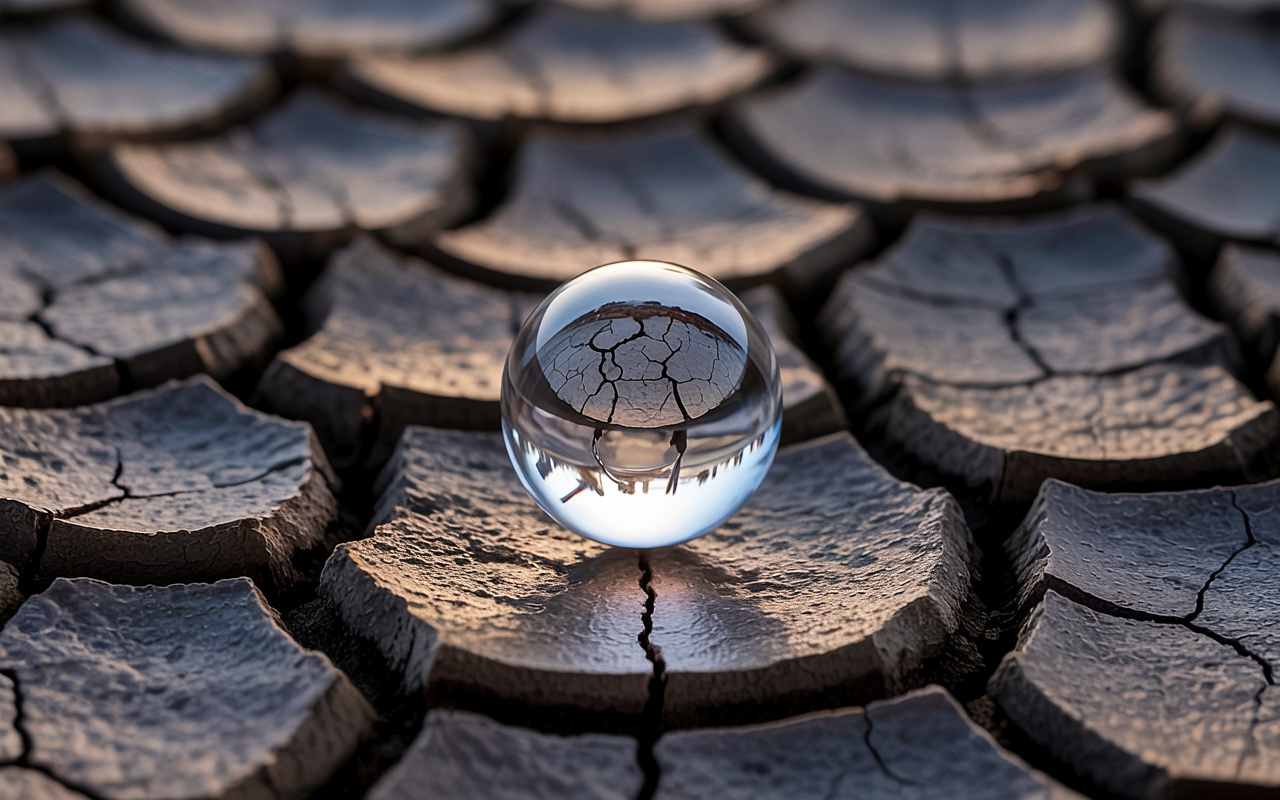
Only 0.5% Of The World’s Water Is Drinkable And Accessible — Understand Why Freshwater Scarcity Threatens Billions Of People And Reveals The Fragility Of This Essential Resource
The Earth is known as the “blue planet” due to its abundance of water, but this image conceals an alarming truth: less than 1% of the planet’s water is drinkable and accessible for human consumption. In a global scenario of population growth and climate change, water scarcity is becoming one of the most serious threats to human well-being.
According to data from the United States Geological Survey (USGS), about 97.5% of the Earth’s water is salty. Of the 2.5% of freshwater available, most is frozen in polar ice caps or stored in inaccessible aquifers. This means that only 0.007% of the planet’s water is actually available for immediate human use.
Understand how much drinkable water exists, how it is distributed, the risks involved in the mismanagement of this vital resource, and what can be done to prevent a global water collapse.
-
Friends have been building a small “town” for 30 years to grow old together, with compact houses, a common area, nature surrounding it, and a collective life project designed for friendship, coexistence, and simplicity.

-
This small town in Germany created its own currency 24 years ago, today it circulates millions per year, is accepted in over 300 stores, and the German government allowed all of this to happen under one condition.

-
Curitiba is shrinking and is expected to lose 97,000 residents by 2050, while inland cities in Paraná such as Sarandi, Araucária, and Toledo are experiencing accelerated growth that is changing the entire state’s map.

-
Tourists were poisoned on Everest in a million-dollar fraud scheme involving helicopters that diverted over $19 million and shocked international authorities.


The False Abundance Of Drinkable Water On Earth
Although most of the Earth’s surface is covered by water, only a fraction is suitable for consumption. It is estimated that 70% of the planet is covered by water, but drinkable water on Earth is extremely limited.
General distribution of water on the planet:
- 97.5%: salty water in oceans and seas
- 2.5%: total freshwater
- 68.7% is in glaciers and polar ice caps
- 30.1% in deep underground aquifers
- Only 1.2% in rivers, lakes, and other surface sources
It is in this last 1.2% that available freshwater for direct consumption is found — used by billions of people, crops, industries, and cities worldwide. The rest remains out of reach or frozen.
The Percentage Of Drinkable Water That Really Matters
When considering all the Earth’s water reserves, only 0.007% is available immediately and safely for human use. This figure is the result of a combination of the scarcity of accessible sources and contamination risks.
The percentage of drinkable water available is surprising due to its smallness. It is this tiny fraction that:
- Supplies over 8 billion people
- Irrigates crops that feed the world
- Sustains industrial and energy activities
- Ensures the functioning of cities and ecosystems
Any pollution or waste affecting this already limited share directly compromises the water security of millions of people.
Water Scarcity: A Silent And Global Crisis
Water scarcity already affects billions of people around the planet. According to UNESCO, over 2 billion individuals live in areas under severe water stress — where demand exceeds the capacity of natural resource replenishment.
Among the main factors exacerbating the problem are:
- Population growth
- Unplanned urbanization
- Pollution of water sources
- Inefficient irrigation and excessive use in agriculture
- Impacts of climate change, such as prolonged droughts and changes in rainfall patterns
Even countries with large reserves, such as Brazil, face inequalities in access and distribution failures. Regions like the semi-arid Northeast suffer from long periods of drought, while large urban centers deal with poor management of their watersheds.
How Much Drinkable Water Exists And Where Is It Concentrated
Despite the scarcity, the available freshwater is not equitably distributed among countries. Only ten nations concentrate about 60% of all the planet’s surface freshwater, according to the World Resources Institute. Brazil is one of them, with about 12% of global reserves.
However, even here, resources are poorly distributed:
- The Northern region contains most of the water, thanks to the Amazon basin.
- Populous regions like the Southeast and Northeast have less water availability per inhabitant.
- Pollution of rivers, soil sealing, and deforestation further compromise water sources.
In other words, how much drinkable water exists depends not only on volume but also on access, conservation, and usage infrastructure.
Available Freshwater: How To Ensure Sustainable Use
Protecting drinkable water on Earth requires coordinated actions among governments, the private sector, and the population. Some fundamental strategies include:
Efficient Management And Public Policy
- Investment in basic sanitation and sewage treatment
- Monitoring and enforcement of water usage
- Protection of watersheds and springs
Recycling And Efficiency Technologies
- Reuse of gray water in industries and homes
- Drip irrigation in agriculture
- Desalination in coastal regions with limited access
Behavior Change
- Reduction of waste in domestic consumption
- Conscious consumption of products that require large volumes of water in production (such as beef)
- Civic participation in local environmental policies
These measures are crucial to curbing the advance of water scarcity and ensuring a stable water future.
Examples That Show The Risks Of The Water Crisis
Recent crises in different parts of the world show how scarcity can become an immediate threat:
- Cape Town (South Africa): in 2018, came close to a “Day Zero,” when reservoirs would be completely dry. The population was forced to limit consumption to 50 liters per person per day.
- Chennai (India): in 2019, the main reservoirs dried up, and water trucks started supplying the city.
- California (USA): has faced recurring droughts for decades, with conflicts between agricultural irrigation, urban supply, and environmental preservation.
These cases prove that even wealthy or technologically advanced regions are not immune to the crisis. Water does not respect political boundaries — it follows the cycle of nature, and any imbalance can affect millions.
Why Water Scarcity Should Be At The Center Of Environmental Debate
The question “how much drinkable water exists?” is not just a statistic — it is a warning about how we are managing the most essential resource for life. The answer — only 0.007% of the Earth’s water — reveals that abundance is, in fact, a dangerous illusion.
The percentage of drinkable water accessible to humans is tiny, and it is being pressured by waste, pollution, unsustainable use, and inequality in access. The global water crisis has already begun, and it can only be addressed with bold political decisions, structural changes in the economy, and a new sense of environmental responsibility from everyone.
Protecting drinkable water on Earth is no longer a matter of distant preservation: it is an immediate necessity to ensure health, food security, economic development, and social peace in the coming decades.










Seja o primeiro a reagir!