





 Portuguese
  English
  Spanish
  6 min of reading
  0 comments


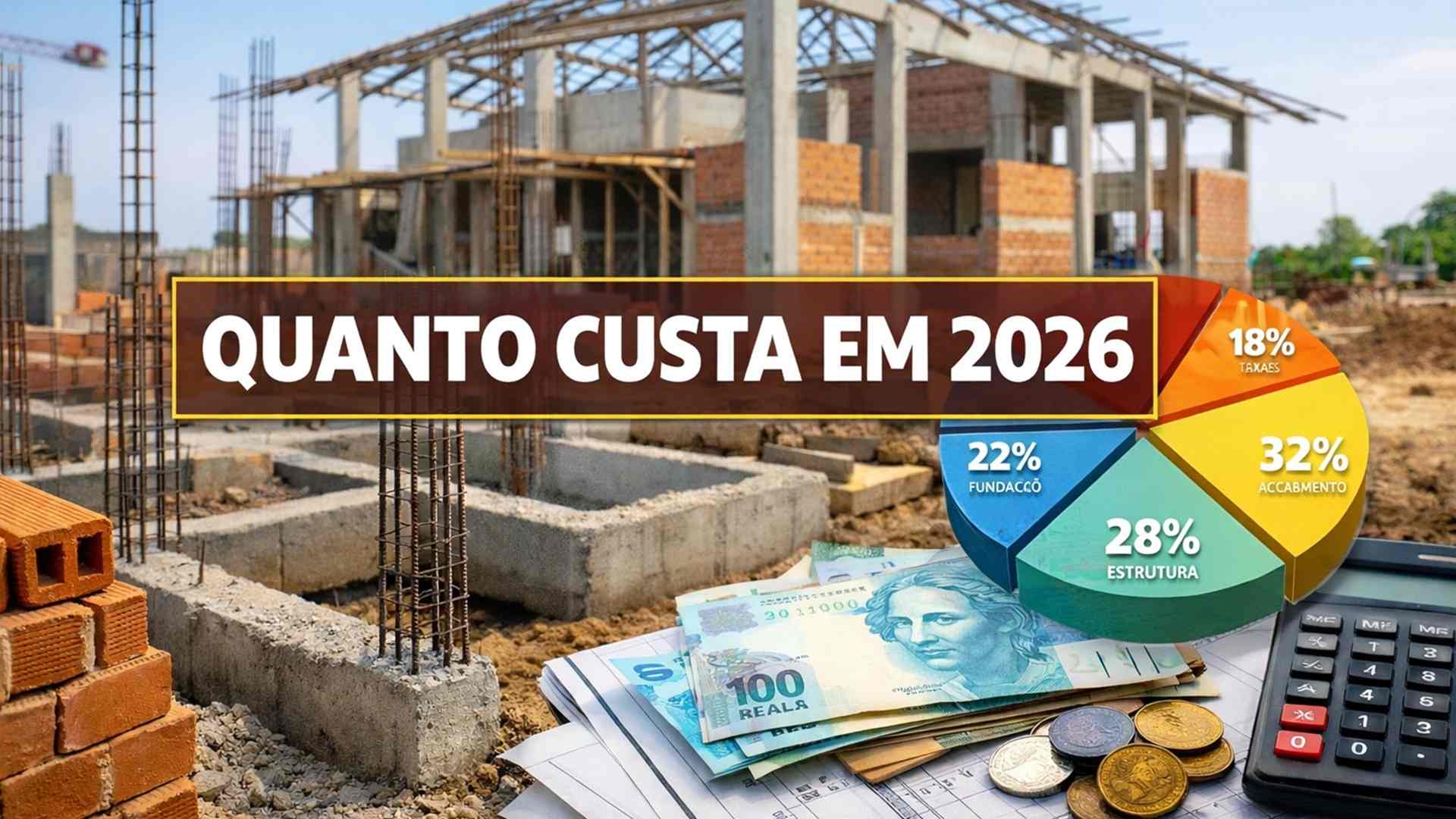
An Architect Presented A Breakdown Of How Much It Costs To Build A House In 2026 In Brazil, Explaining Average Values Per Square Meter, Percentage Division Of The Stages Of The Work And Extra Expenses That Frequently Appear During The Construction Process.
Anyone planning to build or renovate in 2026 needs to first understand the average cost per square meter in Brazil. This is the basis for calculating how much it costs to build a home even before starting the planning stage of the project.
According to the explanation provided, the country has a large regional price variation. Each state has different values because the transportation of materials and the availability of products alter the final cost of construction.
Even with these differences, a national average was presented to facilitate the initial calculation. This reference helps to understand how much it costs to build without solely relying on the specific values of each region.
-
Italian researchers have detected what appears to be a second Sphinx buried under the sands of Egypt, and satellite scans reveal a gigantic underground megastructure hidden beneath the Giza Plateau for over 3,000 years.

-
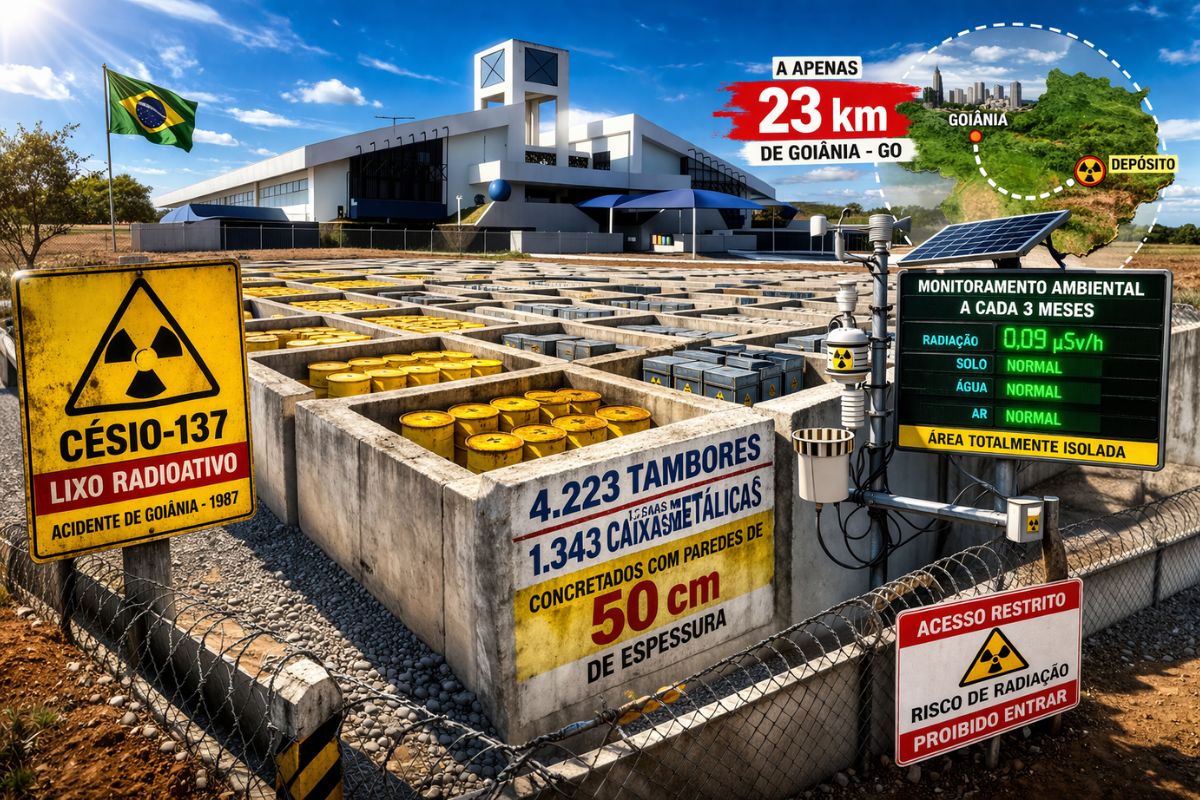
There are 4,223 drums and 1,343 metal boxes concreted with 50-centimeter walls that store the radioactive waste from Cesium-137 in the worst radiological accident in Brazil, just 23 kilometers from Goiânia, with environmental monitoring every three months.
-
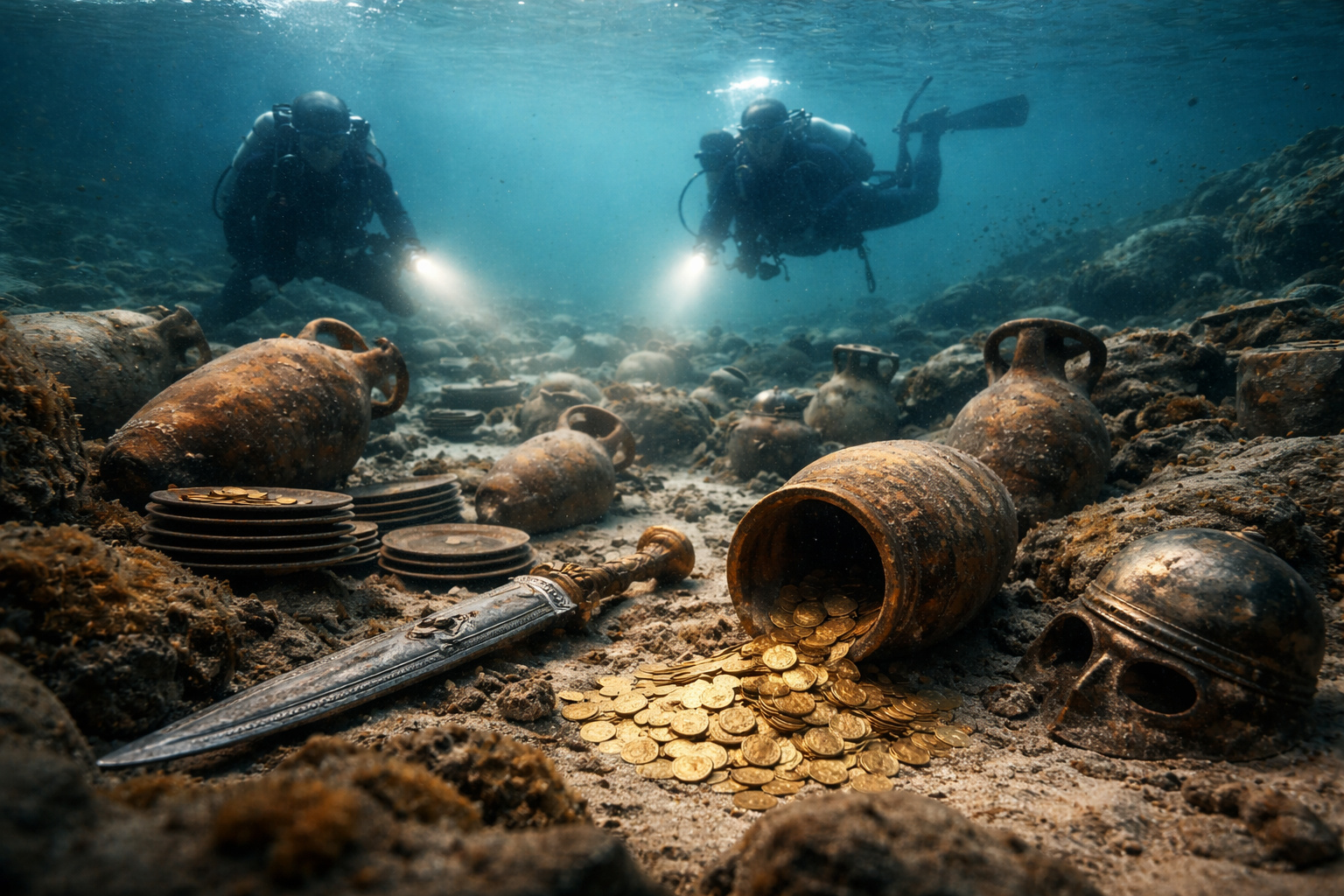
Giant Roman treasure found at the bottom of Lake Neuchâtel in Switzerland reveals an advanced trade system, circulation of goods, and armed escort in the Roman Empire about two thousand years ago.
-
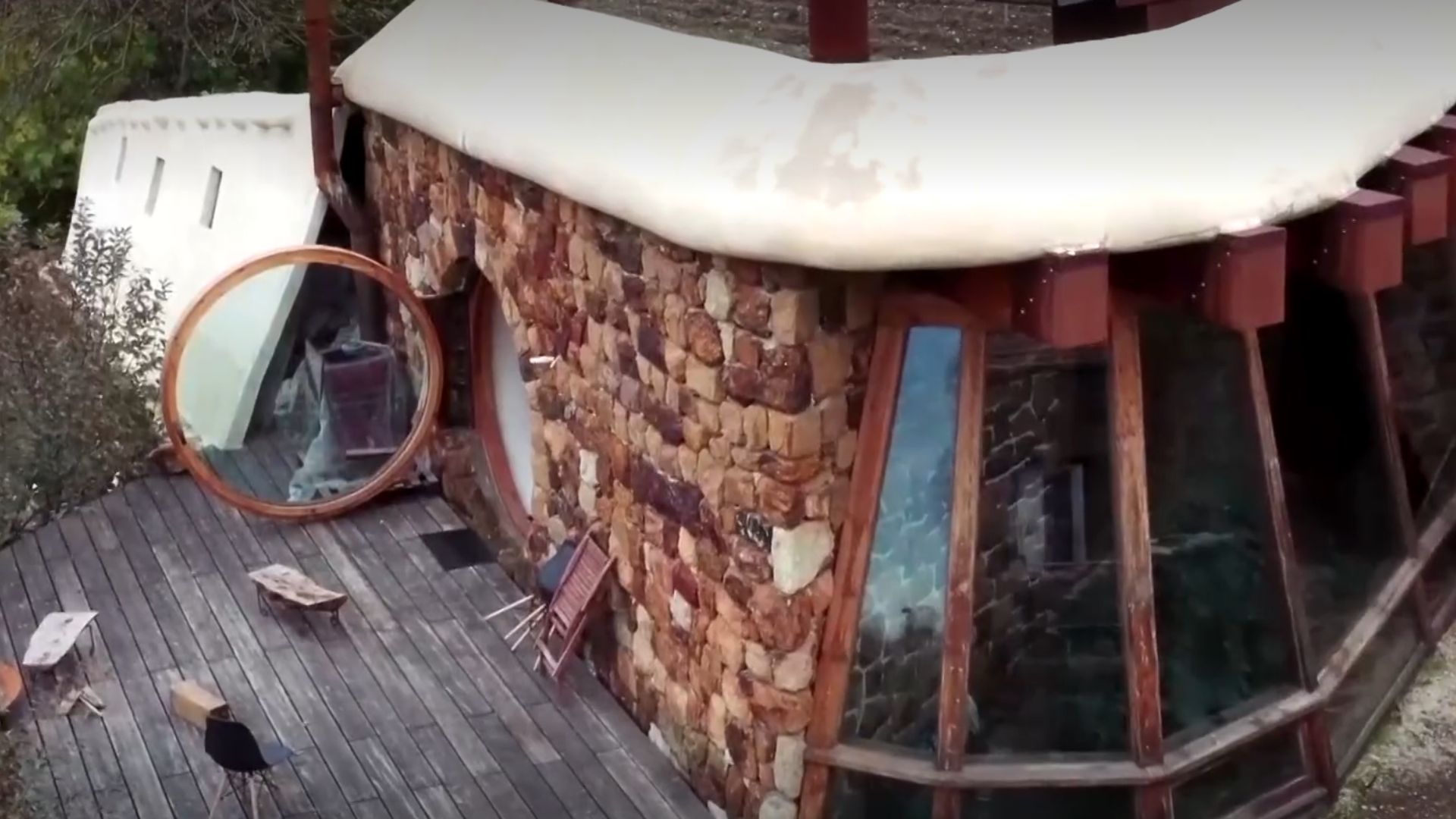
He buried 1,200 old tires in the walls to build his own self-sufficient house in the mountains with glass bottles, rainwater, and an integrated greenhouse.

Within this average, a construction considered popular ranges between R$ 2,000 and R$ 2,300 per square meter. This type of project usually employs more basic materials and simpler finishes.
An intermediate construction presents values between R$ 2,700 and R$ 3,200 per square meter. This standard often represents the reality of many residential projects today.
For constructions classified as high standard, values can range between R$ 3,500 and R$ 5,000 per square meter. In this case, higher-end finishes and more expensive materials are included.
To explain in practice how much it costs to build, a simulation using a 100 square meter house was conducted. The calculation was based on the intermediate value of R$ 2,700 per square meter.
With this reference, the estimated cost for a residence of this size reaches around R$ 270,000. This value represents the average considered closest to reality for those starting a project.
According to the explanation provided, even those planning to build to the popular standard often elevate the standard in some items during the construction. This happens when the owner chooses windows, finishes, or other materials superior to those initially planned.
Foundation And Structure Already Consume About 30% Of The Project Budget
After understanding how much it costs to build, the next step is to understand how the project budget is distributed among the different stages of construction.
The foundation represents between 8% and 12% of the total cost. This stage includes the entire structural base responsible for supporting the house.
Right after, the structure of the construction appears, accounting for about 18% to 25% of the budget. This phase includes columns, beams, and slabs that form the support of the property.
By adding the foundation and structure, expenses can reach close to 30% of the total value of the project. Even with this significant investment, there are often still no walls raised on the site.
This situation often generates doubts among those monitoring the construction. Many people pass by the site and believe that little has been done, while in practice, a significant portion of the budget has already been utilized.
The masonry stage accounts for about 15% to 22% of the total budget. It is in this phase that the walls of the house begin to be built.
The roof represents approximately 8% to 15% of the construction cost. Electrical and plumbing installations range between 10% and 15% of the budget.
The finishes are among the most expensive items in construction. They can represent between 15% and 25% of the total cost of the project.
Painting usually consumes between 8% and 12% of the budget. Glass and frames complete the list with a participation that varies between 5% and 10%.
Fees And Technical Expenses Also Enter Into The Calculation Of How Much It Costs To Build
In addition to direct construction costs, there are mandatory expenses that are often not considered in the initial planning. These amounts also directly influence how much it costs to build.
Among these expenses are municipal fees related to construction. This group includes permits, project analysis, and costs related to land use.
For a 100 square meter house, the presented estimate indicates an approximate expense of R$ 13,300 for these fees. The amount may vary depending on the municipality where the construction will take place.
Another important cost involves the technical documents signed by professionals responsible for the project. In this case, the ART and RRT come into play.
The estimate provided for these fees is approximately R$ 1,200. This amount includes the registration and also the monitoring performed by the responsible professional.
Complementary projects for the construction are also part of the planning. They include foundation, structure, electrical, and plumbing projects.
The estimate provided for these projects is around R$ 4,000. According to the explanation, these documents help avoid mistakes and waste during the execution of the project.
Additionally, there are the connection fees for water and energy. For these services, an estimate of between R$ 800 and R$ 1,000 was provided.
External Items Of The House Also Increase The Total Value Of The Construction
Some important costs often do not appear in the initial project budget. Nevertheless, they are part of the necessary investment to complete the construction.
Among these items are walls, gates, and sidewalks. These elements are usually not included in the house’s budget.
The estimate provided suggests an average expense of around R$ 20,000 for these external structures. This amount may vary depending on the size of the land and the characteristics of the project.
Another item frequently left for later is custom furniture. Although not part of the house’s structure, they usually represent a significant additional investment.
According to the estimate provided, the average cost for custom furniture can reach around R$ 30,000. This amount depends on the number of rooms and the type of furniture chosen.
Characteristics Of The Land Can Increase The Cost Of The Construction
The type of land is noted as one of the factors that greatly alter how much it costs to build a house. Depending on the topography and soil conditions, the project budget can increase.
Sloped lots require additional services, such as leveling or filling. In some cases, it is also necessary to build retaining walls to ensure the stability of the construction.
These interventions can elevate foundation and structure costs by around 20%. As these stages already represent a significant portion of the budget, the impact can be considerable.
Another factor mentioned is soil testing. This procedure identifies characteristics of the land that may require adaptations to the house’s foundation.
If the testing indicates the presence of water near the soil, for example, it may be necessary to use more concrete or reinforce the foundation structure.
Two Common Mistakes Can Increase The Cost Of A Project During Construction
In addition to technical factors, there are also decisions that can increase how much it costs to build a house.
The first mistake mentioned is starting the project without a complete executive plan. Without this detailed planning, many decisions end up being made directly on the construction site.
In this scenario, professionals execute solutions based solely on practical experience. This can lead to rework or waste of materials.
The second mistake is modifying the project during construction. Changes made mid-project can require demolitions or structural changes.
These alterations end up invalidating part of the original plan and raising the project’s cost.
Calculation Can Be Used For Projects Up To 200 Square Meters
The methodology presented to estimate how much it costs to build can be used for houses of different sizes. The calculation based on the value per square meter works as an initial reference.
According to the explanation provided, this model can be used for constructions of up to 200 square meters. Beyond this size, costs can vary more significantly.
For this reason, larger projects may require new calculations and specific analyses. Still, the method presented serves as a starting point for those planning to build in 2026.









-

-

-

-

-

-

23 pessoas reagiram a isso.