





 Portuguese
  English
  Spanish
  5 min of reading
  0 comments


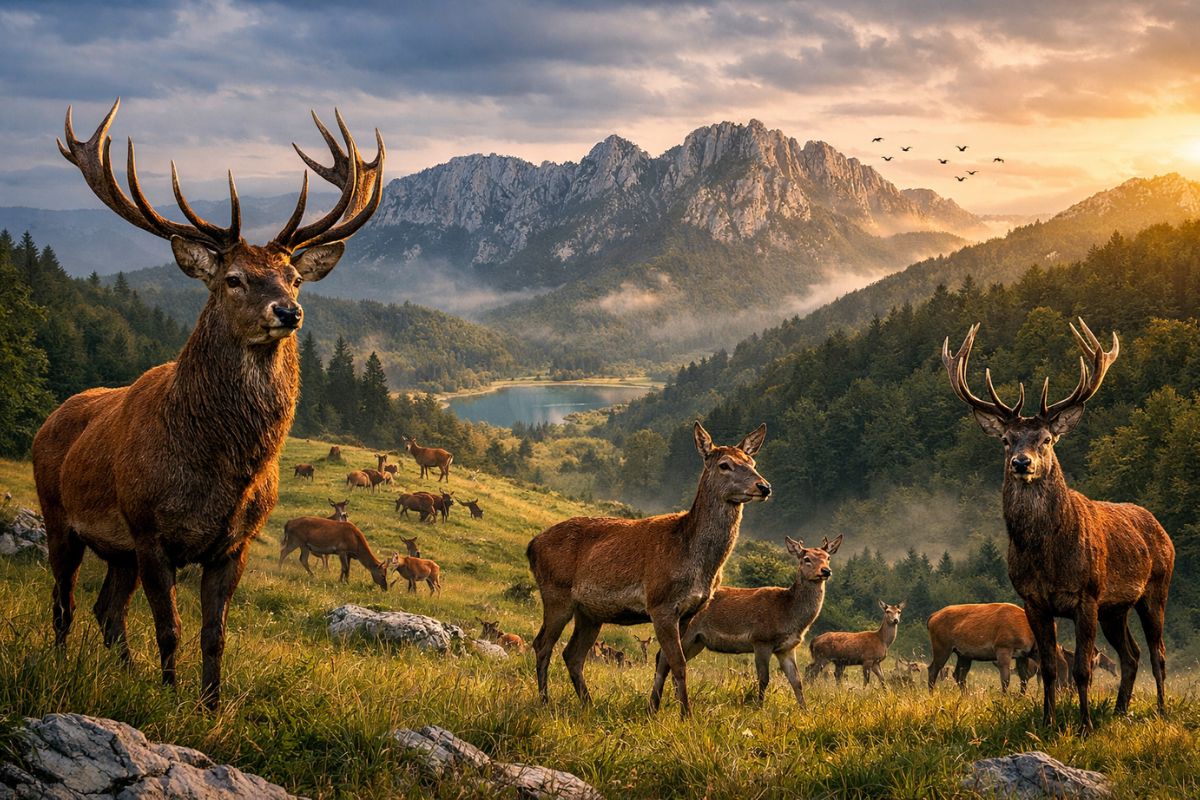
In The Velebit Mountains, Croatia, Red Deer Are Regaining Ground After Reintroductions in Four Hunting Areas with Temporary Suspension of Culling, Cooperation Agreements, and Monitoring Using Camera Traps and GPS Collars to Recover Genetic Diversity, Biodiversity, and Sustainable Local Food Chains.
In the Velebit Mountains, Croatia, the return of red deer is being accelerated by a coordinated effort involving hunting concessions, forest rangers, and the Rewilding Velebit project. Since November, 30 red deer have been released in four hunting areas, with signed agreements to ensure management standards and prevent illegal hunting while the population attempts to recover.
The movement occurs in a context of historical human pressure that has driven the species to levels well below natural. In 2025, a released survey showed that most hunters in Velebit share objectives similar to those of the restoration project, helping to sustain the most symbolic change in the plan: suspending hunting of red deer in the reintroduced areas until recovery is consolidated.
Where It Happened: Velebit, Croatia, and the Turnaround of a Territory Marked by Hunting

The turnaround of the red deer is focused in the Velebit Mountains, Croatia, a landscape known for its large areas of nature and a deeply rooted hunting culture.
-
With a cost per shot close to zero, the DragonFire laser could change naval warfare in 2027 and provide British ships with nearly unlimited defense against drones.

-
A British startup creates tires that generate electricity in electric vehicles when passing over potholes, speed bumps, and cracks.

-
Scientists have created robots made with living cells that have their own nervous system, swim on their own, explore the environment, and self-organize without any genetic engineering, and now they want to do the same with human cells.
-
Students create a solar-powered ambulance that operates without a plug, without fuel, and still keeps medical equipment running in remote areas.


For this reason, the return of the species carries special weight: recovery depends not only on releasing animals but also on changing practices and mindsets that have shaped land use for decades.
In this scenario, restoration relies on direct cooperation with local hunting associations and neighboring concessions.
The declared objective is to restore healthy populations that can be sustained in the long term, without continuously relying on new releases.
Why Red Deer Almost Disappeared and What This Caused in The Ecosystem

The current population of red deer in Velebit remains well below natural levels, and the central explanation is straightforward: excessive hunting throughout history.
Human pressure has reduced the number of individuals to a point where the species no longer fully fulfills its ecological role in some parts of the region.
The absence of red deer has consequences beyond the species itself.
The return is seen as a key piece for increasing biodiversity, preserving genetic diversity, and restoring ecological balance, in addition to revitalizing food chains that support predators and scavengers.
The Coordinated Releases: 30 Red Deer, Four Areas, and a Recovery Plan
The recent reintroduction involved the release of 30 red deer in four hunting areas since November.
This number, while it may seem small at first glance, carries a technical purpose: increasing abundance, strengthening genetic diversity, and initiating a recovery cycle that can expand over time.
The mentioned reintroductions include areas such as Marković Rudine, Vrebac, Vrh Jelovi, and also a concession in the center of Velebit, where 10 deer were released.
Additional releases are still planned, indicating that the effort is not a one-time event but sequential.
Signed Agreements and Hunting Suspension: The Rule Changes Until The Population Recovers
A decisive piece of the plan was formal: agreements were signed with all the concessions where the red deer were reintroduced.
These commitments establish shared standards and best practices, with special attention to preventing illegal hunting and long-term management.
The central point of these agreements is clear: hunting of red deer will be suspended in all areas where there have been releases, at least until the populations have a real opportunity to recover.
In practice, this means creating a window of time for the animals to settle, reproduce, and begin to expand their presence without the immediate pressure of culling.
From Guns to Cameras: What Changes When Wildlife Watching Replaces Hunting
The proposal in Velebit goes beyond repopulation. It seeks to replace hunting with wildlife observation, creating management based on presence, monitoring, and nature-related experiences.
This repositioning also appears as an economic strategy, boosting a local economy based on tourism experiences and wildlife observation.
In this context, the symbolic change is strong: hunters who historically viewed hunting as the axis of the territory are now operating as allies of wildlife’s return, using monitoring tools and participating in conservation standards.
Monitoring with GPS Collars and Camera Traps to Guide Management
Part of the liberated red deer received GPS collars, a resource designed to track seasonal migration and habitat use.
This monitoring provides practical information to adjust management decisions and enhance recovery efficiency.
In addition to GPS, fieldwork also uses camera traps to observe movement and abundance of wild animals.
In practice, this creates a continuous portrait of life in the landscape, helping to identify patterns and anticipate problems before they become irreversible.
Management with Minimal Intervention and Population Goals Still Distant
Even with a management plan allowing selective culling, the current guideline is for minimal interventions, because the desired population goals have not yet been reached.
This detail is crucial: instead of quickly resuming traditional use of the species as a hunting target, the focus is to allow recovery to take shape first.
Concession managers in Velebit highlight that the scenario has already begun to change, with signs of population increase and the perception that, previously, red deer were rare in areas where they are now reappearing more frequently.
The Role of Trust Between Project and Concessions to Avoid Setbacks
In regions where hunting is part of the culture, restoration depends on something intangible but vital: trust.
The signed agreements and ongoing collaboration serve to maintain a common standard of action, reduce conflicts, and create a shared vision for the landscape.
Strengthening partnerships also paves the way to enhance the impact of repopulation and sustain difficult decisions, such as hunting suspension, without the strategy fragmenting under local pressures.
A Base for The Future: More Releases, Healthier Ecosystems, and A New Relationship with Nature
The return of red deer in the Velebit Mountains, Croatia, is seen as a foundation for broader recovery, with the possibility of restoring species on a larger scale and strengthening entire ecosystems.
The long-term idea is to consolidate a wilder landscape, with healthy populations and revitalized food chains.
Rather than an isolated episode, the initiative functions as an attempt to rewrite the relationship between people and nature in an iconic territory, using management, monitoring, and cooperation to transform a historical collapse into a possible recovery.
In your opinion, is the suspension of hunting and the use of cameras and GPS sufficient to ensure that red deer truly become abundant again in the Velebit Mountains, Croatia?








-

-

-

11 pessoas reagiram a isso.