





 Português
  Inglês
  Espanhol
  5 min de leitura
  0 comentários


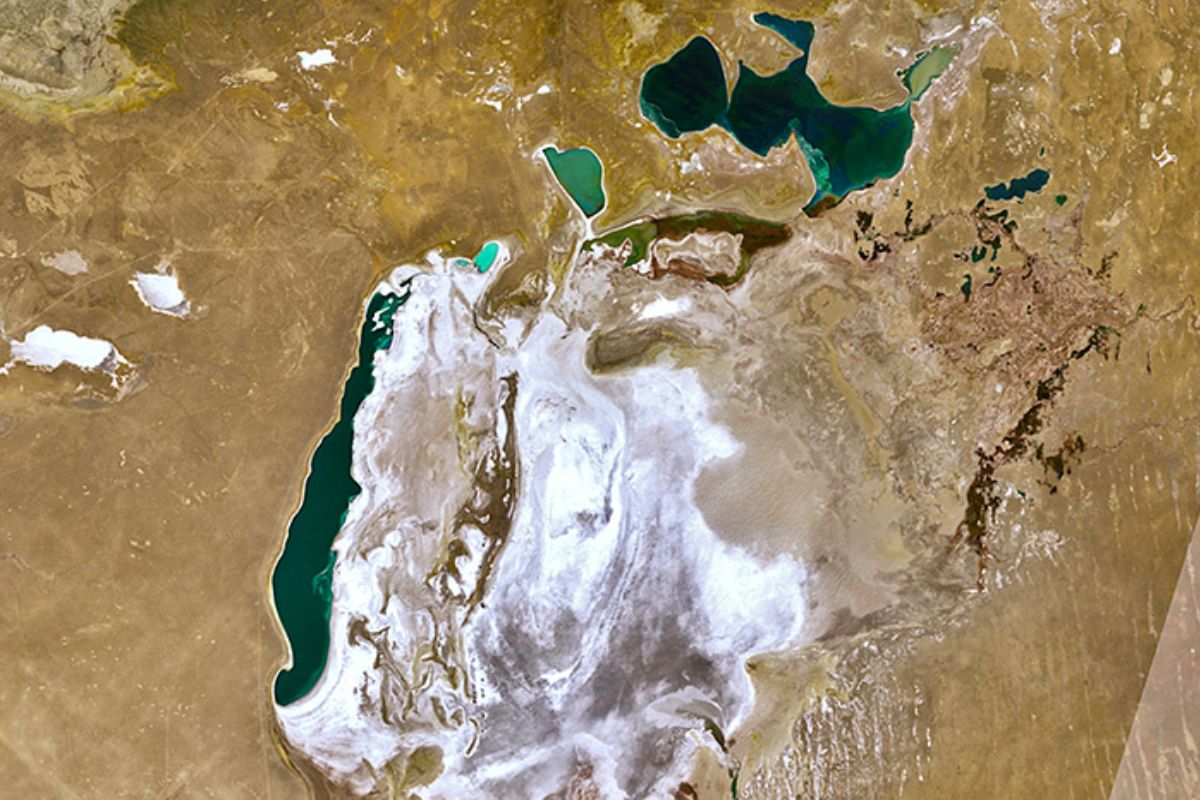
The Sea of Azov, considered the shallowest sea in the world with an average depth of only seven meters, occupies a strategic position between Russia and Ukraine and combines unusual geography, rivers loaded with sediments, and a history that connects ecology, commerce, and geopolitical disputes
The Sea of Azov rarely attracts attention on world maps, but its historical and geographical significance is much greater than its size suggests. Located between Russia and Ukraine, it is considered the shallowest sea in the world, with an average depth of only seven meters.
Despite its small size, the Sea of Azov has always played a strategic role. Its rivers, sediments, and shallow waters have created an extremely productive ecosystem, while its geographical position has turned the region into a trade route, border of empires, and a sensitive point in contemporary geopolitics.
A Small Sea with Unique Geographical Characteristics
The Sea of Azov is connected to the Black Sea by a narrow passage known as the Kerch Strait, which is about 3.1 kilometers at its narrowest point.
-
The world’s first octopus farm wants to open in the Canary Islands and is already provoking an international reaction: the plan aims to produce 3,000 tons per year.

-
Drought may be creating stronger superbugs in the soil and helping antibiotic resistance reach hospitals, warns a study highlighting a problem that could grow alongside extreme weather.

-
The biggest scam in history: Napoleon’s France deceived the United States by selling them a territory that was Spanish.

-
Why is the Danakil Desert so dangerous? It has unstable terrain and how extreme temperatures and toxic gases turn the region into one of the most hostile environments on Earth.

With an area of approximately 39,000 square kilometers, the sea is similar in size to Switzerland, but what truly makes it unusual is its extremely shallow depth.
The average depth of seven meters, with a maximum of about 14 meters, makes it the shallowest sea in the world.
This characteristic creates very specific environmental effects. In winter, for example, the Sea of Azov can completely freeze, while in summer its waters can warm up quickly.
This seasonal dynamic has shaped how human communities utilize the sea for centuries.
Rivers, Sediments, and Impressive Biological Productivity
Much of the uniqueness of the Sea of Azov comes from the enormous amount of sediments and nutrients carried by the rivers that flow into it.
The two most important are the Don River and the Kuban River, responsible for bringing freshwater and nutrients that feed the entire ecological chain of the region.
Since the sea is extremely shallow, sunlight can penetrate easily into the water, stimulating the growth of phytoplankton, the base of the marine food chain.
This phenomenon has made the Sea of Azov one of the most productive aquatic environments on the planet.
Until the mid-20th century, a single hectare in the region could produce up to 80 tons of fish per year, a figure about 40 times higher than many open oceans.
For decades, this supported fishing communities and entire local economies.
A Young Sea in the Geological History of the Earth
From a geological perspective, the Sea of Azov is relatively recent.
Studies indicate that its current form emerged around 5,000 to 6,000 years ago, although the history of the region is much older.
During the last Ice Age, approximately 18,000 years ago, much of the area that now holds the sea was dry land.
With the thawing and rising ocean levels, the waters of the Mediterranean began to invade the Black Sea basin and, subsequently, the region that would become the Sea of Azov.
Since then, sediments brought by rivers have been slowly filling the basin, continuously modifying the local geography.
This geological process is still ongoing today.
Civilizations and Empires That Disputed the Sea of Azov
The strategic position of the Sea of Azov has transformed the region into a meeting point for different civilizations throughout history.
Greek colonizers established communities in the region as early as Antiquity, calling the sea Lake Maeotis.
Over the following centuries, peoples such as the Scythians, Sarmatians, Huns, and Khazars passed through the region, using the sea both as a trade route and as a natural border.
Later, control of the Sea of Azov also became strategic for empires seeking access to the Black Sea and broader trade routes.
Coastal cities arose and grew around this dynamic.
The city of Taganrog, founded by Peter the Great in 1698, became one of the first Russian naval bases in the sea.
Mariupol, on the northern coast, developed as an industrial center and strategic port for exporting metal products and coal.
Throughout history, the sea has served simultaneously as a bridge and a border between different cultures.
Diverse Ecosystem and Modern Environmental Pressures
Despite its reduced size, the Sea of Azov hosts a significant diversity of species.
Traditionally, the region had more than 80 species of fish and around 300 species of marine invertebrates.
Among the most emblematic animals were the sturgeons, including the beluga sturgeon, which could reach lengths of up to seven meters.
Today, many of these species are threatened.
Dams built on major rivers have reduced the flow of freshwater and sediments, while industrial pollution and intensive agriculture have altered the chemical composition of the waters.
Additionally, overfishing has drastically reduced natural stocks.
Currently, commercial fish catches are less than 10% of what they were in the 1950s.
The Sea of Azov at the Center of Modern Geopolitics
Beyond environmental issues, the Sea of Azov has become a sensitive point in international politics.
Located between Russia and Ukraine and connected to the Black Sea by a strategic strait, it holds military and economic importance.
Ports in the region are crucial for exporting industrial and agricultural products, while control of the access strait influences maritime routes and regional security.
Recent conflicts have intensified global attention on the area.
What once seemed like just a small regional sea has become a relevant piece in international geopolitical disputes.
The Sea of Azov may appear small compared to other seas in the world, but its influence is much greater than its size suggests.
Its shallow waters have shaped extremely productive ecosystems, influenced trade routes, hosted ancient civilizations, and today occupy a strategic position in geopolitical disputes.
The unique geography of the sea continues to determine the fate of the communities that live around it.
Now an interesting question arises.
If such a small sea can influence economy, ecology, and international politics for centuries, how many other seemingly “insignificant” places on the map might hide enormous strategic importance?









Seja o primeiro a reagir!