





 Portuguese
  English
  Spanish
  8 min of reading
  0 comments


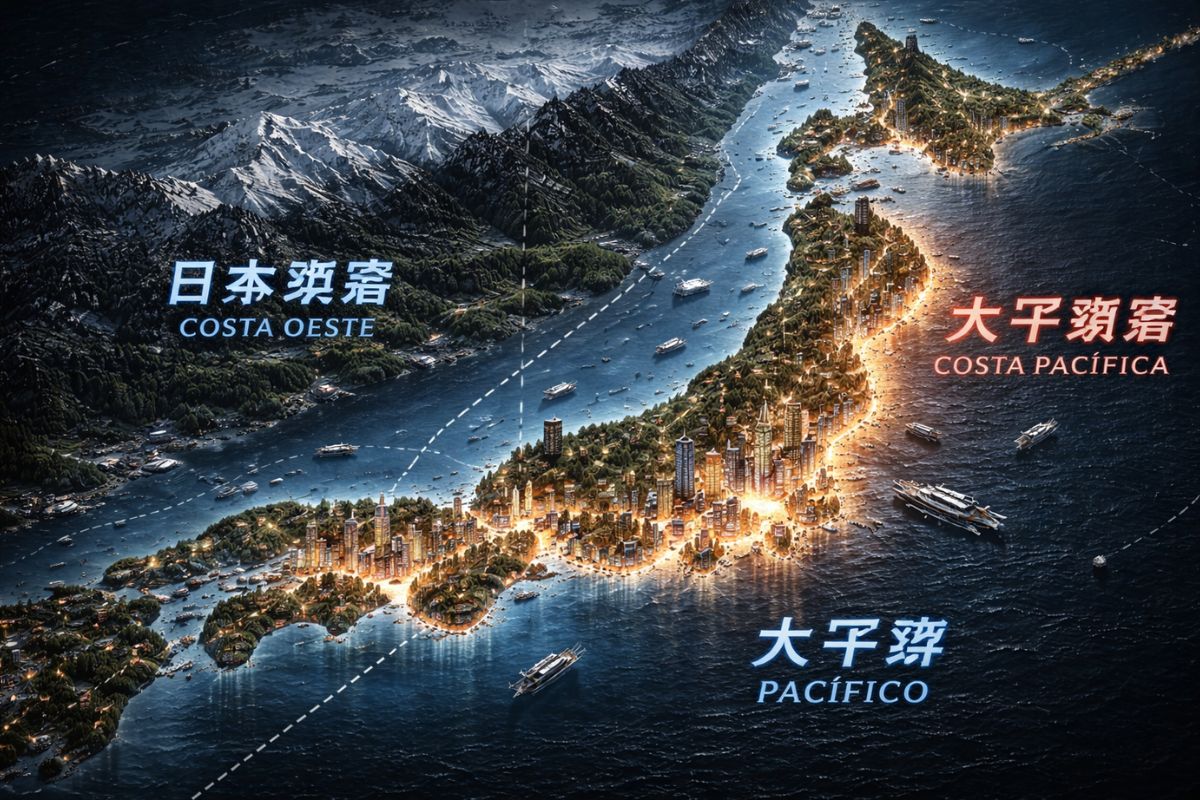
In Japan, the distance between Tokyo, Osaka, and the West Coast seems small on the map, but the Japan Sea tells a different story with narrow plains, extreme snow, historical isolation, and an economic logic that concentrated almost all the great urbanization of the country on the Pacific side for centuries.
In Japan, the difference between the two faces of Honshu is striking when comparing the Pacific side with the Japan Sea side. On one side, Tokyo, Nagoya, and Osaka form an urban sequence that houses about 80 million people. On the other, the West Coast gathers smaller cities, longer rural intervals, and a completely different territorial rhythm. It is not a detail of the landscape. It is a structural pattern.
The explanation cannot be attributed to a single cause. The contrast arose from the sum of relief, climate, trade, political isolation, and infrastructure. Japan did not leave its West Coast less urbanized by neglect. The country was historically pushed toward the Pacific side, where the land was wider, the winter less hostile, and economic connections easier to consolidate.
The Mountains Made Japan Grow to One Side Only
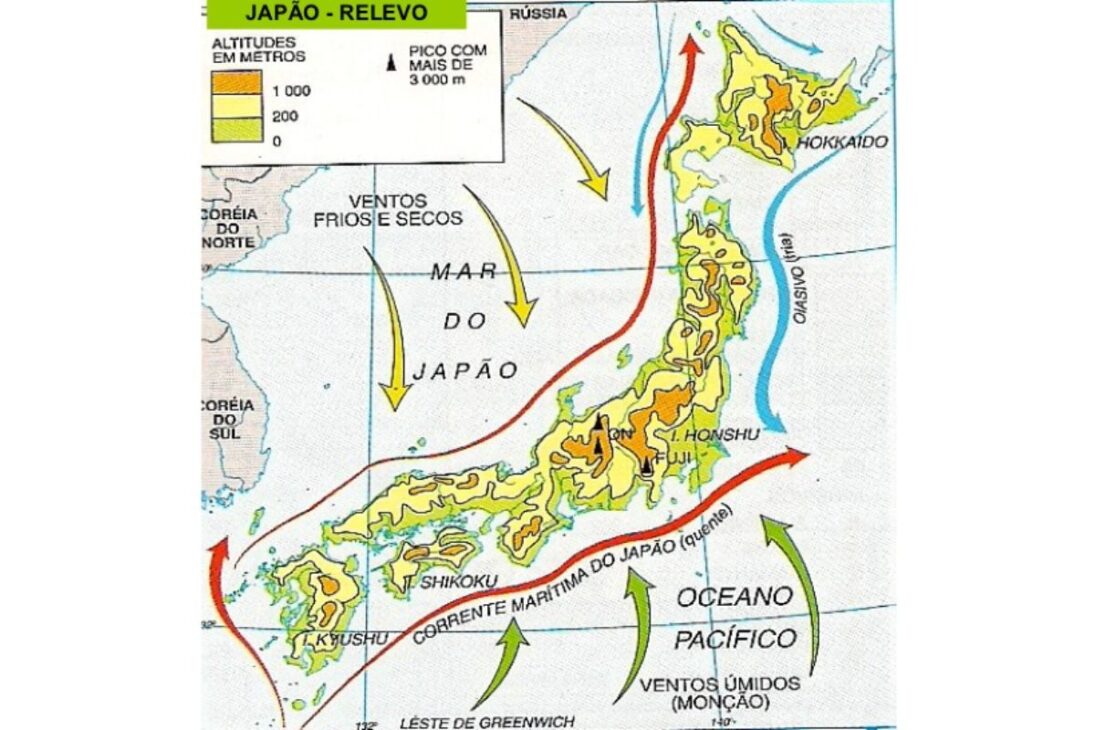
The first answer lies in the center of the island. The Japanese Alps cut through Honshu and separate the country into two territorial worlds. On the Pacific side, Japan found wide and fertile plains, like Kanto around Tokyo and Kansai around Osaka. This terrain provided space for agriculture, ports, urban expansion, and infrastructure projects with more viable costs. Big cities need land, food, circulation, and continuity, and this package existed much more clearly in the east and south.
-
A forgotten cord on the floor of a basement in Vienna leads a plumber to a box containing 30 kilograms of gold with Mozart’s face, hidden before World War II. The treasure, worth 2.3 million euros, was just centimeters away from a worker who ignored the sign a day earlier.
-
A couple buys an old chalet, breaks the kitchen floor for renovation, and finds over a thousand coins of gold and silver hidden since the English Civil War over 4 centuries ago.

-
Rigid bags with their days numbered: new trend prioritizes comfort in 2026.

-
YouTuber creates an excavator equipped with a giant 4.5-meter sword to challenge his brother to a rematch, and the invention quickly goes viral on social media.

On the West Coast, facing the Japan Sea, the design abruptly changes. The mountains descend almost straight into the coastline in several stretches, compressing the cities between slopes and sea. Where there are plains, they are smaller and narrower. This limits expansion, increases costs, and restricts the formation of large urban areas. The numbers reinforce this difference: the Pacific coast of Honshu concentrates about 65% of Japan’s population in less than 40% of the national territory, while the western side of the island gathers about 12% of the population. Geography not only influenced growth. It delimited the possible size of it.
This weight of the relief helps to understand why Tokyo could spread over thousands of square kilometers, while cities on the West Coast became more compact. The issue was not the complete absence of settlement but the lack of land that would allow the same scale of urban multiplication observed in the Pacific corridor.
When looking at the map without considering altitude, it seems that Japan could have distributed large metropolises on both sides of the island. But this ignores the basic fact that a city grows faster when the land allows continuity. On the Japan Sea side, the city meets the sea in front and the mountain right behind.
Tokyo and Osaka Grew Where Trade and Power Were Already Accumulating
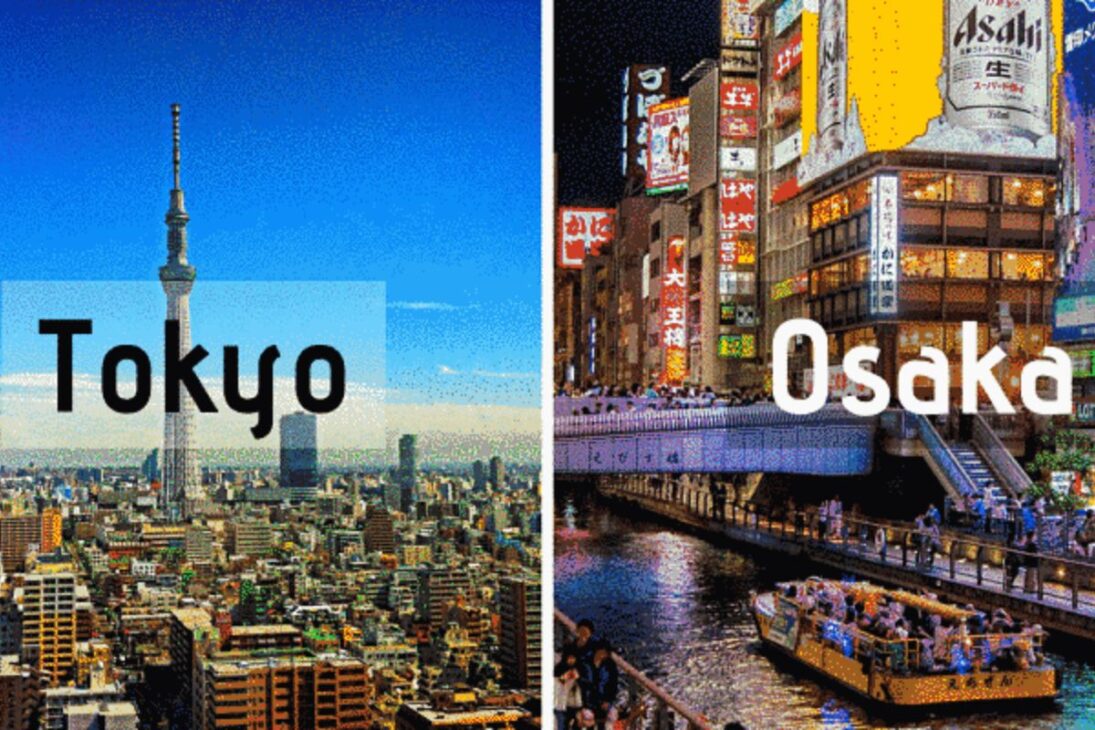
The second piece of the explanation is economic. Before modern industrialization, Japanese maritime trade already favored routes and ports more connected to the south and the Pacific side. The northern coast and the West Coast faced harsher winters, more complicated seas, and a worse internal connection with the rest of the island. This caused the axis of commercial growth to flow toward areas where navigation, agriculture, and political articulation had more stability.
During the Edo period, this logic solidified. Edo, which later became Tokyo, gained weight as a political center. Osaka dominated as the commercial capital. Goods, merchants, and strategic decisions began to circulate increasingly between Pacific and southern poles. The effect was cumulative: more trade attracted more people, more people attracted more services, and more services further reinforced trade.
The period of isolation that began in 1639 deepened this picture. With Sakoku, Japan harshly restricted external trade for over two centuries. When the country closed its doors to the outside, internal trade gained even more relevance, and areas already strong on the Pacific benefited from this redirection. The economy shifted its focus from the outside and started to circulate more intensively within its own territory, but this did not help all regions equally.
When the Meiji era’s modernization began in the late 19th century, the government did not start from scratch. It leveraged what already existed. And what already existed on a more powerful scale was around Tokyo, Osaka, and other Pacific poles. Industrialization did not redistribute the center of the country. It reinforced a concentration that had already existed.
The Japan Sea Pays a Climatic Price That Tokyo and Osaka Almost Don’t Know
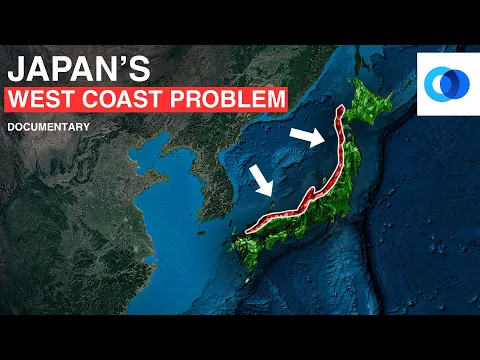

The third explanation is winter. The regions of the Japan Sea face some of the heaviest snowfalls on the planet. In Niigata, snow regularly reaches about 3 meters per year, and higher mountain areas can record up to 10 meters annually. In Tokyo, the average is less than 10 centimeters per year. This difference changes everything, from transportation to trade, from urban routine to the cost of maintaining functioning infrastructure.
The climatic mechanism is straightforward. Cold winds from Siberia cross the Japan Sea, absorb moisture, and dump snow upon reaching the western Japanese mountains. The result is months of gray skies, constant snow, and intense cold on the West Coast, while the Pacific side tends to have a drier and sunnier winter. For densely populated settlements, this weighs heavily. Big cities need regularity, and the climatic regularity of the Pacific is much more favorable.
Historically, this snow reinforced isolation. Communities in the Japan Sea had to organize as smaller, more self-sufficient nuclei, prepared for long periods of climatic difficulty. This allowed for regional survival and continuity but did not favor the kind of urban explosion seen in Tokyo and Osaka. It was not just a matter of discomfort. It was logistics, cost, and predictability.
Even today, with superior technology, winter remains a central part of the explanation. The West Coast is not empty because there was a lack of will to urbanize, but because the territory pushes occupancy into smaller and more spaced formats. When the climate punishes for months, heavy density ceases to be merely an ambitious project and becomes an expensive problem to sustain.
Modern Infrastructure Consolidated the Dominance of the Pacific
When Japan fully entered the industrial era, infrastructure was implanted on the already consolidated economic base. The main Tokaido line, completed in 1889, connected Tokyo, Osaka, and Kobe, becoming the backbone of modern transportation. Then, in the 1960s, high speed reached the same route. The country chose to accelerate precisely the corridor that was already stronger, further amplifying the advantage of the Pacific side.
On the West Coast, progress was much slower. The high-speed railway only began to reach the Japan Sea side from the late 1980s, and some sections were still being completed in 2024. This had a direct effect on investments. Foreign companies and Japanese industries preferred areas with better port, railway, and logistical connections. The result was an even heavier industrial concentration on the other side of the island.
Today, the strip between Tokyo and Fukuoka concentrates about 70% of Japan’s production capacity, while the entire coast of the Japan Sea represents about 15%. The largest Japanese corporations predominantly remained on the Pacific side. This is not just about where cities already existed, but where the country decided to make what already worked better even more efficient.
The mountains exacerbated this imbalance. Before modern transportation, crossing them was risky and slow. Afterwards, it remained expensive. Tunnels, bridges, and rock cuts elevated costs far beyond what would be necessary in wider plains. As the cities on the West Coast were smaller, they did not easily justify such expensive projects. And, without projects, they did not grow enough to justify them later. It was a cycle of blockage, the opposite of what occurred in the Tokyo and Osaka axis.
The West Coast Did Not Disappear, but Followed Another Path Within Japan
This does not mean that the West Coast of Japan failed. It simply developed another economic logic. Niigata stood out for its high-quality rice. Fishing gained weight along the Japan Sea. Hokuriku became a reference for silk and textiles. The region also advanced in hydroelectric and nuclear energy, taking advantage of abundant water, space, and lower population density. The western part of Japan did not turn into a megacity, but it also did not stand still.
More recently, tourism began to explore exactly what was previously an obstacle. Extreme snow attracts winter sports, while mountains and preserved landscapes draw visitors in the summer. Kanazawa, for example, stands out as a success story in regional revitalization efforts. But the general pattern remains difficult to reverse. The population is aging, rural communities, and smaller cities on the west have lost more than 20% of their residents since 1990, and the appeal of Pacific metropolises remains strong.
Japan even launched subsidies for rural relocation, railway expansions, and incentives for remote work, but the center of gravity remains where it has always been more efficient to maintain people, capital, and infrastructure en masse. Tokyo continues to grow, and the urban force between Tokyo, Nagoya, and Osaka remains much greater than any visible arrangement on the West Coast.
In the end, the Japanese division seems extreme because it combines everything at once: mountains as a physical barrier, snow as a climatic brake, trade directed toward the Pacific, and modernization concentrated in the same axis. The Japan Sea side preserved space, silence, and nature. The Pacific side concentrated speed, export, railroads, and metropolises. Two different failures did not emerge. Two functional Japans emerged, but on completely unequal scales.
Japan did not fill the West Coast with megacities by chance or due to simple planning errors. Tokyo and Osaka grew where the relief was more friendly, the winter less aggressive, trade more intense, and the infrastructure more rewarding. Meanwhile, the Japan Sea pushed its cities toward another type of adaptation, smaller, more spaced, and more specialized.
In your reading, does this contrast make the West Coast an underestimated part of Japan or does it show that the country merely followed geography to its logical extremes?








Seja o primeiro a reagir!