





 Portuguese
  English
  Spanish
  5 min of reading
  0 comments


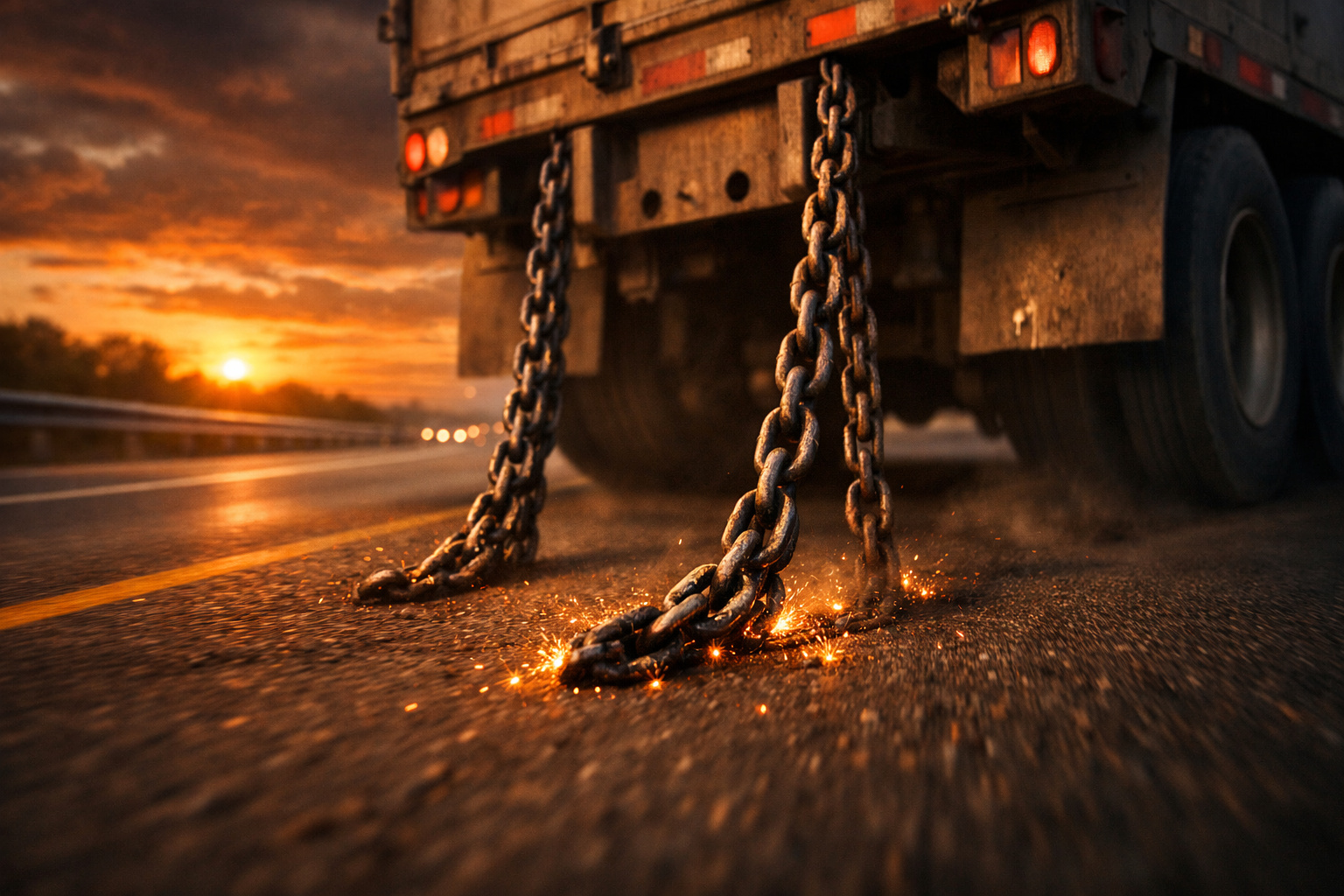
Few People Know, But The Chains Hanging On The Back Of Some Trucks Have An Important Technical Function: Dissipating Static Electricity Accumulated In The Vehicle And Reducing Risks During The Transportation Of Flammable Cargo.
Anyone who frequently drives on highways has probably noticed a curious detail on some trucks: metal chains hanging on the back of the vehicle, often dragging on the asphalt. To most people, this element seems like just an improvised or unimportant accessory. However, it is connected to a little-known physical phenomenon outside engineering: static electricity accumulated in large vehicles. Under certain conditions, trucks can accumulate electric charges in their metallic structure. In vehicles transporting fuels or flammable products, this phenomenon can pose a real risk of sparks. The metal chains appear precisely as a simple solution to help dissipate this electricity.
Although it is a discreet detail, it is part of safety practices used in transporting sensitive cargo in different parts of the world.
Why Trucks Can Accumulate Static Electricity
Static electricity is a common phenomenon in everyday life. It occurs when surfaces come into contact or move against each other, causing the transfer of electric charges. In the case of trucks, several situations can generate this accumulation of charge:
-
Trump wanted to spend $400 million on the White House, but the courts prohibited the million-dollar construction.

-
How the Egyptians erected giant structures like pyramids, temples, and obelisks without modern technology, cranes, or engines still amazes the world and reveals the power of engineering based on ramps, levers, ropes, and colossal organization.

-
The induction stove you know may be numbered: a new invisible technology hides the stove under the stone countertop, heats only the pot, and promises to cook up to 50% faster while using less energy.

-
Garlic with pure honey undergoes a natural fermentation that transforms the two ingredients into a versatile condiment for marinades, sauces, and roasted vegetables, and it can also be used as a natural treatment in your garden.


- friction between tires and asphalt
- movement of liquids inside tanks
- friction of the air with the vehicle’s body
- flow of fuel during loading or unloading
This process is known in physics as triboelectric effect, which occurs when different materials come into contact or move in relation to each other.
In large vehicles, especially those that travel long distances, this charge can gradually accumulate in the metallic structure of the truck. The problem arises because tires act as electrical insulators. This means that the charge accumulated in the vehicle does not always dissipate easily into the ground.
The Risk Of Sparks In Trucks Transporting Fuels
In regular trucks, static electricity rarely represents a significant problem. But the situation changes when the vehicle transports flammable cargo, such as:
- gasoline
- diesel
- kerosene
- industrial solvents
- volatile chemicals
In these cases, flammable vapors may be present in the environment around the truck, especially during refueling, loading, or unloading operations. If an electrostatic discharge occurs, that is, a sudden release of the accumulated charge, a small electric spark may arise.

Although small, this spark can be enough to ignite flammable vapors. For this reason, transportation companies and fuel terminal operators adopt different measures to reduce the accumulation of static electricity.
How The Chains Help Dissipate Electricity
The chains hanging on the back of the truck act as a type of simple grounding. Since they are made of metal, they easily conduct electricity.
When the chain comes into contact with the ground, it creates a pathway through which the electric charge accumulated in the truck can be gradually discharged. This process helps reduce the accumulation of static electricity throughout the journey.
The solution is relatively simple: one end of the chain is attached to the vehicle’s metal structure, and the other remains in contact with the ground while the truck is moving. Thus, the chain acts as a conductive channel between the vehicle and the ground. Although the method is simple, it can help decrease the risk of abrupt electrical discharges.
Not All Trucks Use Chains
Although they are visible on some roads, chains are not used on all trucks. They appear more frequently on specific vehicles, such as:
- tank trucks transporting fuels
- trucks transporting flammable chemicals
- vehicles used in industrial environments with flammable vapors
Moreover, in modern fuel loading operations, other more sophisticated solutions are used.
Many terminals use grounding systems with electric cables and sensors, which monitor whether the truck is properly connected to the system before refueling begins. These systems ensure that any electric charge is safely discharged during the process.
Why Some Chains Are Still Used On The Roads
Even with modern technologies, chains continue to appear on some trucks for various reasons.
One reason is simplicity. The metal chain is a passive device that does not rely on sensors or electronic equipment. It can help dissipate charges during the vehicle’s movement without needing the driver’s intervention.

Additionally, in some countries or companies, the use of chains is still part of traditional safety practices adopted in fuel transport. In environments where the presence of flammable vapors is possible, any additional risk reduction measure can be considered useful.
Not Always The Goal Is Static Electricity
Another curious detail is that not all chains hanging on trucks have exactly the same function. In some cases, chains or metal strips may also be used as visual indicators or auxiliary devices, for example:
- alerting drivers about the height of the back of the vehicle
- producing noise when in contact with the ground
- indicating the approach of obstacles in industrial areas
These variations explain why some chains may be seen on trucks that do not transport fuels. Nevertheless, the most well-known and cited use in safety manuals continues to be the dissipation of static electricity.
A Small Detail That Goes Unnoticed On The Highways
For those observing trucks on the roads, the chains may seem like just a curious detail. But behind this seemingly simple element lies a physical principle linked to static electricity and safety measures adopted in transporting sensitive cargo.
In vehicles transporting fuels or flammable products, reducing the accumulation of electric charges can help decrease the risk of sparks during loading and unloading operations.
Thus, a small piece of metal dragging on the asphalt can play an important role in the safety of a logistics system that moves millions of liters of fuel every day. And that is precisely why, even being a discreet detail, chains continue to appear on the back of many trucks crossing the highways.








-

-

2 pessoas reagiram a isso.