





 Portuguese
  English
  Spanish
  3 min of reading
  0 comments


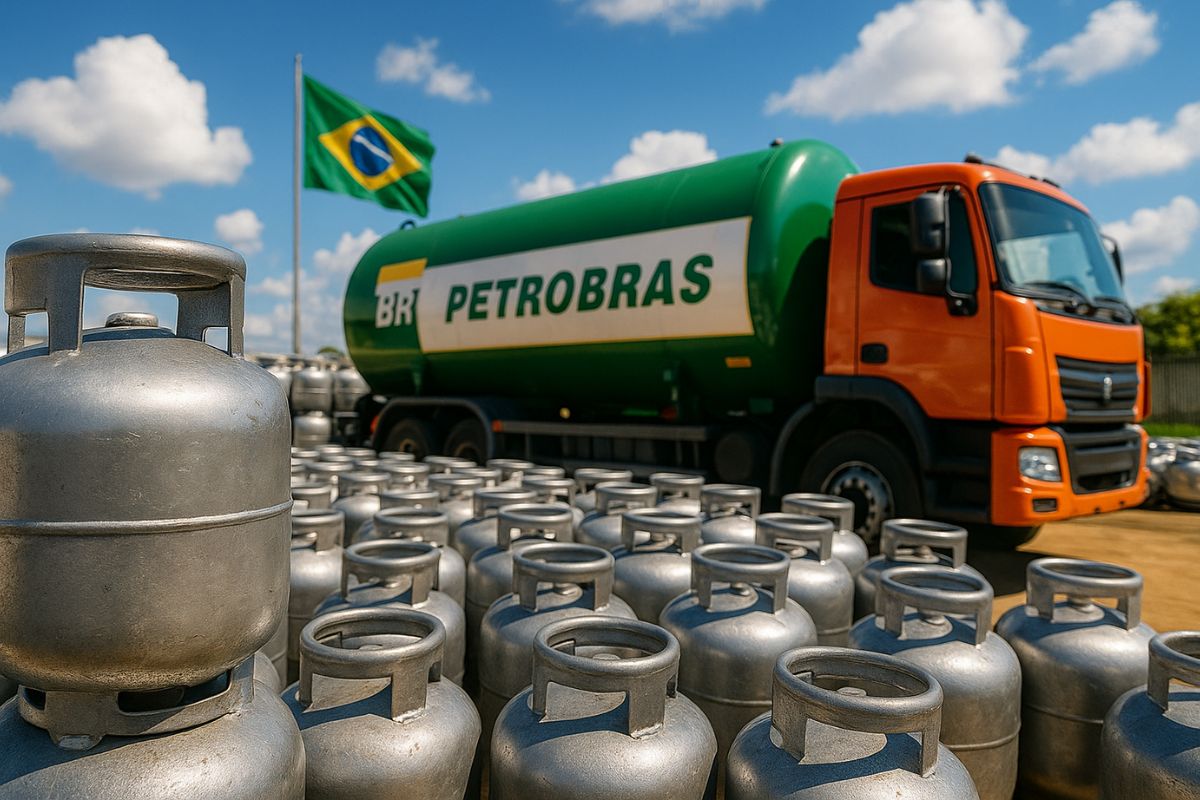
Decision Meets Government Request and May Ensure Free Gas for 17 Million Low-Income Families.
A Petrobras will resume investing in the distribution of gas cylinders, re-entering a segment it left in 2021 with the sale of Liquigás to Ultrapar. The measure was approved by the state-owned company’s Board of Directors and is part of the new Strategic Plan, focusing on profitable businesses and low-carbon solutions.
According to a report by O Globo, the decision responds to a direct request from President Luiz Inácio Lula da Silva, who had already expressed dissatisfaction with the price paid by the public for cooking gas. The goal is to reduce costs for low-income families and increase access to this essential input.
Resumption After Four Years Out of the Sector
Petrobras operated for decades in the distribution of LPG through Liquigás but withdrew from the segment in 2021 during Jair Bolsonaro’s government. Now, with the new guideline, the company intends to return to the market in partnership with other companies, seeking integration with different businesses and markets.
-
Brazilian city bets on the business environment to generate jobs and attract investments in the energy sector — secretary reveals strategy at Macaé Energy 2026.

-
50 viaducts, 4 tunnels, 28 bridges, and 40 kilometers of bike paths: BR-262 in Espírito Santo will receive 8.6 billion reais for the largest engineering project in the state’s history, inspired by the Immigrant Highway in São Paulo.

-
Brazil produces too much clean energy and doesn’t know what to do with it: over 20% of solar and wind capacity was wasted in 2025 while investors flee and 509 renewable generation projects were abandoned in the last year.

-
Piauí will produce a new fuel that replaces diesel without needing to change anything in the truck’s engine and reduces pollutant gas emissions by half: truck drivers from all over the Northeast are already celebrating the news that will arrive later this decade.


According to the official statement, the state-owned company also aims to offer sustainable solutions, integrating gas distribution with energy transition and low-carbon initiatives. The strategy fits with the goal of maintaining profitability while having a direct social impact.
Government Pressure to Lower Prices
During an event in São João da Barra (RJ), Lula criticized the high price of gas cylinders, which can reach R$ 140 in some states, while production costs for Petrobras are around R$ 37. For the president, this difference represents excessive profits for a few at the expense of millions of consumers.
The government wants to ensure that 17 million families registered in CadÚnico receive gas for free, easing household budgets and ensuring food security. Lula argued that this benefit is not just about “governing for the poor,” but stimulating the entire productive chain, as the money saved will be reinvested in consumption.
Expected Impacts on the Market
With Petrobras’s return to distribution, greater competition and possible price reductions are expected, pressuring current distributors to reconsider their margins. The plan may also increase supply predictability, especially in more remote areas, where logistical costs make the product more expensive.
Experts believe that, if well implemented, the strategy can align financial returns for the state-owned company with social benefits, reinforcing the company’s image with public opinion.
And you? Do you think that Petrobras should regain control of part of the gas cylinder distribution to ensure lower prices? Or do you believe the private market should remain responsible? Leave your opinion in the comments — we want to hear from those who live this reality.





-

-

2 pessoas reagiram a isso.