





 Portuguese
  English
  Spanish
  4 min of reading
  0 comments


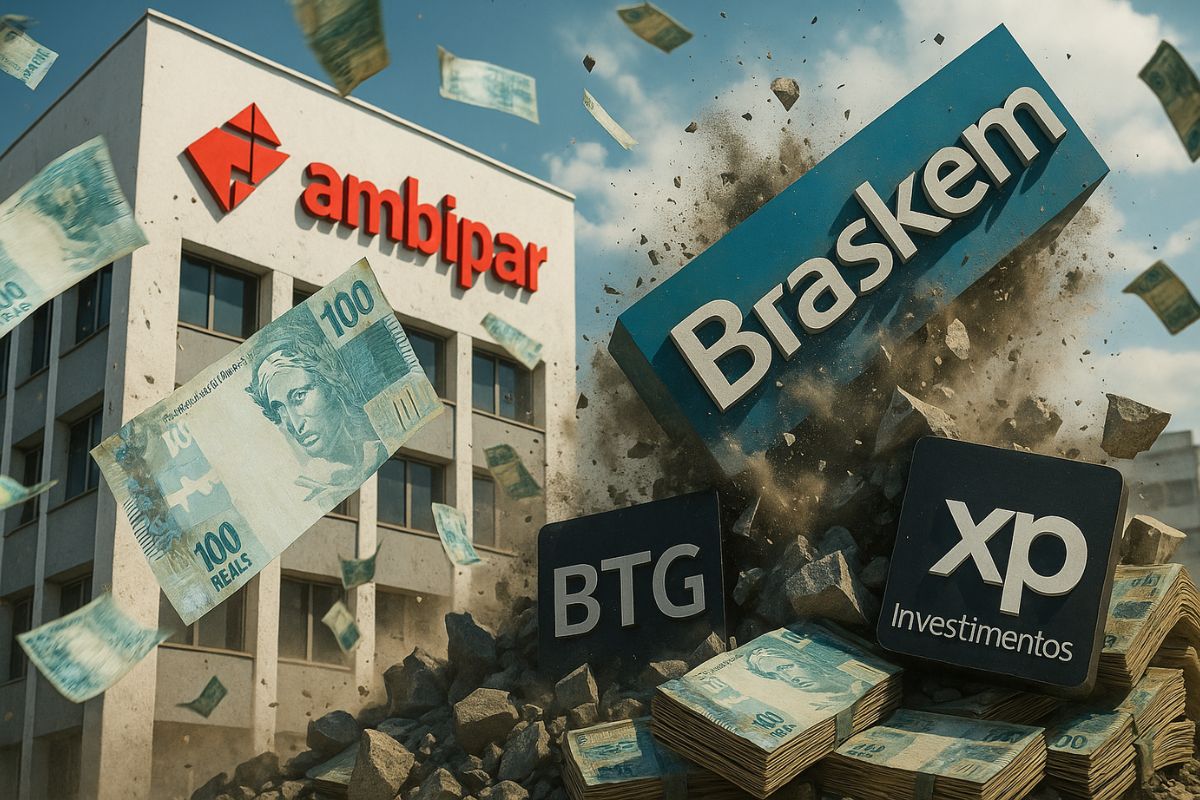
The Fall of Ambipar and Braskem Triggered the Early Maturity Clause in COEs Sold by Major Brokerages, Causing Investors from XP and BTG to Lose Almost All Their Capital and Revealing Serious Transparency Failures in the Structured Products Market
The fall of Ambipar and Braskem raised an alert in the Brazilian financial market. The drop in the shares of both companies triggered an early maturity clause in Structured Operations Certificates (COEs) sold by major brokerages like XP and BTG Pactual. The result was devastating: investors lost up to 93% of the capital invested in a matter of days.
These COEs were backed by debt securities from the companies. When the shares of these companies plunged more than 50%, the contract was automatically terminated. In practice, the forced liquidation turned an investment marketed as “moderate” into an almost total loss, exposing the real risk of products that many investors believed were “capital protected.”
How the Early Maturity Works That Took Everyone by Surprise
The early maturity clause is a contractual condition that allows for the immediate settlement of the security when an indicator falls below a certain threshold.
-
Oil surged to $115 a barrel due to the war in the Middle East, and diesel in Brazil has already risen to R$ 7.45 per liter, while the United States…

-
Brazilian city bets on the business environment to generate jobs and attract investments in the energy sector — secretary reveals strategy at Macaé Energy 2026.

-
50 viaducts, 4 tunnels, 28 bridges, and 40 kilometers of bike paths: BR-262 in Espírito Santo will receive 8.6 billion reais for the largest engineering project in the state’s history, inspired by the Immigrant Highway in São Paulo.

-
Brazil produces too much clean energy and doesn’t know what to do with it: over 20% of solar and wind capacity was wasted in 2025 while investors flee and 509 renewable generation projects were abandoned in the last year.


In the case of the fall of Ambipar and Braskem, the trigger was the devaluation of bonds, corporate credit securities, above 50%.
With the breach of this limit, the contract ended before the deadline and investors’ money was returned with huge losses.
The central problem lies in the lack of liquidity and the difficulty in understanding the structure of these products. The COEs were set to mature only in 2030 and 2031, which prevented investors from redeeming the amount beforehand.
As the companies’ conditions worsened over time and there was no possibility of exit, the investor was stuck with a collapsing asset, without any real protection against credit risk.
The Illusion of Moderate Risk and the Weight of Commissions
One of the most controversial points is how these products were sold.
Many clients reported that the COEs were offered as moderate risk investments with “partial capital protection.”
However, the early maturity clause and the companies’ high leverage made the risk much higher than presented during the sale.
Experts note that COEs pay high commissions to advisors and consultants, which can influence the recommendation of the products.
As the promised profitability seemed attractive and the structure seemed safe, many investors trusted intermediaries without understanding the actual functioning of the contract.
In the end, the combination of commercial incentives and lack of transparency created a scenario of widespread loss.
The Fragility of the Investor and the Role of Brokerages


The episode reignites the debate about the responsibility of brokerages and the level of information provided to clients.
Although the investor needs to formalize electronic acceptance and confirm that they have read the terms, most do not understand the technical language or the risks detailed in the contractual clauses.
In practice, the responsibility falls on the client, while institutions claim to have fulfilled their legal obligations.
For economist Marília Fontes from Nord Investimentos, the case highlights the importance of investors understanding exactly how the asset they are investing in works.
Besides knowing the risks, it is essential to evaluate who the advisor recommending the product is and what incentives they receive.
The lack of clarity regarding the remuneration of intermediaries may distort investment decisions and create conflicts of interest.
What Investors Can Learn from the Case
The collapse of COEs linked to the fall of Ambipar and Braskem is a hard lesson about financial education and risk management.
Structured products can be interesting for those who understand their mechanisms, but they are inadequate for those seeking safety and predictability.
The fact that major brokerages offered these securities as “conservative” alternatives exposes a broader problem of communication and trust in the financial market.
The main lesson is simple: never invest in something you do not fully understand.
Products with sophisticated names and “guaranteed” profitability often hide complex structures and disproportionate risks.
In a scenario of high interest rates and leveraged companies, the promise of quick returns can be too costly.
The fall of Ambipar and Braskem revealed the gaps in a market that is still not very transparent.
The triggering of the early maturity clause showed that even products sold by large institutions can hide poorly explained systemic risks.
While the final investor suffers losses, the system remains protected by contracts filled with fine print.
What do you think, should brokerages be held accountable for not clearly warning about the risks of these products? Have you ever had a similar experience with COEs or structured investments? Leave your opinion in the comments and share how you perceive the responsibility of each party in this case.










-

Uma pessoa reagiu a isso.