





 Portuguese
  English
  Spanish
  3 min of reading
  0 comments


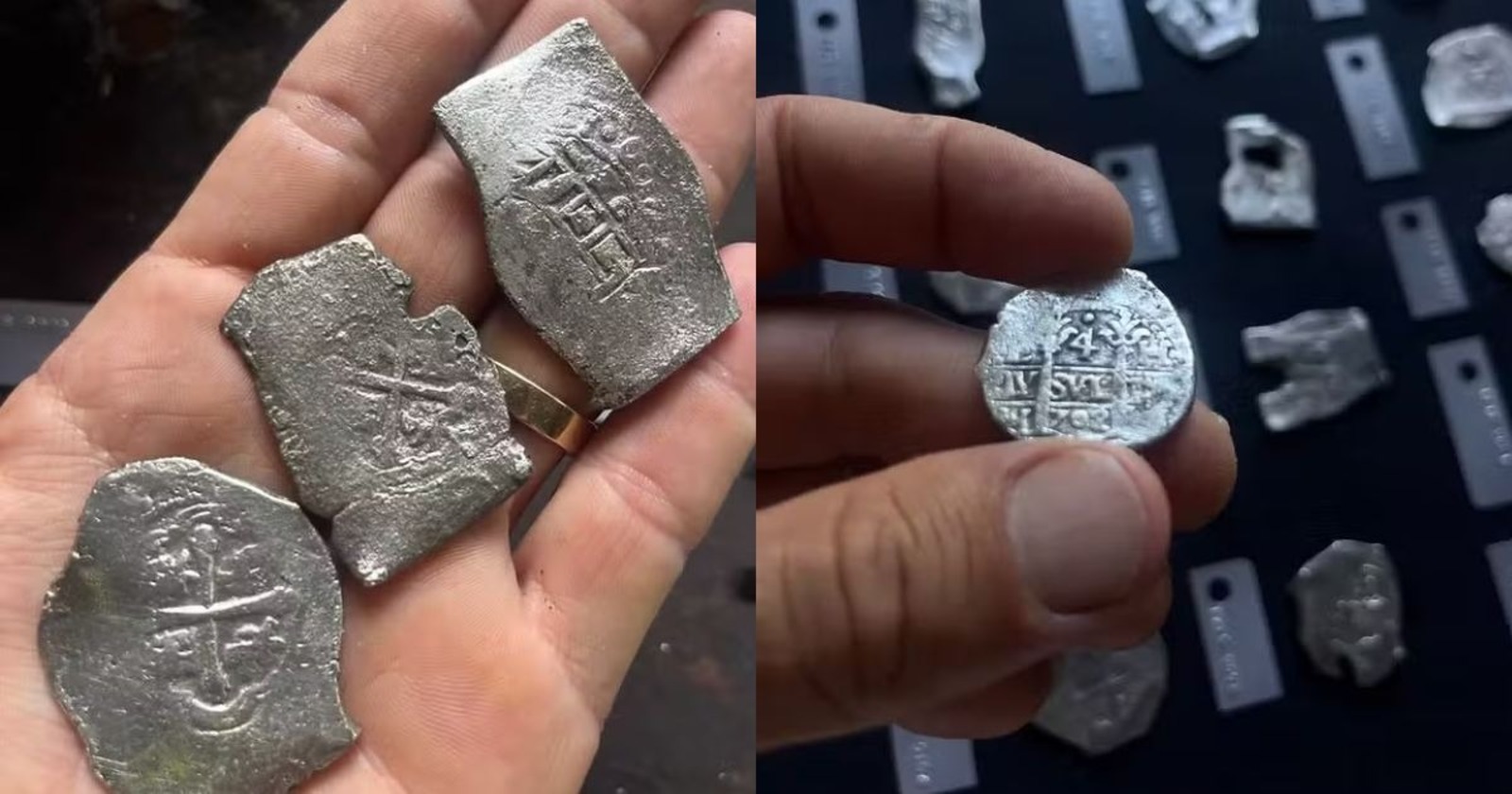
Three Centuries After the Treasure Fleet Shipwreck, an American Team Located More Than a Thousand Coins and Colonial Artifacts off the Coast of Florida, Rekindling the Fascination with One of the Greatest Maritime Disasters of the Spanish Empire
More than three centuries after the shipwreck of the so-called Treasure Fleet, American divers discovered a collection of gold and silver coins valued at R$ 5.3 million.
The find rekindled the fascination with one of the greatest maritime tragedies of the Spanish Empire and raised the question of who will keep the precious relics.
350-Year Mystery Solved
The discovery ends a mystery that lasted about 350 years. In 1715, 11 Spanish ships set sail from Havana, Cuba, bound for Europe.
-
With the war silencing the wells of Iran, Brazil set a record of 5.3 million barrels per day and rose in the global oil ranking without anyone noticing — the pre-salt now accounts for 80% of everything that comes from the seabed.

-
After years of delays and billions invested, the Golden Pass megaterminal in Texas is about to start exporting liquefied gas and will reshape the global energy map amid the Middle East crisis.

-
The artificial intelligence market within the oil industry is worth billions today and will more than double by 2033, and those who do not get on board now with the race for digital twins and autonomous drilling will be left behind.

-
Petrobras quietly installed an artificial intelligence system called Smart Tocha in six of its largest refineries, and the technology independently controls the burning of gases to reduce emissions without any operator needing to intervene.

The vessels carried riches extracted from Latin America, including precious metals and jewels that, in today’s values, would be equivalent to R$ 2.14 billion.
However, just a few days after the voyage began, the fleet was struck by a devastating hurricane off the coast of Florida.
The disaster caused the death of more than a thousand crew members and scattered the treasure across miles of ocean floor.
Since then, the region has become a point of interest for treasure hunters and archaeologists.
How the Treasure Was Found
The rescue operation, conducted in the last quarter, involved the M/V Just Right. The team retrieved 1,051 silver coins, five gold coins, and various preserved artifacts.
Many still display the original mintings from the old Spanish colonies in Mexico, Peru, and Bolivia.
“It’s like finding something you thought was lost forever,” said Captain Levin Shavers, who was in charge of the expedition.
The mission was conducted by 1715 Fleet – Queens Jewels LLC, a company specializing in shipwreck searches and recovery of historical artifacts.
For diver Mike Perna, the work is still far from over. “With each dive, we discover only a fragment of a much larger story. At least five of the 11 ships have yet to be located.”
Dispute Over Ownership of the Treasure
Although the company located the material, possession of the coins will not be immediate. According to Treasure Coast Newspapers, the recovered goods are held under the custody of the United States District Court until their legal disposition is determined.
The state of Florida is entitled to retain up to 20% of the total, according to local legislation. The remainder will be divided between the salvage company and the Spanish government, which claims part of the treasure as historical and cultural heritage.
The situation rekindles an old debate about who owns the recovered goods from the seabed—especially when involving colonial shipwrecks of great historical significance.
Historical Value Surpasses Monetary Value
According to Sal Guttuso, operations director of the company responsible for the expedition, the true value of the coins lies not only in the precious metal. “Each coin is a piece of history, a testament to the Golden Age of the Spanish Empire,” he stated.
He explains that the pieces represent a living narrative about transatlantic trade and the risks of colonial routes. “The treasure is not just gold and silver. It is memory, culture, and a reminder of the price paid for maritime expansion.”
Next Destination for the Relics
Currently, the coins and artifacts are undergoing a rigorous cleaning and conservation process. After this stage, they are expected to be displayed in Florida museums, where the public can see up close part of what remains of the Treasure Fleet.
The exhibit aims to preserve the cultural heritage and allow the events of 1715 to continue being told to new generations.
The team of divers states that the recovery is just the beginning. There are still unexplored areas along the east coast of Florida, where other fragments of the missing fleet may be hidden.
“Each discovery is a new chapter of the same story,” concluded Captain Shavers. “And as long as there is something to be found, we will keep diving.”
With information from ND Mais.




-

-

3 pessoas reagiram a isso.