





 Português
  Inglês
  Espanhol
  4 min de leitura
  0 comentários


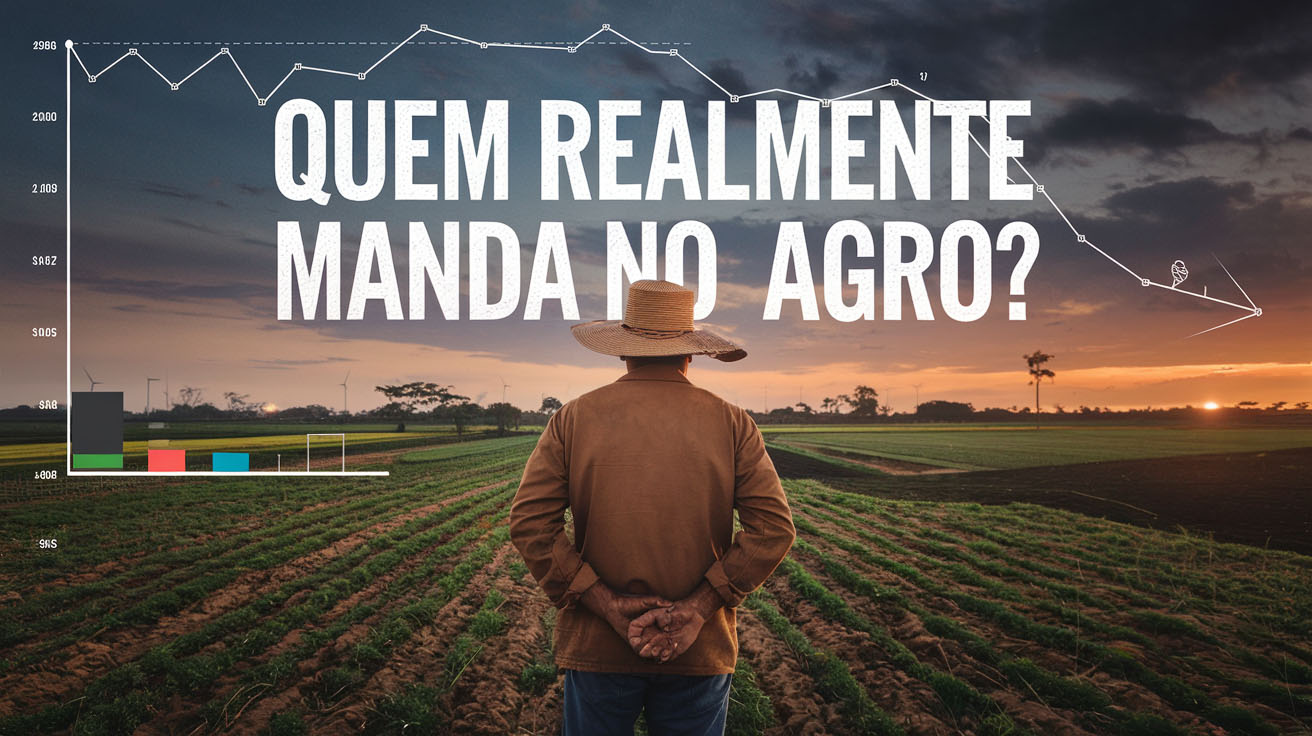
Who Finances Agriculture in Brazil? The Truth Will Surprise You!
The Brazilian agribusiness, recognized as one of the pillars of the national economy, moves billions and generates a significant portion of the country’s GDP.
However, contrary to the popular narrative that suggests substantial government support, the reality is quite different.
Those who really finance rural production in Brazil are the producers themselves and private credit, a truth that is far from being recognized by a large part of the population.
-
The world’s first octopus farm wants to open in the Canary Islands and is already provoking an international reaction: the plan aims to produce 3,000 tons per year.

-
Drought may be creating stronger superbugs in the soil and helping antibiotic resistance reach hospitals, warns a study highlighting a problem that could grow alongside extreme weather.

-
Alone, the producer applies 7,400 hectares with the T100 drone in an optimized structure, replaces the generator with a silent battery, and demonstrates how technology reduces costs, increases productivity, and even challenges the uniport in the field.

-
The biggest scam in history: Napoleon’s France deceived the United States by selling them a territory that was Spanish.


The scarcity of public resources directed towards Brazilian agriculture is directly linked to the impact this has on consumers’ wallets. But why does this happen and how does it affect the country’s economy?
Little Government Support: Brazil at the Bottom of Agricultural Subsidies
According to an article published by Jean Gonçalves and Kamila Souza from João Domingos Advogados, on the Compre Rural portal, data from the Organization for Economic Cooperation and Development (OECD) shows that Brazil ranks last in a list of 20 countries regarding the percentage of government subsidies directed to agriculture.
Countries such as Iceland, Norway, South Korea, and Japan have allocated large percentages of their budgets to the agricultural sector, ranging from 37% to 58%.
In Brazil, this figure is only 3%, which highlights the lack of incentive from the federal government for agribusiness.
This data is crucial for understanding the foundation of Brazilian agricultural financing: private resources.
This means that producers are largely responsible for raising the necessary funds to sustain the country’s rural production on their own.
How Do Rural Producers Finance Agriculture?
According to the National Association of Agricultural and Veterinary Input Distributors (ANDAV), 40% of agribusiness financing in Brazil comes from input suppliers.
Only 7% comes from public banks, which represents a negligible amount compared to the sector’s needs.
To address this deficit, farmers resort to alternatives such as the Rural Producer Note (CPR), Agribusiness Credit Letters (LCA), Agribusiness Credit Rights Certificates (CDCA), and Investment Funds in Agroindustrial Chains (Fiagros).
These tools are essential to ensure the economic viability of the sector, although they also imply a heavy financial burden.
One of the main issues permeating this scenario is the high cost of private financing.
Producers face interest rates ranging from 25% to 35% per year, significantly increasing the cost of harvests and undermining the sector’s competitiveness in the global market.
The Safra Plan and Its Limitations
Although Brazil has a program aimed at agricultural financing, the Safra Plan, the reality is that it covers only a fraction of the total cost of the harvest.
Only 25% of the amount needed for a harvest in Brazil is covered by the Safra Plan, leaving the remainder of the financing to rural producers and private credit.
In 2020, the rural credit market moved about R$ 700 billion, but only one third of this amount came from public and private sources, with the rest being funded directly by farmers and the input industry.
High-Interest Loans: A Challenge for Producers
This high cost of financing directly impacts the country’s agricultural production, making the activity less profitable and riskier.
With exorbitant interest rates, many rural producers face difficulties in remaining competitive in the market, especially when compared to other countries that receive more substantial government support.
In addition, another recurring problem is abusive practices in the sector, such as tied selling.
In many cases, producers are required to purchase additional products or services as a condition for obtaining financing, further worsening farmers’ financial situations.
Bureaucracy and Challenges in Accessing Rural Credit
Excessive bureaucracy is also one of the greatest obstacles for rural producers in Brazil.
According to a survey conducted by the Confederation of Agriculture and Livestock of Brazil (CNA) and the National Rural Learning Service (Senar), over 38% of producers have never contracted rural credit, with most facing difficulties accessing available credit lines.
Among the main barriers are delays in credit release, required guarantees, and strict evaluations of indebtedness capacity.
The Reality of Rural Credit in Brazil
It is much more complex than many imagine, and the current financing system has not been effective in ensuring the sector’s sustainability.
With the decline in the number of credit operations and the decrease in released amounts, the situation is becoming increasingly difficult for those relying on agribusiness to generate wealth and jobs in the country.
The Brazilian Agro: Resilient, But For How Long?
Despite this challenging scenario, agribusiness continues to be the locomotive of the Brazilian economy, sustaining a trade balance surplus and ensuring domestic supply.
However, the cost of private financing and the lack of government support are causing producers to become increasingly overburdened.
The sector’s competitiveness is at stake, and the capacity for sustainable growth is being compromised.
If Brazil Wants to Remain Competitive in the Global Market
It is necessary to rethink agricultural financing policies.
The country needs a structured and urgent reform of its agricultural subsidy policies, so that producers can truly rely on state support.
The Brazilian agro survives, but for how long will it be able to continue carrying alone a sector that represents almost 25% of the national GDP?
The answer to this question will depend on the choices made by governments regarding the future of agricultural financing.








Seja o primeiro a reagir!