





 Portuguese
  English
  Spanish
  7 min of reading
  1 comment


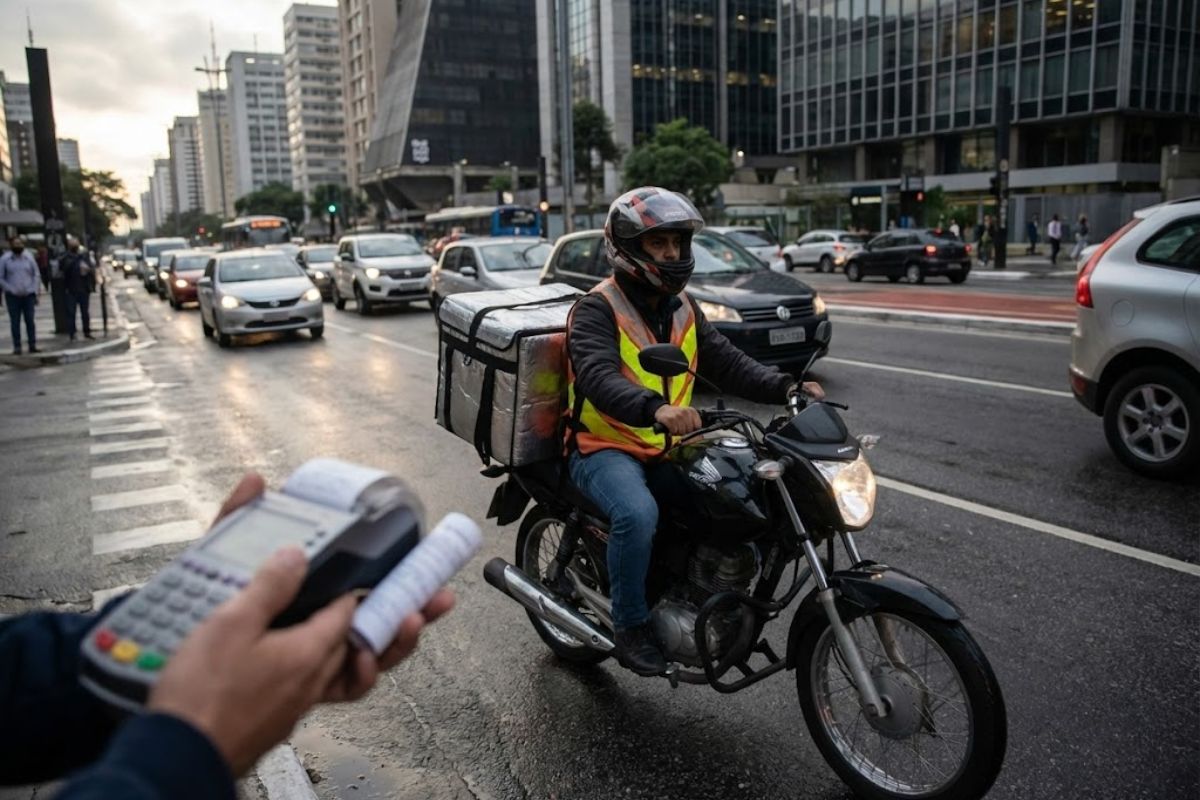


Labor Rule Requires Companies to Pay Hazard Pay of 30% on the Base Salary of Those Who Use Motorcycles for Work, Even If the Employment Record Does Not Say Motoboy. The Amount Includes Vacation, 13th Salary, and FGTS, and Can Be Collected in Court for Five Years, with Simple Evidence Today.
The labor rule was highlighted with a message that is often ignored in the daily operations of companies: those who use motorcycles for work, traveling on public roads in the service of their employer, are entitled to hazard pay of 30% on their base salary, even without a formal job title of motoboy.
It was emphasized that the hazard pay is included in compensation and affects vacation, 13th salary, and FGTS. When payment does not occur, the worker can turn to court to claim up to five years of owed amounts, with monetary correction and submission of simple evidence of motorcycle use for work.
What Characterizes Hazard Pay When Using a Motorcycle
The hazard pay is associated with continuous exposure to traffic risks during the workday.
-
The Senate approves a bill that criminalizes misogyny, hatred, or aversion towards women, and includes the crime in the Racism Law with a penalty of up to 5 years.

-
Chamber Approves Bill That Allows Pepper Spray for Women Over 16 and Imposes Strict Rules for Purchase, Possession, and Use as Self-Defense

-
Chamber Approves Law to Combat Leucaena, Fast-Growing Plant That Dominates Land and Threatens Native Species in Various Regions of the Country

-
Asset Division: Know What Cannot Be Divided in Case of Divorce


The central criterion is the professional use of the motorcycle as a work tool, with constant travel on public roads ordered by the company, whether for deliveries, visits, collections, external service, or other tasks outside the employer’s premises.
In this context, hazard pay is not to be confused with voluntary benefits. It is a legally mandated compensation when the work involves heightened traffic risk, and the routine involving the motorcycle becomes the element that defines the obligation to pay the 30%.
Who Is Entitled: Beyond Motoboy, Delivery Persons, and External Functions
The right to hazard pay is described as exclusive to employees who need the motorcycle to perform work functions on a daily basis.
This includes contracted motoboys and delivery persons but also encompasses any professional who makes constant journeys on public roads in the service of the company using a motorcycle as a means to perform their tasks.
The practical point is habituality. If the motorcycle is a recurring work instrument and the employee remains exposed to traffic risks during work hours, the hazard pay becomes due, regardless of how the position is internally designated.
Why the Job Title on the Record Does Not Determine the Right to Hazard Pay
The labor rule makes it clear that the worker does not need to be registered as a “motoboy” in their employment record to receive hazard pay.
What matters is the reality of the routine, with the motorcycle used to fulfill orders, make deliveries, conduct visits, attend external services, and travel on public roads for the company.
This detail avoids a common distortion: companies that maintain the employee as “assistant” or “salesperson” in the record but require a motorcycle for work.
In these cases, the right to hazard pay is discussed based on actual practice, not on the label of the position.
CLT and Percentage: How the 30% is Added to the Base Salary
The labor rule was presented as established in the CLT, with the obligation to pay 30% extra on the base salary of employees using a motorcycle for work.
The effect is a direct monthly increase because the hazard pay is calculated based on the recorded base salary.
To avoid confusion, the calculation base is limited: the hazard pay applies to the base salary, excluding bonuses, prizes, or profits.
Technical verification, therefore, begins with the base salary on the paycheck and the calculation of 30% on that specific component.
Calculation Base in Practice: How to Check the 30% on the Paycheck
The simplest way to check the hazard pay is to consistently repeat the same verification routine.
First step: locate the base salary on the paycheck.
Second step: calculate 30% of the base salary.
Third step: look for the line item “Hazard Pay” on the payslip.
Fourth step: compare whether the paid amount corresponds to 30% of the base salary.
If the line item is missing, if the amount is less than 30% of the base salary, or if the motorcycle is used for work and payment has never occurred, the labor rule indicates that there is a discrepancy to be corrected.
Reflections on Vacation, 13th Salary, and FGTS: Why the Impact Goes Beyond the Month
The hazard pay is not an isolated item. By being included in remuneration for all purposes, it directly influences vacation, 13th salary, and FGTS.
This means that, upon receiving hazard pay, the worker is likely to have vacation calculated on a higher basis, 13th with a higher reference, and FGTS deposits adjusted.
The labor rule details that the hazard pay has repercussions on:
paid vacation with the constitutional one-third
proportional and full 13th salary
monthly FGTS deposits and notice periods
When the company does not pay hazard pay, the loss is not just the 30% monthly.
The employee also fails to receive reflections in vacation and FGTS, which amplifies the accumulated difference over the course of employment.
How to Identify Reflections in Vacation and FGTS When Hazard Pay is Paid
In practice, the reflections appear when the payments are calculated on the remuneration that includes the hazard pay. This is usually perceived in two moments.
When closing vacation, the considered remuneration tends to reflect the hazard pay, raising the calculation base for vacation and the constitutional one-third.
In monitoring the FGTS, the expectation is that monthly deposits consider the remuneration adjusted by the presence of the hazard pay, as the pay becomes part of the remuneration.
Therefore, the worker who uses a motorcycle for work and receives hazard pay should observe two sequential things: whether the pay exists as a monthly line item and whether, in the periods of vacation, 13th, and FGTS, there is no unexplained drop indicating that the hazard pay has been ignored in these calculations.
The Home-to-Work Route Does Not Generate Hazard Pay
The distinction between professional use and personal use is objective. Using a motorcycle to travel to and from work, on the route from home to the company, does not generate hazard pay.
This travel is treated as personal and does not characterize exposure to the risks associated with executing orders and tasks for the employer.
The hazard pay is due when the motorcycle is used to perform activities during the workday, such as visits, deliveries, and external services.
In other words, what counts is the time of exposure to traffic risks while at work, not personal commuting.
Common Errors That Make the Worker Lose Hazard Pay
Four confusions frequently arise when the topic is hazard pay.
The first is believing that only motoboys are entitled, when the criterion is using a motorcycle for work.
The second is confusing base salary with total remuneration and concluding that the 30% “is incorrect” without verifying the correct calculation base.
The third is thinking that riding a motorcycle to work already generates hazard pay, when the home-to-work route does not create the right.
The fourth is not keeping simple evidence of motorcycle use for work, which weakens the claim in court.
Correcting these errors is often decisive for those who use a motorcycle for work, as the hazard pay, in addition to the 30%, impacts vacation and FGTS and can generate significant sums when added over five years.
Collection in Court: Up to Five Years of Arrears and Monetary Correction
When the hazard pay is not paid, the labor rule indicates that the employer accumulates legal liability and may be held responsible in fines and lawsuits.
For the worker, the described recourse is to seek the courts and demand retroactive amounts, corrected for inflation, related to the last five years of service.
The five-year period makes checking the payslip a measure of financial protection.
If the employee uses a motorcycle for work and does not receive hazard pay, the delay in taking action may reduce the recoverable period since the claim is limited to the last five years.
Simple Evidence: What to Keep to Demonstrate Motorcycle Use for Work
The labor rule indicates that proof can be made through simple means related to routine.
Time records help to establish the workday and the dynamics of external work.
Fuel reimbursement receipts show expenses related to the use of the motorcycle for work.
Service orders indicate travel, deliveries, and external services.
The goal is to connect the motorcycle to the service provided to the company. The Labor Court is cited as firm in defending the right, provided that the motorcycle’s use in the work routine is demonstrated.
The hazard pay was presented as a right for those who use a motorcycle for work, with 30% on the base salary and repercussions on vacation, 13th, and FGTS, even without a formal title of motoboy.
When the company does not pay, the claim can reach back five years in court, with correction and simple evidence.
The most realistic step is operational: check the payslip, keep time records, fuel reimbursement receipts, and service orders, and seek a union or lawyer if the hazard pay is not being paid.
Do you use a motorcycle for work and have you checked if you receive hazard pay of 30% with effects on vacation and FGTS?










Qual o dispositivo lehgal da CLT que trata desta obrigação