





 Portuguese
  English
  Spanish
  4 min of reading
  2 comments


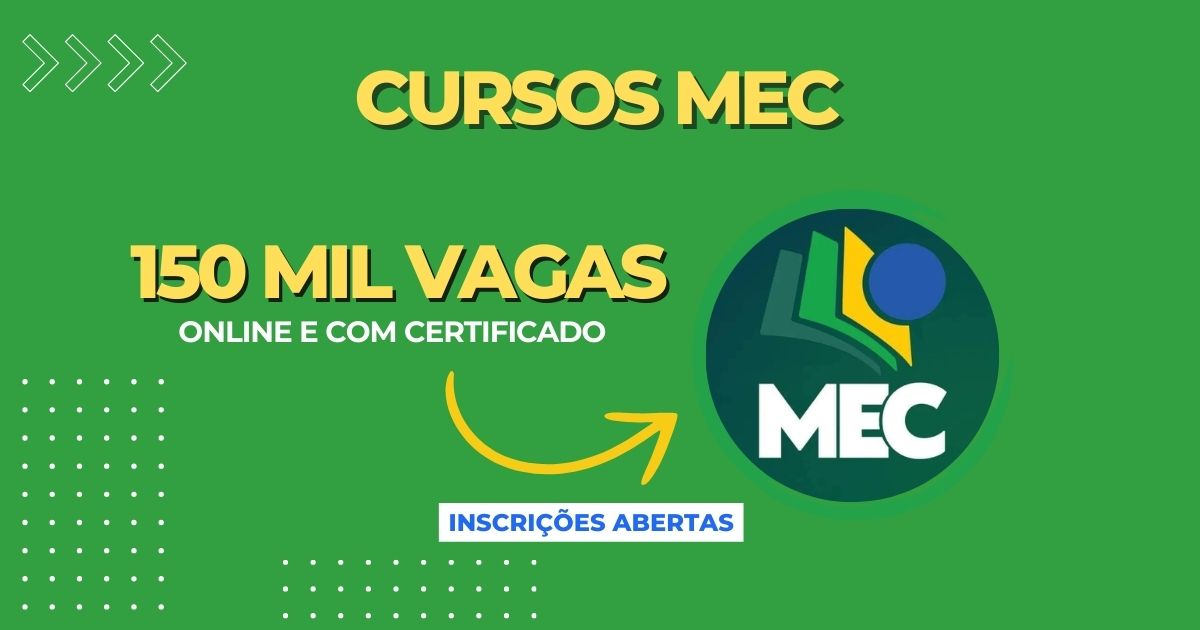

MEC, in partnership with CAPES, launched 150 thousand vacancies for a free and online course that trains teachers in ethnic-racial education and quilombola school education. Don’t miss this opportunity to qualify and impact inclusive education in Brazil.
The Ministry of Education (MEC), in partnership with the Coordination for the Improvement of Higher Education Personnel (CAPES), announced an initiative that promises to significantly impact Brazilian basic education.
There are 150 thousand vacancies in free and completely online courses, aimed at teachers and school administrators, with certification rights.
But, after all, what exactly is behind this opportunity? And why does this program attract so much interest?
-
USP opens 10,000 spots in a free 100% online course lasting 110 hours in areas such as nutrition and health, with registrations until April 15 and classes on diabetes, obesity, and educational public policies.
-
Excel dominates job openings even in the era of artificial intelligence: analysis reveals high demand and highlights 5 courses to move beyond the basics and advance in the job market.
-
Senai launches free technology courses in Amapá and creates a strategic opportunity for those seeking quick qualification, entry into the job market, and professional growth in areas with high digital demand.

-
Take a free course at the Federal University: UFPR calls 200 candidates for intensive preparation for master’s and doctoral programs.
Free Course for Quilombola School Education and Ethnic-Racial Relations
The course is part of the Open University of Brazil (UAB) program and is a response from MEC and CAPES to the growing demand for training and specialization of professionals working in basic education.
The focus is on fundamental themes for inclusive and multicultural education, addressing teaching and school management aimed at ethnic-racial relations and quilombola education.
In a country marked by cultural diversity, training teachers and administrators to handle the plurality of identities in schools is essential.
Inclusive Training for Over 100 Thousand Educators
The course aims to meet a wide range of basic education professionals from all regions of Brazil.
With a workload of 120 hours, students will have access to training content for inclusive pedagogical practices, as well as for managing ethnic-racial issues within the school environment.
In addition, the course aims to train teachers to act more sensitively and consciously on issues related to quilombola communities, promoting respect for the culture and rights of these groups within the educational sphere.
Online and Free Education: A Commitment to Inclusion
This movement to expand online and free education represents the government’s commitment to inclusion and the democratization of knowledge.
MEC, in partnership with the Secretariat for Continuing Education, Youth and Adult Literacy, Diversity and Inclusion (Secadi), recognizes that distance learning offers opportunities for teachers in regions where the availability of training courses may be limited.
The expectation is that this initiative increases the reach of specialized training, democratizing access to knowledge and helping to build a more inclusive school environment.
According to CAPES, classes are scheduled to start in March 2025, providing ample opportunity for preparation and planning for all registrants.
Who Can Participate?
The vacancies are intended for teachers and administrators who are already working in basic education in any region of the country.
The objective is to provide training that addresses diversity and inclusion in the school environment in a practical and applied manner, enhancing educators’ ability to promote respect for cultural diversity in schools.
The proposal focuses especially on meeting the needs of quilombola communities, seeking to foster the integration of these students and the appreciation of their cultures.
Involved Institutions and National Reach
To ensure that this training reaches all corners of the country, MEC and CAPES have partnered with 40 educational institutions from various regions of Brazil.
These institutions are prepared to offer courses according to local specificities, ensuring training that addresses both theory and practice, tailored to the reality of each region.
Program Content and Topics Covered
The course will feature a program content specifically developed to meet current educational demands, addressing topics such as ethnic-racial relations, inclusive school management, and quilombola education.
This program aims to prepare teachers to effectively and respectfully manage cultural diversity, promoting a school environment that respects and values differences.
Additionally, the training includes guidance on pedagogical practices that encourage active student participation and respect for their cultures.
Universities with Open Enrollment
Currently, some institutions have already begun the selection process.
The Federal University of Tocantins (UFT), the Federal University of Rio Grande do Norte (UFRN), the Federal University of Pará (UFPA), and the Federal University of Santa Catarina (UFSC) are some of the universities that are already accepting applications.
However, it is important to note that each institution has its own calendar and specific requirements for candidate selection.
How Can the Course Impact Brazilian Basic Education?
With this initiative, MEC and CAPES not only offer free training but also encourage a significant transformation in how the school environment deals with cultural diversity.
The expectation is that teachers and administrators will leave this training more prepared to act inclusively, promoting a welcoming and respectful environment for all students, regardless of their cultural backgrounds.
This movement also strengthens the development of public policies that recognize the importance of diversity and inclusion in the educational context.
Information and Registration Links
For those wishing to be part of this transformative training and secure one of the 150 thousand vacancies, registrations can be made directly through the regional links listed below.
Remember to select the link corresponding to your region of interest and check the specific dates and requirements of each institution:
With a focus on essential themes for inclusion and respect for diversity, this course represents a unique opportunity for education professionals. Can this training transform teachers’ views on diversity and strengthen respect in schools?






Esse rapaz, Tomires Pereira, escreve bem. Deve ter tido um professor dedicado e BEM FORMADO, estudioso, de forma contínua. É pena que o sr Tomires não complementou seu aprendizado humano sobre sensibilidade social para com as realidades que não fazem parte do seu contexto.
Gratidão ao MEC, pela equidade de priorizar minorias como matéria de interesse, tanto quanto a formação basilar para profissionais essenciais como pedreiros, enfermeiros e técnicos em geral.
Surreal, educação inclusiva e quilombola? Precisamos e de cursos na área de construção civil ( pedreiro, ajudante, etc) saúde (enfermagem, técnico de laboratório auxiliar dentista) e serviços ( padeiro, mecânico, barbeiro, etc.) É um desperdício de dinheiro público que só alcança minorias e professores. Precisamos capacitar os jovens para o mercado de trabalho, com cursos uteis, e não essa bobagem de educação inclusiva.