





 Portuguese
  English
  Spanish
  4 min of reading
  0 comments



To Join the Career of Ship Pilot, the Candidate Must Meet Rigorous Requirements and Be Approved in a Highly Technical Selective Process Without Public Link, According to Norm NORMAM-311
The NORMAM-311/DPC, the official norm of the Brazilian Navy, rigorously details how the selection process for ship pilots works, a professional responsible for the safe navigation of vessels in complex navigation areas and highly valued in the port sector.
With salaries that can exceed R$ 300,000 per month, the career requires technical training, physical preparation, and approval in a selection process divided into four stages. Watch the following video from inside the ship’s bridge while the maneuver is being executed.
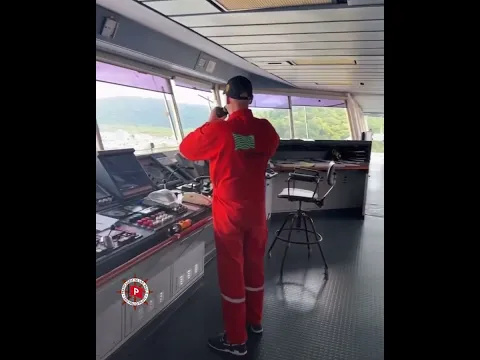

Elite Profession Requires Graduation, Nautical Qualification, and Physical Assessment
According to the norm, entry into the career occurs exclusively through a selection process for the category of Trainee Pilot (PSCPP), announced by public notice in the Official Gazette of the Union.
-
Senai will pay up to R$ 700 per month for those who take free technical courses: there are 12,000 open positions across Brazil and training with access to the technology market.

-
Take one of the free courses from SENAI! There are over 100 options for training completely online and with a guaranteed certificate in Logistics, Mechanics, Business, Energy, Safety, and much more; see how to enroll and boost your resume with SENAI EAD.

-
Petrobras and SENAI join forces and launch free technology courses that pay up to R$ 706.

-
Federal Institute calls for EAD and free course with 200 spots in a 400-hour specialization.

To apply, the candidate must be Brazilian, over 18 years old, hold a diploma of higher education recognized by the MEC, and be qualified as a seafarer or, at a minimum, a recreational captain, a category provided in NORMAM-211 for recreational personnel with advanced nautical training.
Additionally, the candidate cannot be retired due to disability, must be up to date with military and electoral obligations, have a CPF, an official photo ID, and pay the application fee. All expenses related to participation in the selection process and the subsequent travel to the Pilotage Zone (ZP) are the candidate’s responsibility.
Ship Pilot: Selection Includes Written Test, Health Exams, and Demanding Physical Tests
The selection process includes a written test (with questions in Portuguese and English), document submission, psycho-physical inspection, and physical fitness testing, in addition to a qualifications test and a practical-oral test.
The medical stage is conducted by Navy Boards and requires examinations such as electroencephalogram, ergometric tests, complete blood counts, audiometry, wide-window toxicological exams, among others.
To proceed, the candidate must be clinically fit and also demonstrate satisfactory physical performance in pull-ups, swimming 50 meters in up to 1 minute and 30 seconds, and floating for 20 minutes. Failure to meet any requirement results in elimination.
Oral Exam and Practical Qualification Conclude the Selection Process
The last stage of the examination is the practical-oral test, preferably conducted in simulators at CIAGA, in Rio de Janeiro, and mandatory conducted in English. This stage assesses knowledge applied to ship maneuvering in restricted waters.
Upon approval, the candidate receives the Certification of Qualification as Trainee Pilot and begins an onboard qualification period, supervised by experienced pilots.
At the end of the process, candidates are ranked by final grades and assigned to pilotage zones according to the vacancies in the announcement. Zone changes are not allowed. A pregnant candidate may participate in the process conditionally, with an extended period for medical examinations and physical tests after childbirth.
Rules Established by the Navy Ensure Technical Excellence in Pilotage
The norm also specifies that the role of pilot is neither a public position nor a state job. Pilots are autonomous professionals who provide services regulated by the Navy in the public interest, especially to prevent environmental and operational accidents in port areas.
In practice, they operate aboard commercial vessels, issuing technical orders directly to the captains and tugboats, coordinating maneuvers, and ensuring safety in difficult navigation areas. Therefore, technical mastery and accumulated experience are valued, which justifies the high monthly earnings of the profession.
The Last Article Addressed Revision of the Norm by the Navy That May Change How the Selection Process for Ship Pilot Works
In a previous publication, we reported the update of NORMAM-311/DPC, which provides for a review of the syllabus and bibliography required in the selection process. The change has been interpreted by experts as a sign of a possible new public notice soon, although it has not been officially confirmed by the Directorate of Ports and Coasts.
The information was disclosed by the Brazilian Navy in its official norm NORMAM-311/DPC, a document that establishes all the requirements, phases, and criteria of the selection process for the role of pilot. The text is a mandatory reference for those who wish to begin preparation and compete for one of the most sought-after positions in the Brazilian maritime sector.










-

-

2 pessoas reagiram a isso.