





 English
  Francês
  Alemão
  Italiano
  Japonês
  Norueguês
  Portuguese
  Spanish
  6 min of reading


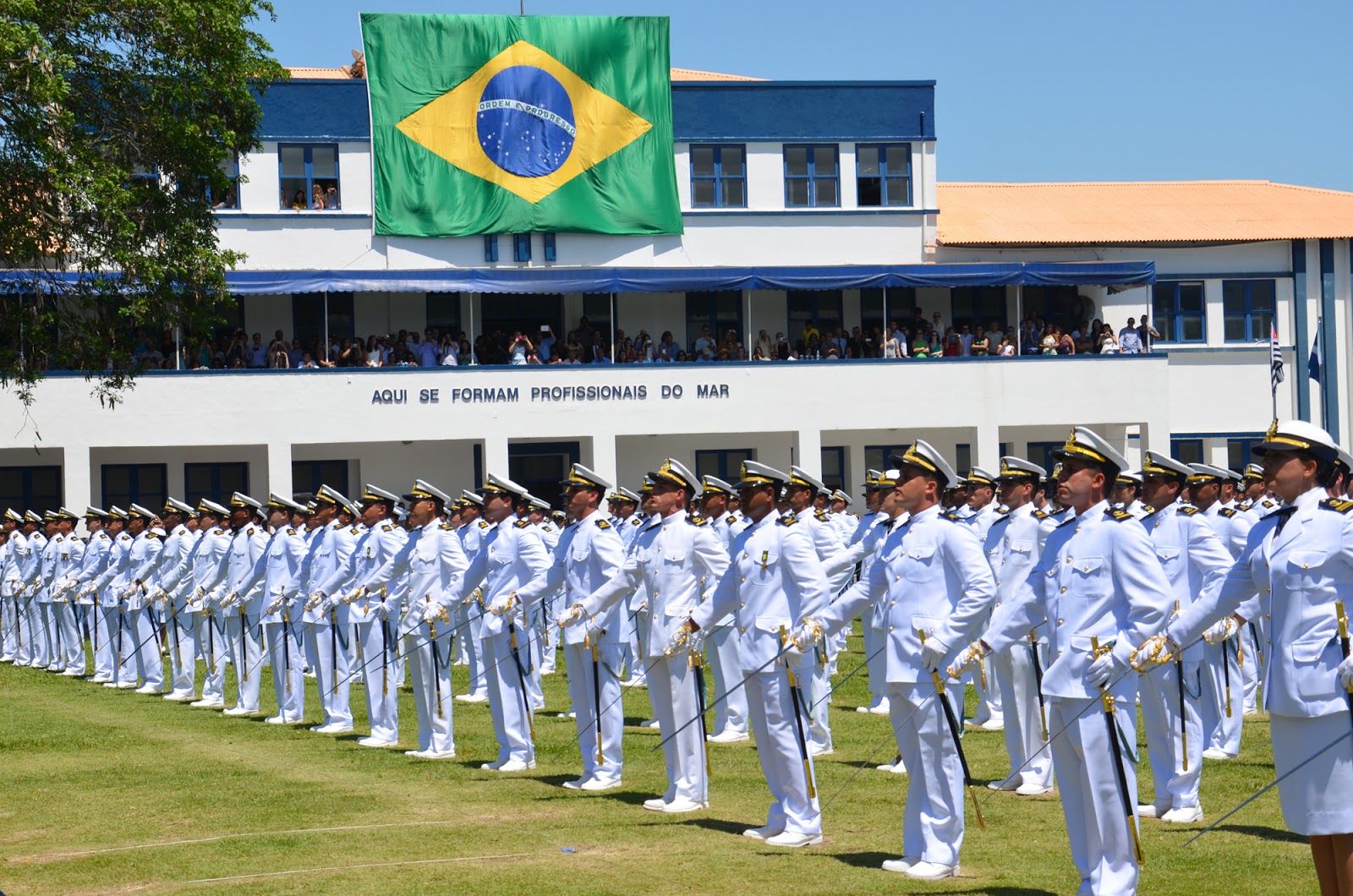
The Merchant Marine Opened 2019 Public Notice with Many Openings for Qualification and Improvement Courses Throughout the Country, for Various Educational Levels. The Courses are Free and Aimed at Those Who Want or Already Work on Board. Hurry, as the Registrations are Closing!
Enrolling in courses for the Merchant Marine is now one of the most solid and promising careers in the market. With possibilities for immediate start and career advancement, in addition to a possible military career, the Merchant Marine also offers professionals the chance to explore various places around the world. The maritime career has become one of the most sought-after in Brazil.
Even with the financial crisis that Brazil is going through, the Merchant Marine continues to have open positions and a growing demand for new professionals. The requirement for qualification reduces competition for vacancies in the field.
Job opportunities are even higher due to the possibility of hiring by public and private companies, making initial salaries very attractive, as well as career progression!
What is the Merchant Marine?
The merchant marine can be divided into three branches:
1. Merchant Navy – dedicated to the economic activities of passenger and cargo transportation. (tugs, lightships, icebreakers, and research vessels, cruise ships, bulk carriers, container ships, ferries, and tankers)
2. Fishing Navy – dedicated to fishing activities;
3. Recreational Navy – dedicated to water sports and other recreational activities.
-
Government unlocks R$ 554 million for a highway that has been requested for decades and accelerates the duplication of BR.

-
Without bricks, without cement, and without endless construction: the cardboard house that is assembled in modules and can be moved.

-
Billions of barrels on the equatorial margin could lead Amapá to double its oil production in Brazil — the state aims to enter the route of companies in the Campos Basin, attract investments, and boost jobs and businesses in the oil and gas sector.

-
Without bricks, without cement, and without endless construction: the cardboard house that is assembled in modules and can be moved.

What is an Aquatic Professional?
The maritime professional with certified qualifications to operate vessels is called an Aquatic Professional. To work as an Aquatic Professional in the Merchant Marine, it is necessary to take the Aquatic Professional Training Course conducted by the Port Captaincies. The profession is regulated by the Brazilian Navy’s Ports and Coasts Directorate (DPC), which regulates all aquatic traffic in Brazilian Jurisdictional Waters and ensures the safeguarding of human life at sea. The career of an Aquatic Professional is divided into two sections: Deck and Machinery. Within these two sections that make up the Aquatic Professionals category, the professionals are distributed into 6 groups:
1st Group – Seafarers: crew members operating vessels classified for navigation in open sea, port support, and for inland navigation in channels, lagoons, bays, arms, coves, and sheltered maritime areas;
2nd Group – River Navigation Workers: crew members operating vessels classified for inland navigation in lakes, rivers, and river support;
3rd Group – Fishermen: crew members engaged in activities aboard fishing vessels;
4th Group – Divers: crew members or non-crew professionals with certified qualifications from the maritime authority to perform tasks directly related to the vessel’s operation and provide occasional underwater services aboard;
5th Group – Pilots: non-crew aquatic professionals who provide piloting services aboard;
6th Group – Maneuvering and Docking Agents: non-crew aquatic professionals who maneuver ships during operations in docks, shipyards, and dry docks.
Aquatic Professional Training Course – CFAQ
The Aquatic Professional Training Course (CFAQ) is a completely free vocational training course in Maritime Professional Education (EPM) that enables candidates to qualify for a career in the Merchant Marine. The Brazilian Maritime Authority (Brazilian Navy), through the Ports and Coasts Directorate, is responsible for implementing the Maritime Professional Education courses, which are conducted at the Executive Agencies, namely the Admiral Graça Aranha Instruction Center (CIAGA) in Rio de Janeiro, Admiral Braz de Aguiar Instruction Center (CIABA) in Belém, and the existing Port Captaincies, Delegacies, and Agencies throughout the national territory.
The CFAQ courses have an average duration of 7 months. After completing the course, the professional is qualified to start their career in the maritime sector. To apply for the CFAQ, the interested party must: have completed High School; be over 18 years old, and be a natural-born or naturalized Brazilian. Upon enrollment, the candidate must also present a series of documents defined by the Navy. This course is not classified as a competitive exam and can be conducted by the Navy or entities duly accredited to carry out the classes and training activities.
Merchant Marine Officers Training School – EFOMM
The Merchant Marine Officers Training School – EFOMM – is a military higher education institution, administered by the Brazilian Navy and maintained with resources from the Merchant Marine Fund. EFOMM aims to train Nautical Officers and Machinery Officers, graduated in Nautical Sciences and members of the Non-Paid Reserve Officers’ Corps of the Brazilian Navy with the rank of 2nd Lieutenant (2LT-RM2). EFOMM is a University of the Sea, a reference center for training highly qualified Merchant Marine Officers, not only from Brazil but also for young people whose country of origin does not have a Merchant Marine School or for those from countries with student exchange programs, such as Peru, Panama, Ecuador, Dominican Republic, etc. Brazil serves as a reference for Central America, South America, and parts of Africa. This attests to the level of professional training that Brazilian Officers achieve in the market.
At EFOMM, Officers are trained in two course options: Nautical and Machinery. In both the nautical and machinery courses, students study at the School in a boarding regime for 3 years. The course will have two periods and will be developed over eight semesters, as follows:
Maritime Professional Education Program – PREPOM
The courses of PREPOM – Maritime Professional Education Program are aimed at the training and improvement of all aquatic personnel on merchant ships. Aquatic professionals trained by EFOMM need to regularly take improvement courses that are recorded in their Registration and Record Book (CIR).
What is the Registration and Record Book – CIR?
The CIR is the document that proves the entry of the Brazilian citizen into one of the groups of Seafarers, River Navigation Workers, or Fishermen, in the Deck or Machinery Section, duly approved in the following courses:
a) Aquatic Professional Training Course – CFAQ; or
b) Aquatic Professional Adaptation Course – CAAQ; or
c) Career Access Course for Nautical or Machinery Officer – ASON or ASOM; or
d) Merchant Marine Officers Training Course – EFOMM
Why Join the Merchant Marine?
Before embarking on the qualification process to join the Merchant Marine, assess whether this is the right career for you!
Advantages
• Great salaries: from its base levels, the Merchant Marine increasingly attracts professionals by offering attractive salaries and benefits to aquatic professionals.
• Different destinations: life in the Merchant Navy allows you to travel constantly and discover various places in Brazil and around the world.
• Many job vacancies available: in the sector, there are always open vacancies. Being alert and qualified guarantees a position in the market.
• Solid career plan: the Merchant Marine follows a career plan, which allows you to always dream bigger.
Disadvantages
• Working on board: adapting to the work schedule and assignments can be a problem; on average, you work 15 days at sea and 15 days on land. Some schedules can be 28×28, meaning 28 days on board and the same period of rest.
• The feeling of confinement must also be addressed to avoid disrupting the professional.
• Being away from family: most aquatic professionals miss their family and friends a lot due to long periods at sea.
How to Join the Aquatic Professional Career?
To join the aquatic professional career, the interested party must seek the nearest Port Captaincy, Delegation, or Agency, which are located throughout the national territory. After completing the Aquatic Professional Training Course, the participant will be qualified to enter the aquatic professional career as Deck Boy or Engine Boy. CLICK HERE AND CHECK THE PUBLIC NOTICE WITH INFORMATION ABOUT ALL COURSES, LOCATION, REGISTRATION DATE, AND REQUIRED DOCUMENTATION
THE BRAZILIAN NAVY RELEASES PUBLIC NOTICE FOR 960 VACANCIES!








Seja o primeiro a reagir!