





 Portuguese
  English
  Spanish
  4 min of reading
  4 comments


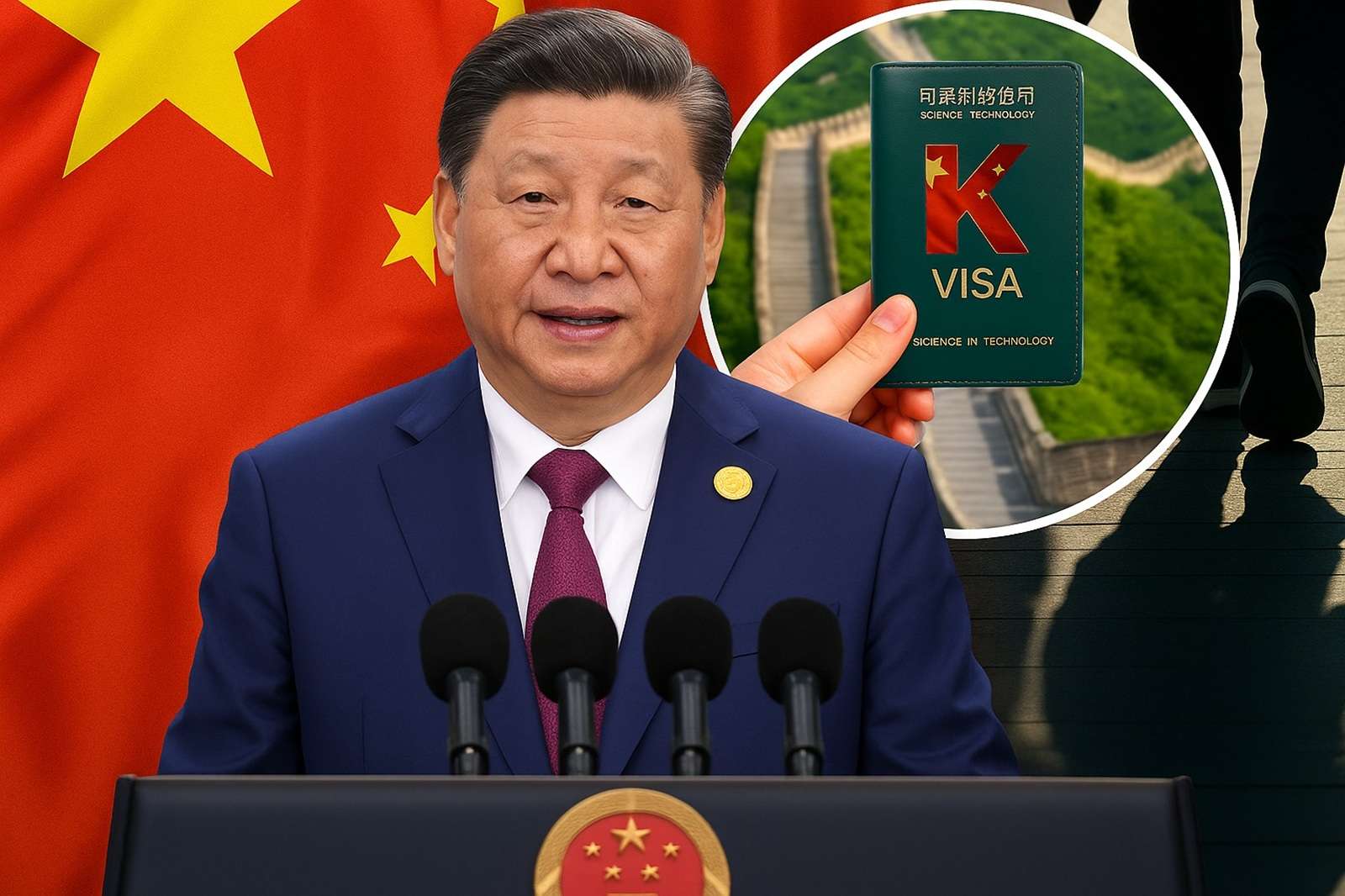


China Is Making A Strategic Move To Attract International Talent. Starting On October 1st, The Country Will Offer A New Type Of Visa Specifically For Young Foreign Professionals Working In Science And Technology. This Measure Comes At A Time When Other Powers Are Making It Difficult For Specialists To Enter, And Represents A Chinese Bet On Global Innovation As A Growth Engine.
At A Moment When The United States, Under The Trump Administration, Is Making It More Difficult For Qualified Foreign Workers To Enter, China Is Moving To Take Advantage Of The Space.
Starting On October 1st, The Chinese Government Will Implement The K Visa Created To Facilitate The Entry Of Graduates In Science, Technology, Engineering, And Mathematics Who Wish To Study, Start Businesses, Or Engage In Innovative Activities In The Country.
The Announcement Occurred In August 2025, With The Change Of The Regulation On The Administration Of Foreigners’ Entry And Exit, And Represents A Milestone In China’s Strategy To Strengthen Its Technological Ecosystem.
-
These are the drivers who may stop paying tolls on highways in a project that promises to reduce costs for those who live from transportation in Brazil.

-
(Video): Italian pilot lands plane on moving train at 120 km/h and achieves unprecedented feat in aviation, even with a narrow runway and without direct visual contact.

-
It seems to have come out of a science fiction movie: A Brazilian city where it rains almost every day, recording over 4,000 mm per year, driven by climatic factors — a direct result of its strategic location in the Amazon.

-
The water crisis that could change everything this year has already begun; it’s not just about the climate, it affects technology, raises product prices, and can halt entire companies without warning.


The Fight For Talent And Innovation
The Launch Of The K Visa Fits Into An Increasingly Intense Dispute Between China And The United States For Scientific And Technological Leadership.
While Washington Implements A US$ 100,000 Fee For The H-1B Visa, Making It Difficult For Foreign Professionals To Enter, Beijing Sends The Opposite Message: Openness, Flexibility, And Encouragement.
This Divergence In Policies May Directly Influence The Fate Of Thousands Of Engineers, Researchers, And Entrepreneurs Seeking Opportunities.
The New Policy May Offer Alternatives To Technology Workers Who Feel Less Welcomed In The United States.
The Measure Conveys The Idea That China Can Be A New Viable Option For Global Talent.
Flexibility And Innovation In The Model
The Differentiator Of The K Visa Is Its Flexibility. Unlike Traditional Categories Such As The Z For Work Or The X For Study, The New Mode Allows Multiple Entries, Longer Stays, And A Wide Range Of Activities.
Additionally, It Eliminates The Requirement For A Formal Invitation From A Company Or Employment Sponsorship, A Factor That Previously Limited The Mobility Of Young Professionals.
This Opens Up Opportunities, For Example, For Startups Without Human Resources Structures To Attract External Talent Or For Foreign Students Who Completed Their Courses In China To Remain In The Country In Search Of Job Placement.
A Contrast With The American Model
The Contrast With The North American Scenario Is Evident. In The United States, Rising Costs And Bureaucracy Reduce Attractiveness For Foreigners, Especially Indians, Who Make Up The Largest Share Of H-1B Holders.
In Contrast, China Is Expanding Access Channels And Signaling Greater Receptivity.
Still, Experts Note That The Chinese Challenge Is Not Only In Visa Issuance But Also In The Capacity For Cultural And Social Integration Of Foreigners, Given Language And Political Barriers.
Statistics And Open Policies
The Most Recent Numbers Reinforce China’s Strategy Of Increasing Openness. In The First Half Of 2025, The Country Recorded 38.05 Million International Trips, Up 30.2% Compared To The Previous Year.
Of This Total, 13.64 Million Entries Occurred Without Visa Requirements, An Increase Of 53.9%. So Far, China Has Signed Reciprocal Visa Exemption Agreements With 75 Countries.
These Data Show A Consistent Trend Of Facilitating Mobility, In Contrast To Restrictive Measures From Other Powers.
Youth As A Long-Term Bet
Another Point That Differentiates The K Visa Is The Focus On Young Professionals. Instead Of Prioritizing Only Veteran Specialists Or Established Scientists, China Is Directing Efforts To Attract Recent Graduates And Early-Career Researchers.
The Logic Is Simple: Establish Early Links With Professionals Who Can Later Occupy Strategic Positions In Academia, Business, Or Government.
Thus, A Foreign Engineer Arriving With A K Visa May, Years Later, Found An Innovative Company Or Become A Partner In International Collaborations.
This Approach Contrasts With The Immigration Systems Of Developed Countries, Which Generally Favor More Experienced Candidates.
China Is Betting On The Potential Of The New Generation, Planting Seeds For Future Harvests In The Field Of Science And Technology.
Obstacles And Challenges
Despite The Advantages Of The New System, Obstacles Remain. The Acceptance Of Foreigners In Chinese Society Is Still Uneven.
Negative Reactions On Social Media Against The Possible Arrival Of Indians Exemplify Cultural Tensions That May Limit The Program’s Reach.
Indian Analysts Also Note That Many Professionals Choose The United States Not Only For The Visa But For The Entire Lifestyle Associated With The Country, Including The Possibility Of Obtaining Citizenship.
Furthermore, The Chinese Leadership Itself, Represented By Xi Jinping, Continues To Prioritize Technological Self-Sufficiency As A Strategic Priority.
The K Visa Should Therefore Be Understood As A Tool To Capture Knowledge And Accelerate Domestic Development, Rather Than As An Unrestricted And Permanent Opening.
The Launch Of The K Visa Marks A Turning Point In Chinese Immigration Policy. By Choosing To Open Doors While Other Nations Erect Barriers, China Signals Its Ambition To Become The Global Hub Of Innovation.
More Than A Technical Adjustment In Entry Regulations, It Is A Long-Term Strategy Aimed At The Most Valuable Resource Of The 21st Century: Human Capital.
If October 2025 Represents The Beginning Of A New Chapter, The Outcome Will Depend On The Practical Execution Of The Measure And The Country’s Ability To Provide Real Conditions For Integration.
What Is Certain Is That In The Global Arena Of Science And Technology, The K Visa Is Already Standing Out As A Key Piece In The Chinese Play.








Deus o livre. Chegar na China pra ser escravizado como montes de Chineses que ousam discordar do governo.
golpe tá aí, cai quem quer… o desemprego comendo solto na xina, e os profissionais deles saindo pro mundo a fora… mas o gov comuna é bom e eles querem empregar estrangeiros…
nao tem o que falar , fique calado , sera muito mais util.