





 Portuguese
  English
  Spanish
  2 min of reading
  0 comments


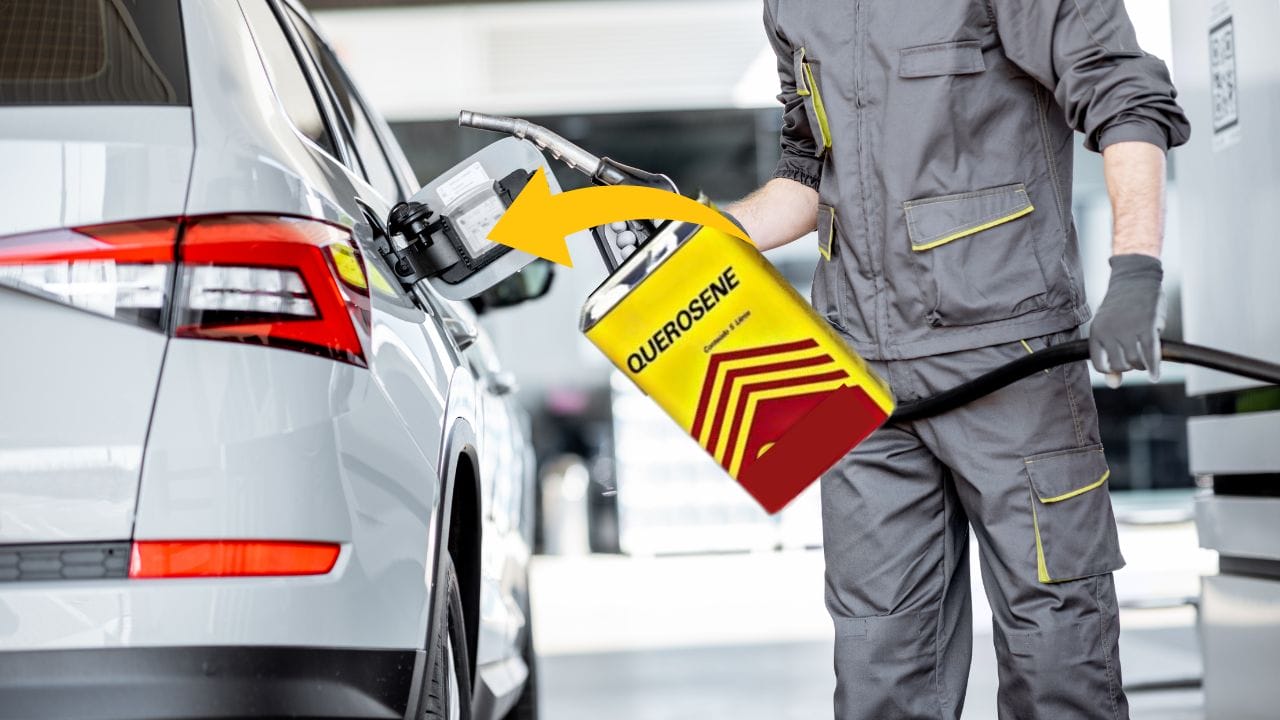
A Recent Test Conducted by the CAR UP Automotive Tips Channel Aimed to Answer a Common Question Among Drivers: Does the Addition of Kerosene to Gasoline Really Clean Injectors, Decarbonize the Engine, and Increase Fuel Economy?
The practice of adding kerosene to gasoline, while common, raises questions about its effectiveness and potential damage to the vehicle. The test involved mixing 1 liter of kerosene for every 50 liters of gasoline, a commonly recommended ratio. Various experiments were conducted to evaluate the density of the mixture, its cleaning power, and the efficiency of the fuel’s combustion. Mixtures are common among experienced and novice drivers, as was the case with dipyrone in gasoline.
Results of Density and Cleaning
In the density analysis, pure gasoline presented 73 grams per 100 ml, while the mixture with kerosene showed a slightly lower density, with 72 grams per 100 ml. This indicates a potential reduction in the energy generated during combustion, which may affect power and fuel economy.
Regarding cleaning, the test found no significant differences between pure gasoline and the mixture with kerosene, suggesting that the addition of kerosene may not be effective in mechanically cleaning the engine.
-
Engineers propose a fourth traffic light for intersections – the change promises to affect crossings, queues, and waiting times.

-
Chevrolet Suburban Z71 lands in Brazil with a V8 engine, off-road design, air suspension, seven seats, and colossal size, a rare version imported for around R$ 1.3 million with luxury and exclusivity.

-
The Chevrolet Onix 1.0 turbo achieves 17.7 km per liter on the highway and ranks among the three most economical cars in Brazil in 2026, alongside two more expensive Toyota hybrids available at dealerships.

-
Little sister of the Hilux: Toyota launches Land Cruiser FJ with 4 radical versions, 2.7 engine with 166 hp and 4×4 traction with locking.




Analysis of Fuel Combustion
The combustion test revealed that pure gasoline burned completely, while the mixture with kerosene left residues and demonstrated less efficient burning. This suggests that the mixture may lead to increased carbon buildup in the engine and potential contamination of the lubricating oil, decreasing the engine’s lifespan and protection. TEXACO published an article about engine lifespan and lubricating oils, which is definitely worth reading.
But then, can you add kerosene to gasoline?
The results indicate that adding kerosene to gasoline may be harmful to the vehicle’s engine. In addition to potentially reducing fuel efficiency, the practice may increase carbon buildup in the engine and contaminate the lubricating oil. Furthermore, kerosene can degrade rubber components of the vehicle, leading to leaks and other issues.
Therefore, the recommendation is to use high-quality gasoline and specific additives, avoiding homemade mixtures that may cause more harm than good. Practical experience and adherence to the vehicle manufacturer’s guidelines are essential for proper maintenance and longevity of the automobile.










Seja o primeiro a reagir!