





 Portuguese
  English
  Spanish
  4 min of reading
  0 comments


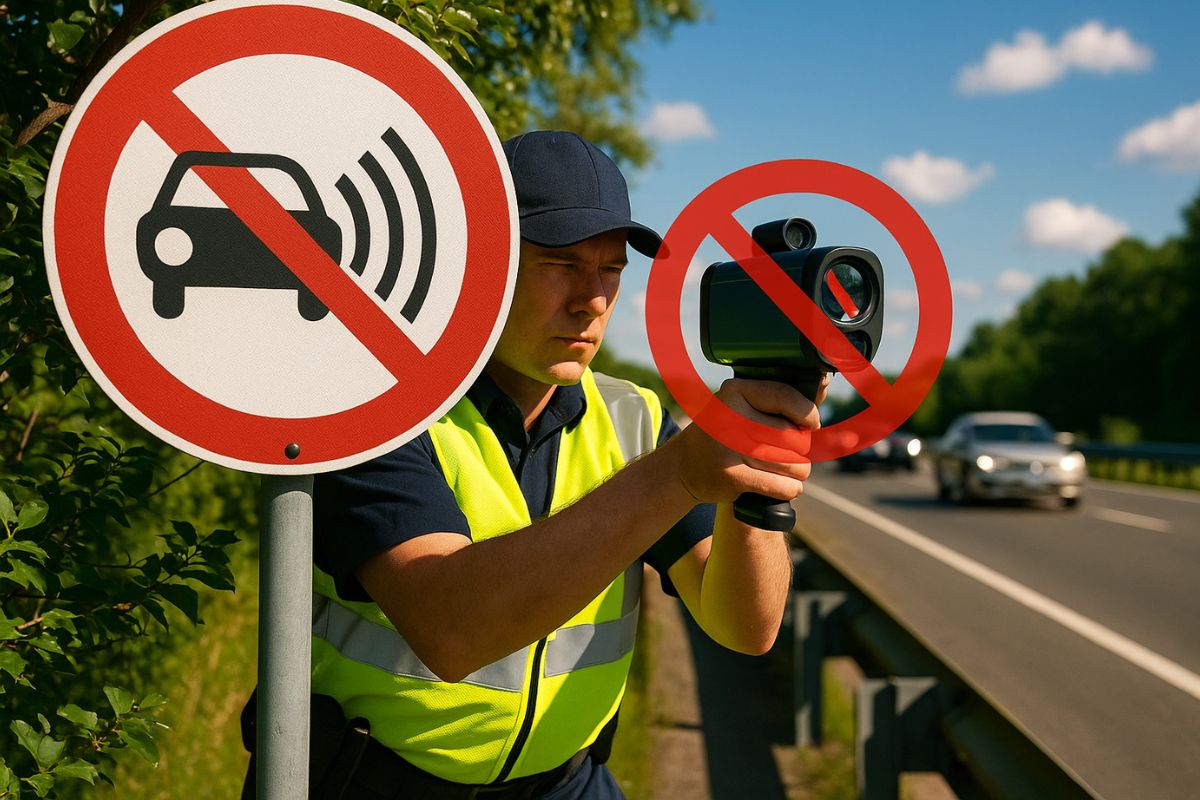
Mobile Speed Cameras Are Prohibited in This Country, Where Police Can Only Enforce Speed With Visible Methods Like Overt Patrols and Fixed Cameras, in a Strategy That Avoids Traps and Reinforces Education in Traffic.
Instead of scattering hidden mobile speed cameras at surprise points, this model prioritizes transparency: the driver knows where they are being monitored, enforcement is clearly identified, and the relationship between the citizen and traffic authority tends to be less confrontational. The result is a direct debate about what works best to save lives: surprise punishment or visibility and predictability of the rules.
In Brazil, mobile speed cameras are part of the routine on highways and urban roads. In certain states in the United States, the path has been different: mobile speed cameras have been banned by law, and speed enforcement has been limited to resources deemed more honest and educational, such as clearly marked fixed speed cameras and police presence constantly on the roads.
Which American States Ban Mobile Speed Cameras
Traffic legislation in the United States is decentralized, and each state defines its own rules.
-
The Senate approves a bill that criminalizes misogyny, hatred, or aversion towards women, and includes the crime in the Racism Law with a penalty of up to 5 years.

-
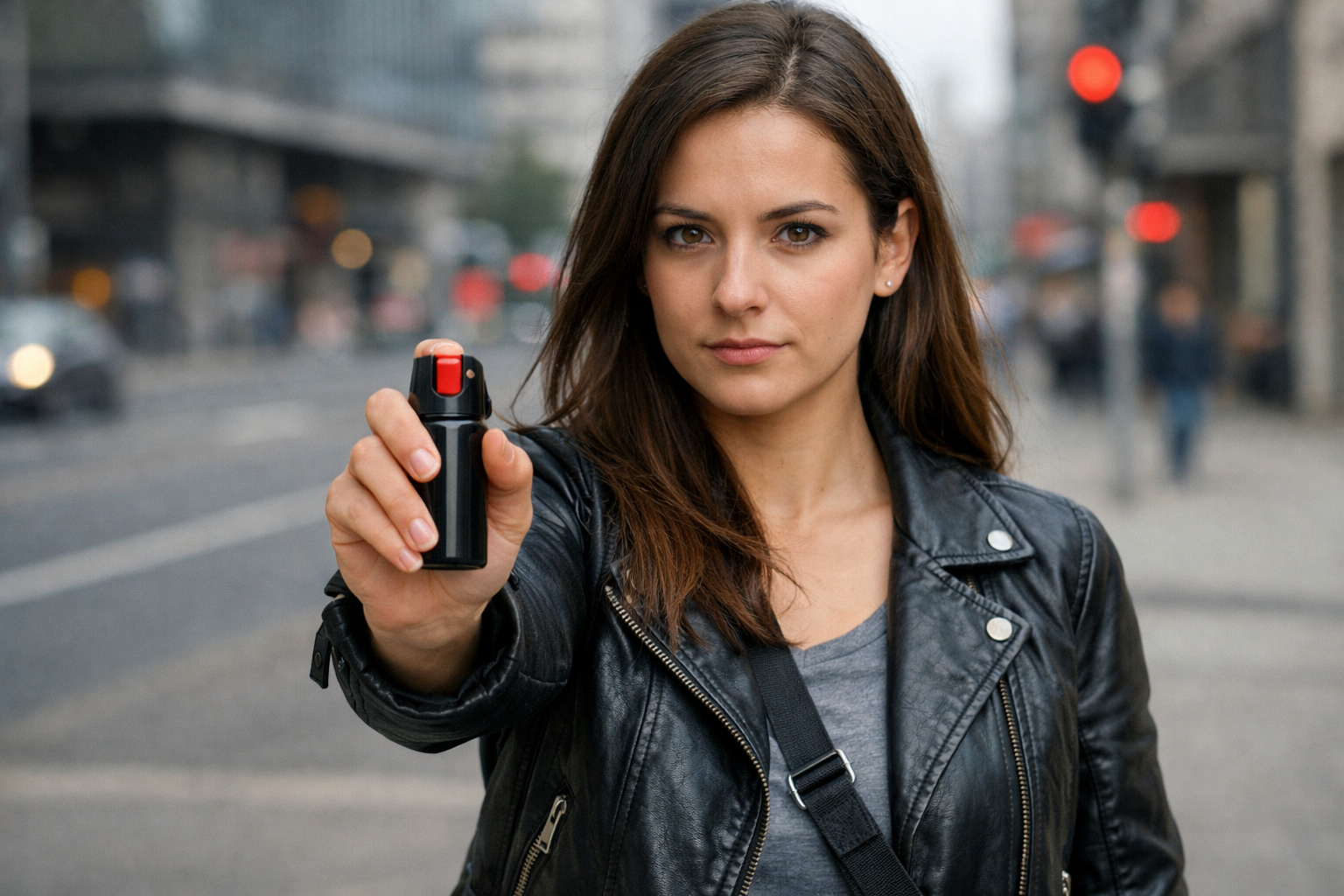
Chamber Approves Bill That Allows Pepper Spray for Women Over 16 and Imposes Strict Rules for Purchase, Possession, and Use as Self-Defense
-
Chamber Approves Law to Combat Leucaena, Fast-Growing Plant That Dominates Land and Threatens Native Species in Various Regions of the Country

-
Asset Division: Know What Cannot Be Divided in Case of Divorce


Within this mosaic, some have opted for stricter restrictions or simply banned mobile speed cameras, understood there as portable equipment, hidden or installed in unmarked vehicles to catch speeding violations.
Among the states mentioned with stricter restrictions on the use of mobile speed cameras are:
• Hawaii
• New Jersey
• Virginia
• Wisconsin
In these locations, police cannot operate mobile speed cameras in a camouflaged manner or use discreet devices embedded in unmarked cars to record violations.
Enforcement is designed to be seen, not to surprise the driver around the last corner.
How to Enforce Speed Without Mobile Speed Cameras
The prohibition of mobile speed cameras does not mean the absence of control.
On the contrary, enforcement remains active but structured around tools that emphasize visibility and predictability.
Instead of a portable device lurking, the focus is on:
• Fixed speed cameras installed in public points, usually with prior signage
• Patrols with marked vehicles, moving in critical areas
• Manual measurement techniques, such as VASCAR, based on distance and time
• Cameras at traffic lights to monitor behavior at intersections
The logic is simple: the driver needs to realize they are being monitored all the time, but through clear and overt means, not by mobile speed cameras hidden behind signs, trees, or overpasses.
The desired feeling is one of permanent oversight, not “electronic tricks” at isolated points.
Why Do Some States Reject Mobile Speed Cameras
The rejection of mobile speed cameras in these states arises from a combination of ethical, political, and educational arguments.
Lawmakers and voters start from the idea that the way enforcement is conducted directly impacts the legitimacy of traffic rules.
Among the main foundations are:
• Avoiding traps: hidden mobile speed cameras are seen as revenue-generating instruments, not as safety tools
• Giving an educational character to enforcement: knowing where control exists encourages lasting respect for speed limits
• Reinforcing visible police presence: marked vehicles on the streets convey a sense of security and deter multiple violations, not just speeding
• Responding to public pressure against practices deemed abusive
In this framework, mobile speed cameras end up associated with a model of surprise punishment, while fixed cameras and overt patrols are presented as tools of transparency.
The political message is clear: enforce, yes, but in an open, predictable manner with a focus on changing behavior.
And Brazil, Where Do Mobile Speed Cameras Fit Into This Discussion
In Brazil, the Brazilian Traffic Code authorizes a wide range of equipment for speed control, including fixed speed cameras, mobile speed cameras, portable and static units.
In practice, mobile speed cameras remain present on various highways and urban roads, operated by agents at strategic points or in vehicles positioned at the edge of the road.
Since 2019, there have been sporadic attempts to reduce the use of hidden cameras and reinforce the requirement for prior signage, precisely to respond to the criticism that certain points operate more as “traps” than as safety devices.
Still, mobile speed cameras remain allowed and are seen by many authorities as an indispensable tool to curb abuses in areas without fixed equipment installation infrastructure.
While some American states opt for a total ban on mobile speed cameras, Brazil seeks to balance wide electronic enforcement with the need for visibility and transparency, especially in corridors with high accident rates.
Traffic Education and Public Trust
Despite the differences in approach, the stated goal is the same in both countries: to reduce deaths, prevent serious collisions, and save lives.
The divergence lies in the chosen path.
On one side, there are those who argue that rigorous mobile speed cameras are the only way to deter drivers who only respect the law under the immediate risk of a fine.
On the other, the argument is growing that predictable enforcement, associated with educational campaigns and police presence, builds a more solid and less confrontational culture of respect.
At its core, the discussion about mobile speed cameras is also a discussion about trust.
Drivers tend to respond better to rules they perceive as fair and transparent, and governments need to show that the technology of enforcement is there first to save lives, and not just to generate revenue.
For you, which model makes more sense: a system that allows the use of mobile speed cameras or a model that prohibits these devices and relies solely on visible enforcement and traffic education?









Seja o primeiro a reagir!