





 Portuguese
  English
  Spanish
  3 min of reading
  0 comments


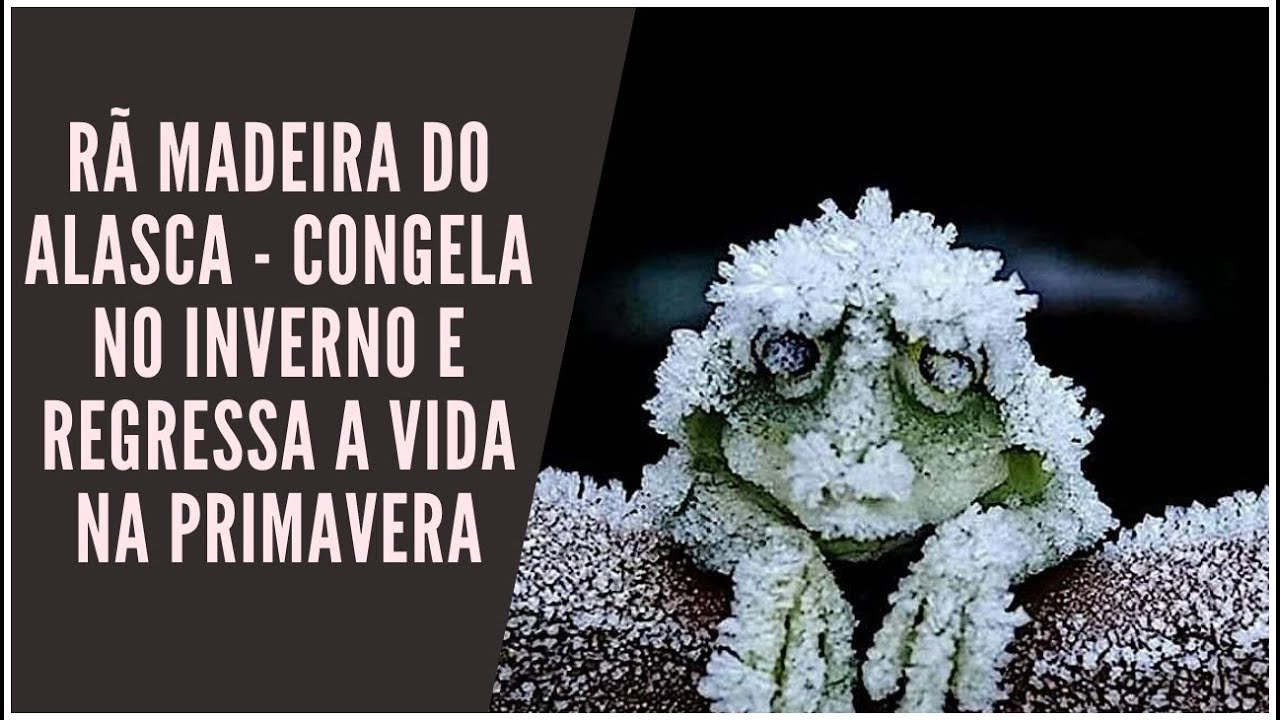
Capable of Freezing Nearly Its Entire Body and “Reviving” in Spring, the Rana Sylvatica Challenges Biology by Stopping Its Heart for Weeks and Surviving Extreme Cold.
Among all known animals, few challenge the limits of life as much as the Rana sylvatica, known as the wood frog. Found in the cold regions of North America, especially in Canada and the northern United States, this species has developed an extreme adaptation: it can freeze almost completely during winter and return to life when temperatures rise.
Unlike the common hibernation in other animals, what happens here is much more radical. The frog not only reduces its metabolism — it physically freezes, with stiff tissues, breathing halted, and blood circulation suspended.
How the Rana Sylvatica Survives Total Freezing
During the coldest months, the frog’s body temperature drops below zero. Studies published in scientific journals such as Science and Journal of Experimental Zoology show that up to 65% of the water present in the Rana sylvatica’s body turns into ice.
-
Argentina places the first U.S. Stryker 8×8 armored vehicles in operational units, while Brazil sets a record of $3.1 billion in military exports, reaching 140 countries and strengthening the Defense Industrial Base.

-
A flight attendant fell from 10,160 meters without a parachute after an airplane explosion, survived against all logic, and still holds the record for the highest fall ever survived by a human being.

-
With a monumental stone structure dating back over 2,000 years, excavated 6 meters deep and with dimensions that surprise archaeologists, the newly discovered tank in Gabii may be one of the first major public works of Ancient Rome outside of temples and walls.
-
Goodbye fitness bracelet: users around the world are replacing the old item with this more discreet, comfortable smart ring that can monitor health for several days without recharging.


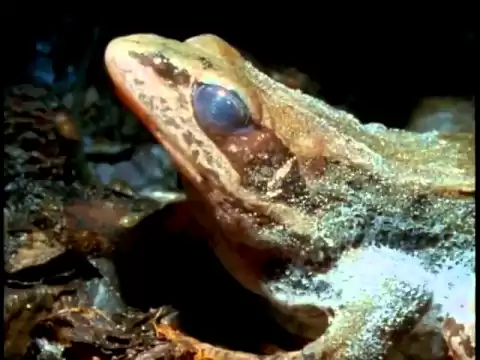

In this extreme process, vital functions come to a complete pause:
- the heart stops beating;
- breathing ceases;
- there is no detectable brain activity;
- blood flow is interrupted.
Biologically speaking, it is a state that dangerously approaches clinical death — something that would be fatal for practically any other vertebrate.
The Secret Lies in Glucose: A “Biological Antifreeze”
What prevents cell destruction is a highly sophisticated biochemical mechanism. Upon detecting the onset of freezing, the frog’s liver releases large amounts of glucose into the bloodstream.
This glucose accumulates inside the cells and acts as a natural antifreeze, reducing the formation of intracellular ice crystals that would typically rupture membranes and vital structures.
In addition to glucose, there is also the production of urea, which helps stabilize proteins and reduce cellular damage. The result is a delicate balance: ice forms mainly outside the cells, while the interior remains protected.
A Heart That “Shuts Down” and Starts Functioning Again Weeks Later
One of the most impressive aspects of the Rana sylvatica is the duration of this state. The heart can remain still for weeks, especially during prolonged winters. When the ambient temperature rises and the ice begins to melt, a gradual “awakening” occurs.

The heart resumes beating, circulation is restored, and within a few hours, the frog starts moving, feeding, and even reproducing. From a physiological standpoint, it is as if the animal has been “reset.”
Where This Frog Lives and Why This Adaptation Is Vital
The Rana sylvatica inhabits boreal forests, wet areas, and regions of high latitude, where winters are harsh and the ground freezes deeply. Unlike other amphibians that seek shelter at great depths, this frog stays close to the surface, often under leaves or logs.
Without this controlled freezing ability, the species simply would not survive in these environments. The adaptation ensures an ecological advantage, allowing it to be one of the first to reemerge in spring, occupying territories and reproducing before competitors.
Why Science Studies the Rana Sylvatica So Much
Scientific interest goes far beyond curiosity. Research involving the wood frog helps to understand:
- cryopreservation of human tissues and organs;
- techniques to reduce cellular damage during deep hypothermia;
- possible applications in transplants and emergency medicine;
- biological preservation strategies in extreme conditions.
The ability to interrupt vital processes without causing irreversible damage places the Rana sylvatica as one of the most extreme vertebrates ever documented by science.
An Amphibian That Redefines the Concept of Active Life
The Rana sylvatica does not just survive the cold, it redefines the boundaries between life, metabolic pause, and apparent death. By completely freezing and returning to normal activity, this small amphibian has become one of the most impressive examples of evolutionary adaptation ever recorded.
While many animals flee from winter, this frog faces it head-on, literally freezing time within its own body and then moving forward as if nothing had happened.







-

-

-

9 pessoas reagiram a isso.