





 Portuguese
  English
  Spanish
  3 min of reading
  5 comments


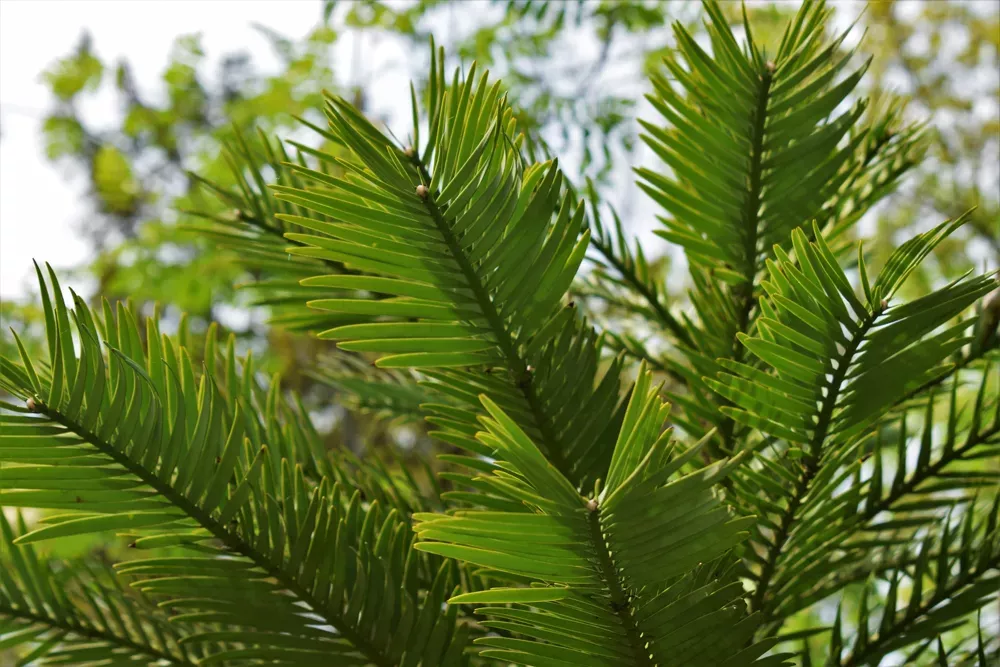


A Rare Tree, Once Considered Extinct by Scientists, Has Been Rediscovered and Became the Most Protected Species in the World. Meet This Jurassic Survivor and Understand Its Importance for Biodiversity!
Hidden in the deep canyons of Wollemi National Park in Australia, an extremely rare and ancient tree defied all expectations when found alive in 1994.
The Wollemi Pine (Wollemia nobilis), a conifer belonging to the Araucariaceae family, was considered extinct for millions of years.
Its discovery, made by chance by explorer David Noble, rewrote botanical history and put this species at the center of one of the most intense conservation efforts in the world.
-
In a flooded well, archaeologists found a 1,700-year-old Roman egg that still contains clear and yolk intact inside the very thin shell.

-
Something is happening around the Earth: Inside the huge explosion of fireballs in 2026

-
A hot air bubble coming from Argentina expands over Brazil, causing thermometers to exceed 38 degrees with a thermal sensation of 40 degrees in late March, affecting 6 states at once.

-
The radish leaf that almost everyone throws away has more polyphenols, flavonoids, and fiber than the consumed root, and a 2025 study showed that the leaf contains compounds that protect the intestine, combat inflammation, and may inhibit the growth of cancer cells.


With fewer than 100 specimens found in their natural habitat, the Wollemi Pine has become a symbol of the fragility and resilience of life on Earth.
Since then, strict protection measures have been implemented to ensure its survival, with controlled access and rigorous biosafety strategies put in place.
A Living Fossil
The Wollemi Pine is described by scientists as the “botanical equivalent of finding a small dinosaur still alive“.
Its evolutionary history dates back over 200 million years, making it a relic species from the age of dinosaurs.
This extreme longevity suggests an incredible capacity for adaptation but also highlights its vulnerability to sudden environmental changes.
The tree has unique characteristics, such as a knobbly bark and foliage resembling that of ferns, which help differentiate it from other modern conifers.
Genetic studies have confirmed that it is a completely new genus, increasing its value for botanical and evolutionary research.
Conservation Efforts
Given the extremely low number of specimens in the wild, scientists and conservationists have developed strategies to protect the species.
The exact location of the last Wollemi Pines in the wild is kept secret, and only authorized researchers are allowed access to it.
Additionally, visitors must undergo strict decontamination processes to prevent the introduction of deadly pathogens, such as Phytophthora cinnamomi, a fungus that can wipe out entire plant populations.
During the 2019-2020 bushfires in Australia, an emergency operation was conducted to protect the wild population of the tree.
Helicopters were used to drop water and fire retardants, while ground teams constructed barriers to prevent the spread of the fire. Thanks to these measures, most specimens survived, but the threat remains constant.
A Promising Future
In an effort to reduce the risk of extinction, Wollemi Pine seedlings have been cultivated in botanical gardens and private collections around the world.
The commercial propagation of the species began in 2005, allowing interested individuals to acquire seedlings and contribute to its preservation.
Although this initiative officially ended in 2010, many young trees are still being cultivated.
The Wollemi Pine has also become a symbol of diplomacy and conservation. Specimens have been planted in iconic locations like the Royal Botanic Gardens in Sydney and Kew Gardens in London, serving as a reminder of the importance of preserving threatened species.
The discovery of the Wollemi Pine was a landmark for science and environmental conservation. This prehistoric species, a survivor from the age of dinosaurs, continues to face significant challenges, but the efforts to protect it offer hope for its continuity.
The existence of the Wollemi Pine reminds us of the immense biological diversity that may still be hidden in the planet’s ecosystems and the human responsibility to ensure that these species do not disappear.
By supporting conservation initiatives and raising awareness of the importance of biodiversity, each person can contribute to a future where natural relics like this can continue to thrive.
With information from Forbes.







Essa espécie é da família da Araucária brasileira?
Só não mandam mais fotos dessa planta!
Faltou a foto da árvore. Se for esta que aparece tem mato dela aqui na praia de Tramandaí RS.