





 Portuguese
  English
  Spanish
 7 min of reading
  0 comments



Former Beggar from the Sertão of Paraíba Collected R$ 450 in Steel Sheets and Built the Mobile Shrimp, a Handmade Car with a Motorcycle Engine That Reaches 80 km/h.
Orismar de Souza was 9 years old when he started building his first little cars on the family farm in Cajazeiras, in the Sertão of Paraíba. The miniatures were not bought toys, but small vehicles made from used oil cans from the kitchen, manually shaped until they had wheels and a body. The process was simple but revealed an uncommon skill for working with metal. Orismar would bend the sheets with his hands and adjust each piece until it formed the toy cars. Over time, the models began to attract the attention of the neighbors.
One liked it. Then another. Soon, he was already producing several toy cars and started to trade the handmade pieces for eggs, chickens, and clothes, creating a small barter network in the rural area where he lived. The family noticed the boy’s talent and decided to buy a small tin of paint so he could paint his creations. At that moment, what seemed like just a game with recycled cans was already showing something bigger: the ability to transform discarded metal into functional vehicles — a skill that, decades later, would lead Orismar to build a real car in the Sertão of Paraíba.
The Journey of Orismar de Souza from the Streets to the Dream of Building a Car
Childhood on the farm did not follow the peaceful path the parents envisioned. At one point in his life, Orismar ended up on the streets.
-
A brand new car starts at around R$ 75,000 in Brazil, but what stands out the most is seeing streets filled with SUVs and expensive sedans in a country where millions remain in debt.

-
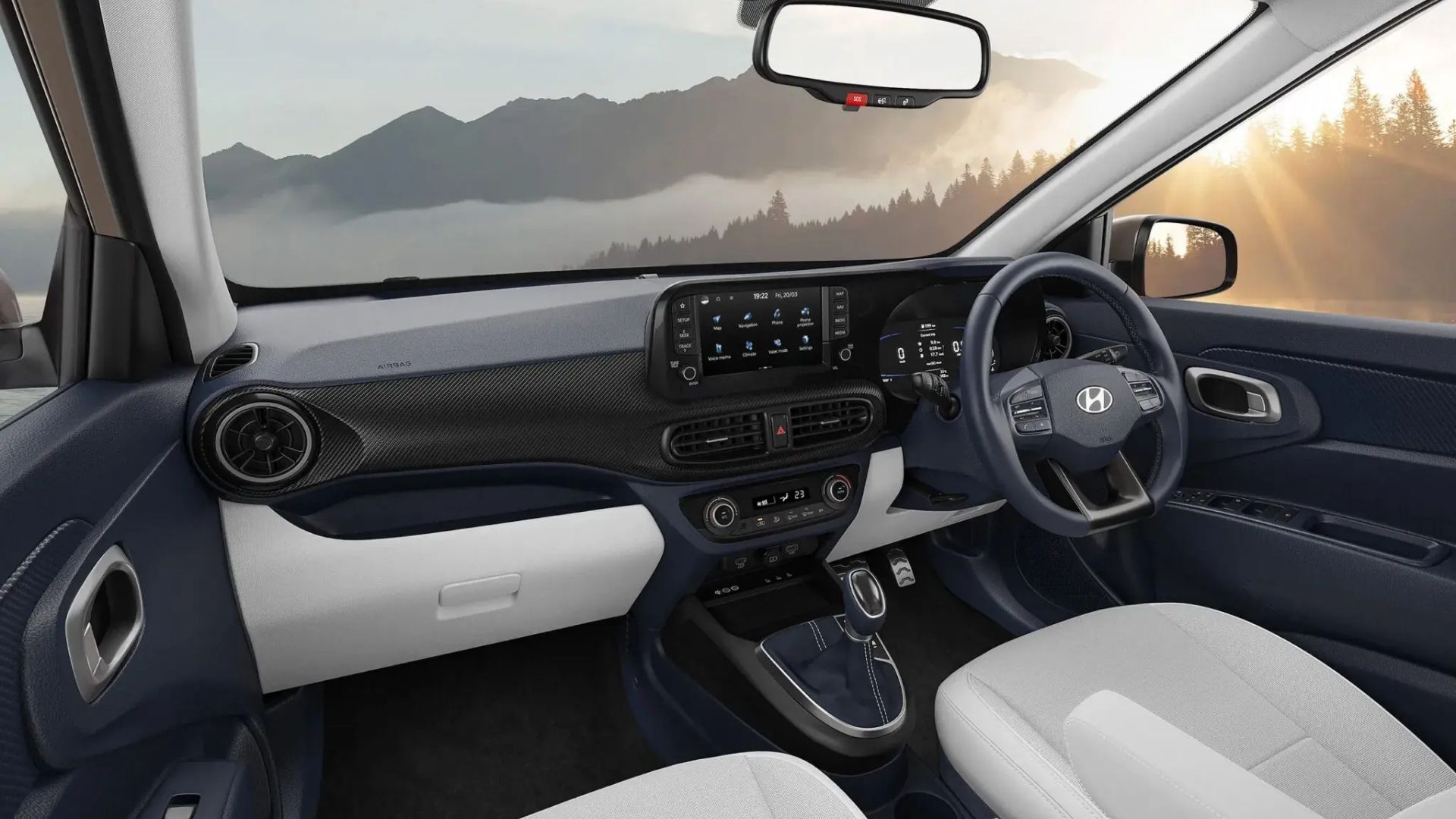
For R$ 32,000, a brand new Hyundai car is a rival to the Kwid with a 1.2 engine producing 82 hp, 6 airbags as standard, multimedia with wireless Android Auto, up to 391 liters in the trunk, and a refreshed look for 2026 in India.
-
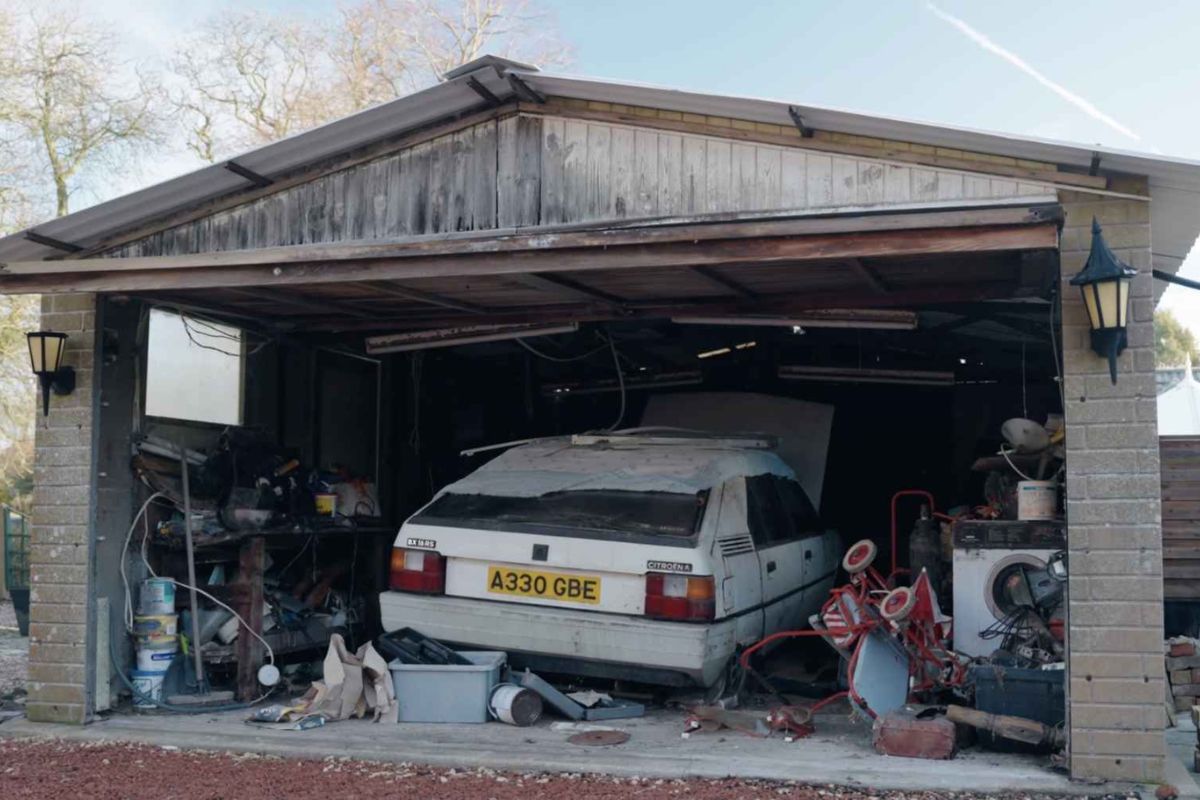
He bought a new car in 1983, locked it in the barn in 1988, and no one opened the door for 38 years until the family discovered what was stored inside and realized it looked like something out of a movie.
-
A 250cc motorcycle that can reach 560 km with a 14-liter tank, features disc brakes on both wheels and is among the most well-known in Brazil.

The sources recounting his story do not detail exactly what happened during that period. Orismar himself rarely talks about that phase in depth. What appears in almost all reports about him is a striking fact: when he built his handmade car, he was known as a former beggar. Despite the hardships, a childhood passion remained: cars.
At 17, while walking through the city of São José de Piranhas in the Paraíba Sertão, he saw a man with a physical disability driving an adapted car. He stopped to observe the vehicle and had a thought that would change his life. He decided that he would build his own car.
There were no technical courses, manuals, or money for that. There was only the memory of the folded cans from his childhood and the conviction that metal can be shaped with patience and hard work.
How Orismar Collected Money to Build a Handmade Car
The first challenge was to get material to build the car. Orismar needed steel sheets to assemble the body, but he had no money to buy the metal. To solve the problem, he started taking any job that came his way. He did odd jobs as a cleaner and also worked cutting sugarcane. At the same time, he began saving practically everything he earned.


During that period, he recounts that he faced difficulties in getting enough food because he saved every penny possible. After four months, he managed to save R$ 450.
With the money in his pocket, he went to a store to buy steel sheets. Upon arriving at the place, he saw a man assembling a metal gate and asked where he could buy that material. When he explained that he intended to build a car, he heard laughter.
“No one believed it. Everyone laughed at me. I was very humiliated by that,” he said in interviews.
Even so, he pressed on. The tools came from a neighbor who believed in the project and decided to help: a hammer and a chisel. It was these two simple tools that started the car’s construction.
The Technical Challenge of Working with Steel Sheets Without Experience
The first technical obstacle appeared early on. When Orismar began cutting the steel sheets with the chisel, he noticed that the metal seemed to lose rigidity and deform in unexpected ways.
Without technical knowledge about the material’s behavior, he initially believed he had ruined the steel.

“I started cutting the steel with the chisel and the steel became soft. I didn’t know how to work with it and I got scared,” he reported.
Later he realized that when bending the pieces, the metal regained rigidity. Today it is known that the phenomenon is related to the behavior of steel during cutting and mechanical deformation, something common in metal sheet processing. Without technical training and without access to manuals, Orismar learned everything through practice.
Motorcycle Engine and Reclaimed Parts: How the Mobile Shrimp Was Born
To obtain an engine, Orismar began visiting local mechanics asking for discarded parts. After some time, he found a 125 cc motorcycle engine that could be reused.
Other parts of the car came from scrap or abandoned pieces. The initial ignition functioned similarly to that of a motorcycle, with pedal start at the rear of the vehicle.
Months later, he managed to adapt an ignition system with a key and also installed a reverse gearbox, improving the car’s performance.
Mobile Shrimp: The Handmade Car Built in the Sertão of Paraíba
In December 2010, after over a year of work, the car was ready. The chosen name was Mobile Shrimp. The nickname “Shrimp” was already used by the residents of São José de Piranhas to refer to Orismar. The rest of the name came from the most important fact: the vehicle really moved.
The car has a body made with manually shaped steel sheets, a 125 cc motorcycle engine, and capacity for two people.
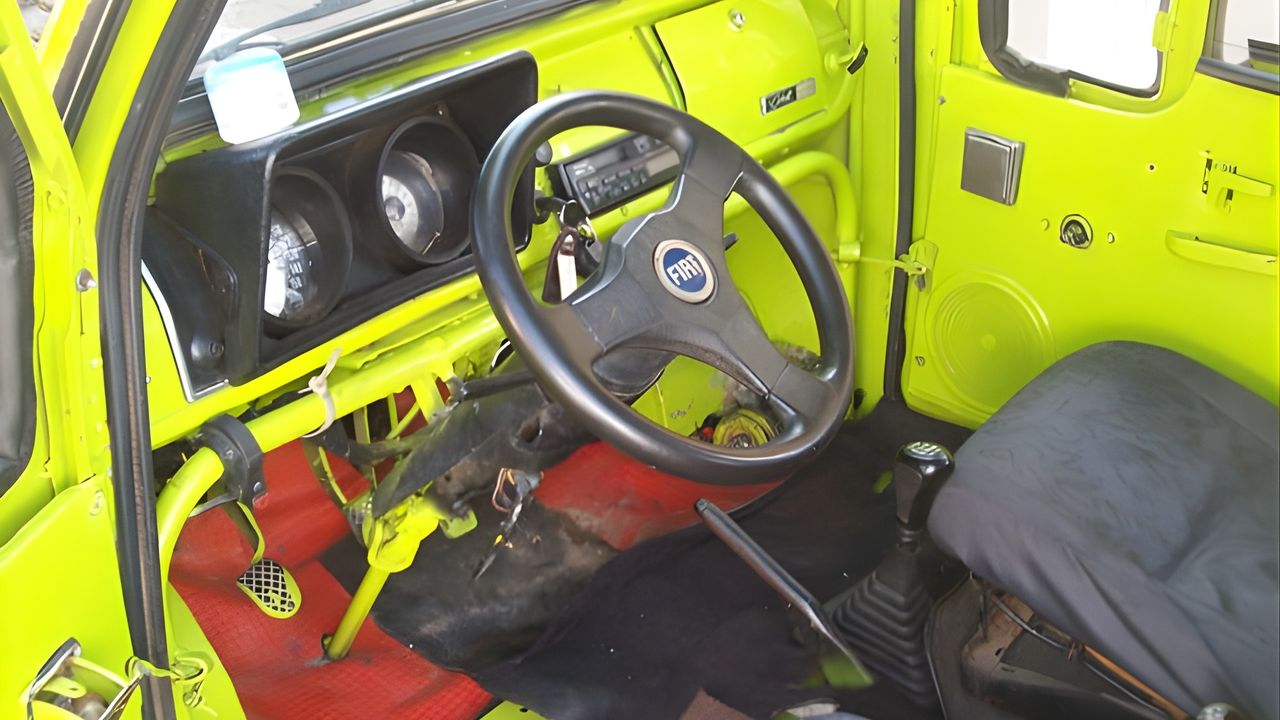
According to Orismar himself, the vehicle can reach up to 80 km/h on asphalt. Even so, he prefers to drive at around 40 km/h, especially on the dirt roads in the region.
The car has no license plate, documentation, or official registration. Despite this, the vehicle became known in town.
“When I drive down the street, it’s a celebration. Many people take photos,” he said.
How Much It Cost to Build the Mobile Shrimp
The total cost of construction is impressive. Orismar spent R$ 450 buying steel sheets. The other parts were obtained for free from workshops or from scrap.
In 2010, the cheapest popular car sold in Brazil cost around R$ 25,000. This means that the Mobile Shrimp was built for less than 2% of the price of a popular car at the time.
The Problem of Legalizing a Handmade Car
With the repercussions of the story, concerns also arose. Orismar knew that the Mobile Shrimp could not circulate legally on the streets since the vehicle lacks a license plate, licensing, registration with the DETRAN, or technical certification. Orismar himself also did not have a driver’s license at the time.
“I never drove at high speeds. Neither with the motorcycle nor with the car. My parents taught me to drive properly,” he stated in interviews.
His declared dream was to obtain a driver’s license and, if possible, secure some form of regularization for the vehicle. Brazilian legislation does allow the handmade construction of vehicles but requires technical approval from DENATRAN and reports from INMETRO, a complex and costly process.
For someone who had only R$ 450 to build the car, this path becomes nearly impossible.
The Northeastern Sertão and the Tradition of Self-Taught Inventors
The story of Orismar de Souza also reflects a cultural characteristic of the northeastern interior. In the sertão, many solutions arise from necessity.
Improvised irrigation systems, adapted carts, handmade agricultural machines, and small generators are examples of inventions created by residents who need to solve problems without access to industrial equipment.
This reality has helped shape generations of self-taught mechanics and builders in states like Paraíba, Pernambuco, and Ceará. What makes Orismar’s story different is not just the technical creativity.
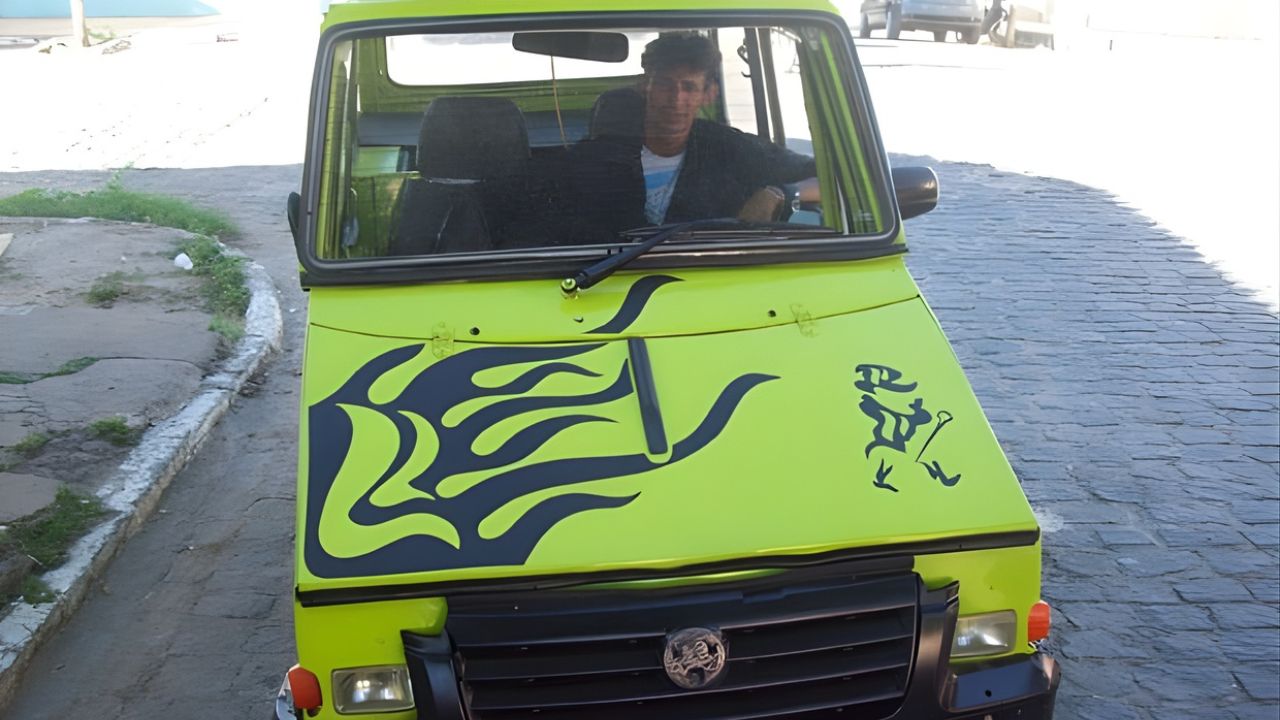
Building a functional motorized vehicle from scratch, using only a hammer and a chisel, would already be an impressive feat. But what really stands out is his journey.
Orismar began life making little tin cars to help his family on the farm. He went through hardships on the streets and, years later, returned to the sertão with the seemingly impossible idea of building a car by himself. The result was a vehicle that actually works and became known in his city.
All this with R$ 450 in steel sheets and two simple tools.
A Handmade Car in a Country Where Vehicles Cost Over R$ 80,000
In today’s Brazil, a new entry-level car can exceed R$ 80,000. In this context, the story of the Mobile Shrimp serves as a curious contrast. Orismar’s car has no airbags, no ABS, and none of the technologies present in modern vehicles.
But it has four wheels, a functioning engine, and a body manually built in the sertão of Paraíba. All done by someone who heard for a long time that it was impossible.








-

-

-

-

-

-

93 pessoas reagiram a isso.