





 Portuguese
  English
  Spanish
  5 min of reading
  0 comments


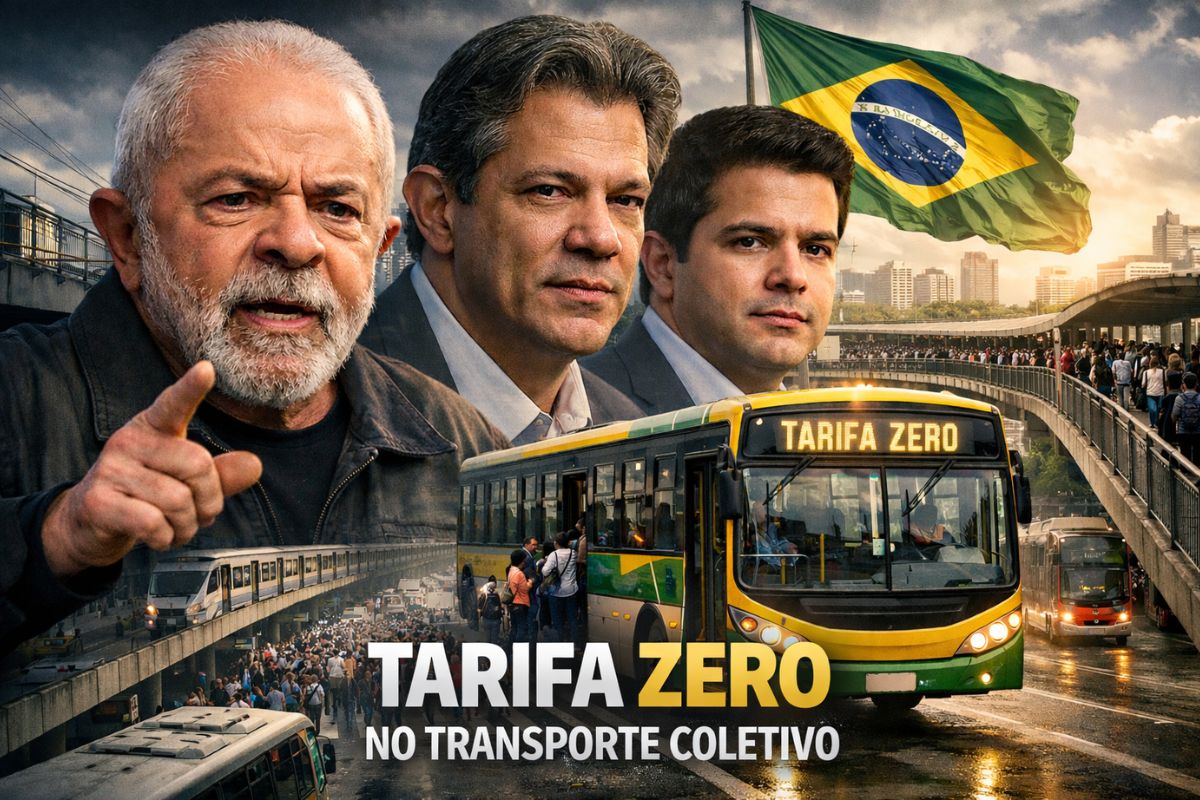
The Proposal of “Public Transport SUS” Aims to Unify Public Transport Funding, Removing the Fare from the Turnstile and Allocating the Cost to a National Fund, with Participation from Employers, the Federal Government, and Municipalities, While Ministers and the Chamber Seek a Viable Formula Without Breaking Contracts and Without Blocking Smaller Cities
The Public Transport has firmly entered the radar of the government of Luiz Inácio Lula da Silva as an agenda with the potential to reorganize daily life in cities and, at the same time, become a national banner for 2026. The idea, nicknamed “Public Transport SUS”, is to create a “unique system” capable of sustaining zero fare on a municipal scale, supported by a robust fund and standardized rules.
Behind the concept is a central point: zero fare does not mean zero cost, but rather a change in who pays and how they pay. This is why the plan involves political engagement with Fernando Haddad, technical participation from the Ministry of Finance, and dialogue with the presidency of the Chamber, under Hugo Motta, to discuss funding sources and a governance framework that can survive the electoral calendar.
Why the Idea of a “Public Transport SUS” Has Returned to the Center of the Debate
When the government speaks of a “unique system”, it is evoking the logic of a national policy with shared rules, rather than isolated solutions that rely solely on each municipality’s budget.
-
The government requests the Federal Revenue Service for a new system to automate the income tax declaration, reducing errors, time, and bureaucracy for millions of Brazilians.

-
Pix in installments, international Pix, and contactless payment without internet: the Central Bank revealed the new features coming to the tool that is already used by almost every adult in Brazil.

-
Mercado Livre has just started selling medications with delivery in up to three hours to your door, and this move could completely change the way Brazilians buy medicines on a daily basis.

-
In Dubai, rising tensions from the war in the Middle East are causing super-rich individuals to leave the Gulf and direct their fortunes to a new financial refuge in Asia.


In Public Transport, this difference matters because the service is local, but the challenges are similar: how to ensure daily operation, financial predictability, and network planning without turning every fare adjustment into a political crisis.
The proposal arises precisely to address what is often the most fragile point of the model: the dependence on direct payment from users at the turnstile.
By shifting funding to a broader arrangement, the government seeks to create a pathway for zero fare that does not rely on “surplus” from the municipal budget, but rather on a stable mechanism, with goals, transfers, and clear criteria.
Who is Engaging and What is the Political Path to 2026
At the core of the engagement is federal deputy Jilmar Tatto, secretary of Communication of the PT, reporting meetings with the president and describing Lula’s direct interest in the topic.
The mentioned political strategy is to initiate the processing as early as 2026 to keep the subject in the spotlight during the electoral period, with Public Transport occupying a space similar to that of other structuring agendas.
On the technical side, the Ministry of Finance is conducting studies to make the plan feasible, and Fernando Haddad signals the intention to have the material ready before leaving office in April, in joint work with the ministries of Cities and the Civil House.
On the Legislative side, Hugo Motta is identified as supportive and intent on establishing a subcommittee to map funding sources, a step likely to define the actual pace of the project.
How Much It Would Cost and Where the Money Would Come From: The Design of the Fund
The preliminary studies from the Ministry of Finance indicate that implementing zero fare in Public Transport at the municipal level would require R$ 65 billion.
This number does not appear as a peripheral detail: it represents the “size of the problem” that needs to be consistently covered, year after year, for the policy not to become an intermittent promise.
To make this funding feasible, the mentioned design involves a fund supported by new contribution rules, with an estimate that it could total R$ 100 billion annually.
The imagined mechanism is simple in concept and complex in execution: collect resources, centralize them in a fund, and distribute according to criteria, while maintaining control over efficiency, service quality, and spending transparency.
What Changes in Vale-transporte and Why It Is the Most Sensitive Piece
One of the most delicate points lies in vale-transporte. The proposed bill mentioned foresees a remodeling of the model and would eliminate the current 6% charge, altering a mechanism that directly impacts workers, companies, and the predictability of revenue linked to daily mobility.
Instead of the current format, the proposed idea is that employers collect between R$ 100 and R$ 200 per employee monthly, depositing into the fund that would sustain the zero fare.
Here lies the most evident political tension: while the change could create a recurring source of funding for Public Transport, it also redistributes costs and requires fine-tuning to avoid unfairly penalizing different sectors.
Where Zero Fare Is Already Happening and What These Experiences Indicate
Even before any national “unique system,” there are already examples of zero fare on a local scale. In Santa Catarina, the cited survey points to nine municipalities with free public transport: Araranguá, Balneário Camboriú, Balneário Piçarras, Bela Vista do Toldo, Bombinhas, Foquilhinha, Garopaba, Governador Celso Ramos, and Três Barras.
One detail that helps to understand the dynamics of this type of policy is that the list is not static: in December 2025, Bela Vista do Toldo joined the group.
In practice, these municipal experiences serve as a signal that the fare can be removed from users in certain contexts but also reinforce the question the government seeks to answer on a national scale: what is the permanent source of money capable of sustaining operations without improvisation.
Risks, Questions, and What Defines Whether Zero Fare Becomes National Policy
The promise of zero fare tends to gain popular support quickly, but the decisive test lies in the design of funding and control of outcomes.
If the fund is undersized, the policy risks generating frustration, service cuts, or dependence on emergency contributions; if it is oversized without governance, it opens up room for disputes over transfers and inefficient use of resources in Public Transport.
This is why the establishment of a subcommittee to discuss funding sources could become the “turning point” of the debate: it is here that difficult questions arise regarding revenue collection, distribution among the federal government, municipalities, and the productive sector, and mechanisms to ensure that money reaches where services need to be expanded.
In the end, what is at stake is not just removing the fare from the turnstile, but ensuring that the system continues to operate with predictability, quality, and rules that make sense for the entire country.
Looking at this plan, do you think it is fairer to finance the zero fare in Public Transport through a fund with monthly contributions per employee, or do you prefer that each city solve it on its own with its budget?
And in your daily routine, what would really change if the bus were free: would you use it more, switch from your car, or do you think the bigger problem would still be frequency and overcrowding?









Seja o primeiro a reagir!