





 Portuguese
  English
  Spanish
  4 min of reading
  0 comments


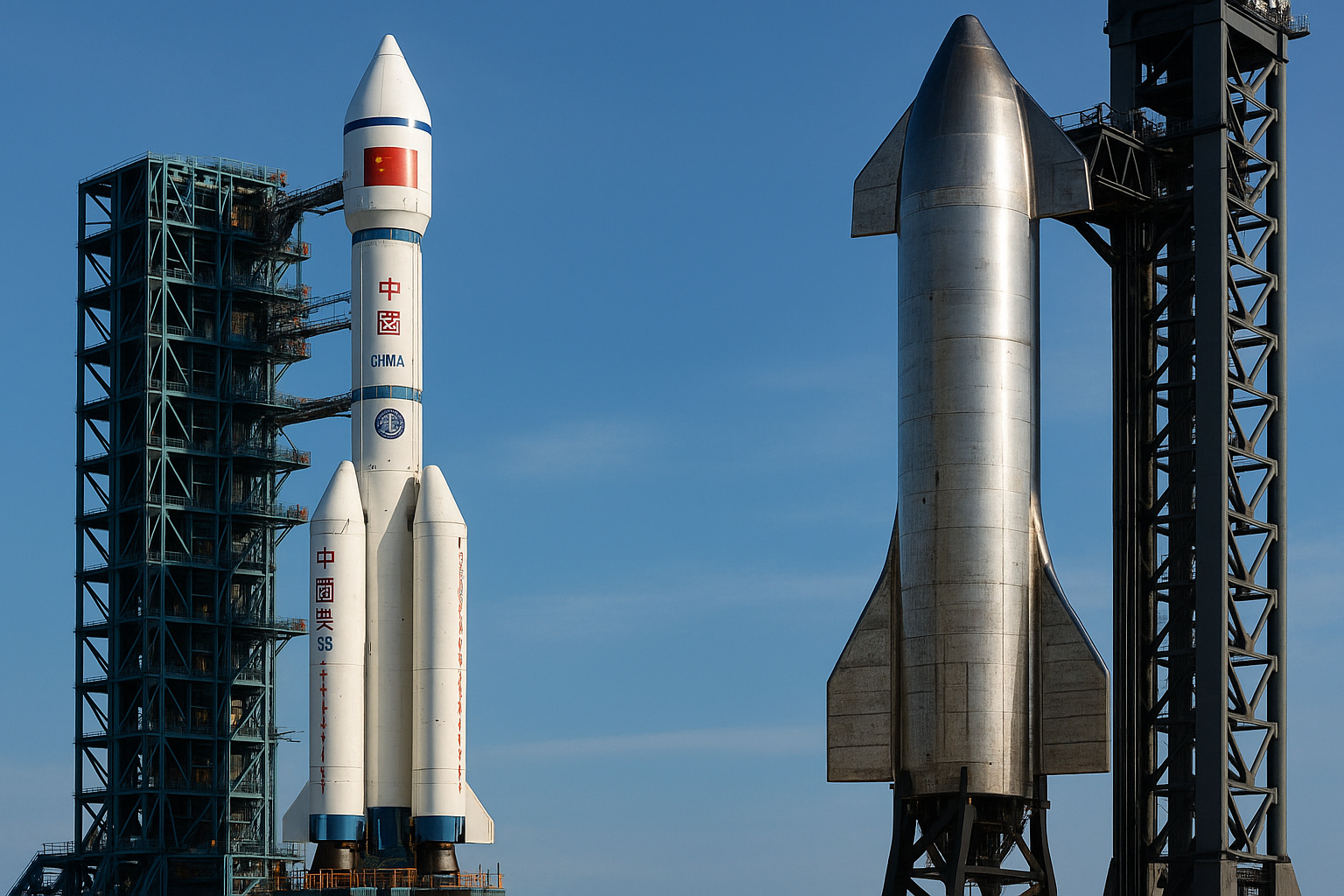
Space Race Gains Strength and Puts NASA Under Global Pressure
The NASA is betting on the Starship megaraft from SpaceX to fulfill the Artemis III mission and take astronauts back to the Moon by 2027.
However, recurring failures and delays threaten the schedule.
Meanwhile, China is accelerating with the Long March-10 rocket, which increases pressure on the United States.
In addition, experts believe that the Asian country could surpass the Americans by 2030.
Starship Faces Failures and Expands Risks of Lunar Mission
Since January 2025, Starship has been experiencing worrying setbacks.
Six out of ten test flights have partially failed, and one prototype even exploded during ground tests.
The 11th experimental flight is scheduled for October 13, 2025, departing from the SpaceX base in Texas, according to CNN Brazil.
Even before takeoff, NASA acknowledges that the project is extremely ambitious.
The system still needs to test in-orbit refueling, something never before achieved by a rocket of similar size.
In 2024, a company executive stated that 10 launches would be needed to complete the mission.
On the other hand, engineers from the Johnson Space Center in Houston estimated that more than 40 Starship tanks could be required for a lunar landing.
This technical divergence has intensified doubts about the mission’s viability.
Despite the criticism, acting administrator Sean Duffy declared on September 4, 2025 that NASA “will beat the Chinese to the Moon”.
This reinforced the agency’s confidence in its lunar return plan.
SpaceX Faces Risks with Continuing Failures of Starship and Musk in 2025
ARTICLE CONTINUES BELOWSee also
Researchers dive nearly 5,000 meters deep in Japan, discovering a rare “glass castle” inhabited by unknown species and demonstrating that the oceans remain one of the greatest mysteries of the planet.

Researchers in Dubai develop a solution for concrete with biodegradable plastic that resists corrosion, provides ductility comparable to that of steel, and paves the way for modular, temporary, and prefabricated structures.

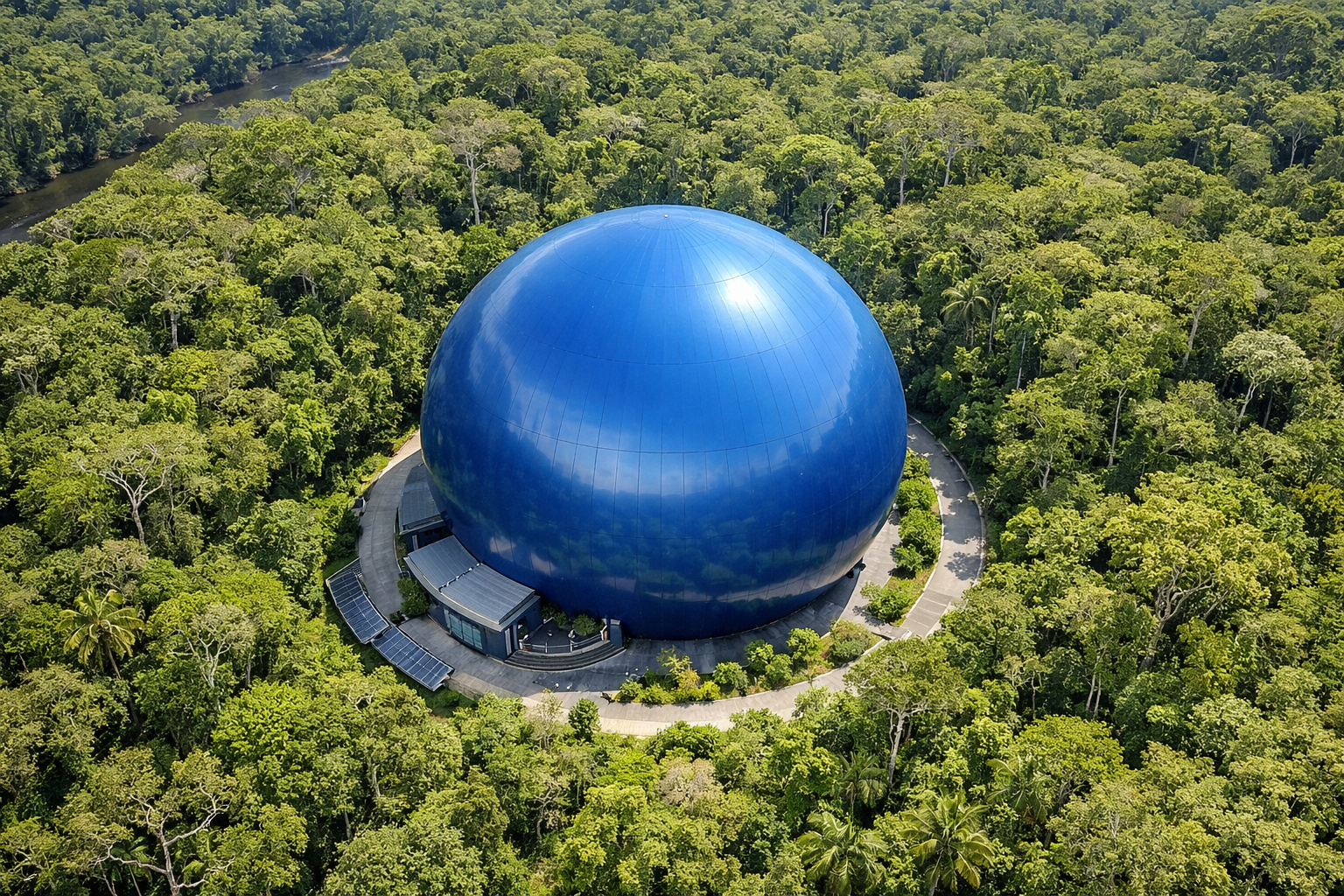
The mysterious giant blue sphere in the middle of the Amazon that went viral on the internet is the Planetarium of Médio Solimões, an impressive project that is revolutionizing access to astronomy in Brazil.
Earth is “pulling” water from the oceans into the core at nearly 3,000 km deep, and scientists finally explain how this slow and invisible process may be completely transforming the planet from the inside over billions of years.

Why NASA Insists on the Starship Project
Unlike the Apollo missions, Artemis III aims to reach the lunar south pole, where there are indications of frozen water.
This resource is considered essential for creating future human bases.
Moreover, the mission requires larger landing modules and an in-orbit refueling system.
The plan calls for the launch of a Starship fuel depot, followed by dozens of additional flights to transfer propellant.
Then, a crewed Starship (HLS) will head to the Moon.
Astronauts will be sent in the Orion spacecraft and will dock with the HLS in lunar orbit.
After that, they will descend to the surface and return to Earth aboard the Orion.
Despite this complex technical design, NASA remains optimistic.
However, former administrator Doug Loverro considers the plan “excessively complicated”.
He claims that the choice of SpaceX as the sole supplier was “a strategic mistake”.
The decision was made while the agency was without confirmed leadership in the U.S. Senate.
China Advances and Threatens U.S. Leadership
While the United States faces delays, China accelerates at a steady pace.
On August 16, 2025, CNSA successfully completed a static test of the Long March-10 rocket.
The equipment produced 990 tons of thrust, according to the Aéreo portal, representing a fundamental advance.
With this performance, the Asian country reinforces the plan to carry out its first crewed mission to the Moon by 2030.
For engineer Bill Nye of The Planetary Society, “China will almost certainly walk on the Moon in the next five years.”
If that happens, the NASA schedule for 2027 will become even tighter.
Moreover, China’s advancement reignites rivalry and intensifies the global lunar race.
Timeline of Starship Tests
- January 16, 2025: explosion of the upper part in the 7th experimental flight (S33/B14); the booster was recovered.
- March 2025: engine failures mark the 8th experimental flight, with loss of control.
- May 27, 2025: the 9th flight (S35/B14) reaches orbit but disintegrates on reentry.
- August 26, 2025: the 10th flight (S37/B16) performs a water landing but explodes upon impact.
- October 13, 2025: the 11th flight (S38/B15) is expected, which could mark the first controlled landing.
A Future of Uncertainties and High Stakes
The NASA races against time and bets on the Starship as a key piece for a new historic leap.
On the other hand, experts warn that the 2027 schedule is overly optimistic.
This is due to the number of pending tests and the risks of refueling.
Meanwhile, China presents a more straightforward and efficient strategy.
The country demonstrates technical consistency, political stability, and long-term planning in its space program.
Thus, the 11th Starship flight may become the decisive milestone that reveals who will truly lead the new era of lunar exploration.








-

-

-

6 pessoas reagiram a isso.