





 Português
  Inglês
  Espanhol
  4 min de leitura
  0 comentários


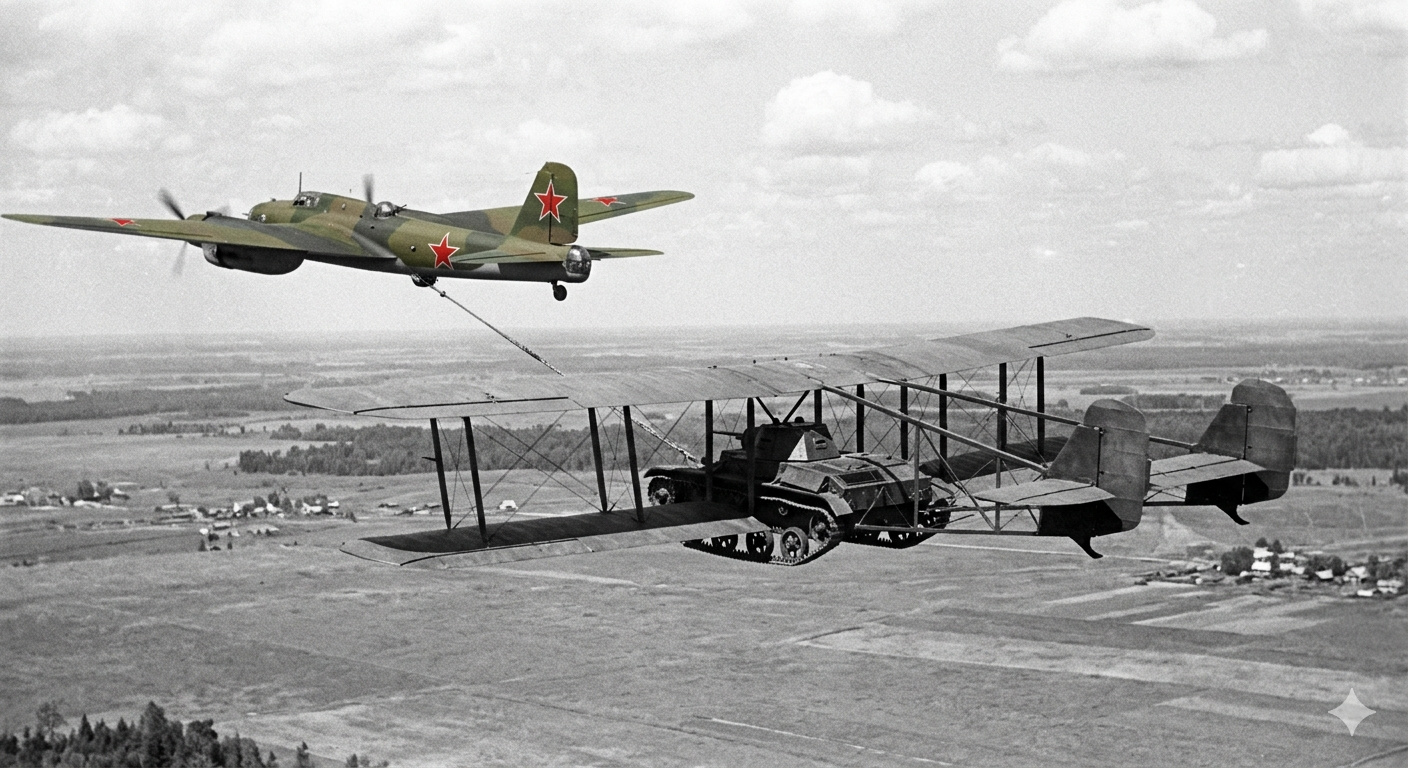
Soviet Project of World War II Tried to Turn a T-60 Tank into a Combat Glider. The A-40 “Flying Tank” Was Tested in 1942.
During World War II, the Soviet Union faced a huge logistical challenge: quickly transporting armored vehicles to the front lines. In many cases, tanks took days to reach the battlefield, especially in areas where railways and roads were destroyed. It was in this context that one of the most unusual ideas in 20th-century military engineering emerged: the A-40 “Flying Tank”, a Soviet experiment that tried to turn a light tank into a giant glider.
The concept seemed improbable at first glance. The idea was simple in theory: attach wings and a large tail to a T-60 tank, transforming the vehicle into a sort of glider. This assembly would be towed by a military aircraft close to the battlefield and then released in the air. After landing, the tank would discard the wings and be immediately ready for combat.
How the Soviet Flying Tank Would Work
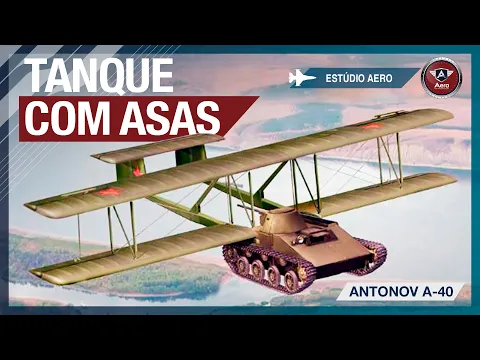
The project was developed in the early 1940s by Soviet aerospace engineer Oleg Antonov, who would later become famous for designing large military transport aircraft. The base vehicle chosen for the experiment was the light tank T-60, a relatively small armored vehicle used by the Red Army.
-
The world’s first octopus farm wants to open in the Canary Islands and is already provoking an international reaction: the plan aims to produce 3,000 tons per year.

-
Drought may be creating stronger superbugs in the soil and helping antibiotic resistance reach hospitals, warns a study highlighting a problem that could grow alongside extreme weather.

-
The biggest scam in history: Napoleon’s France deceived the United States by selling them a territory that was Spanish.

-
Why is the Danakil Desert so dangerous? It has unstable terrain and how extreme temperatures and toxic gases turn the region into one of the most hostile environments on Earth.

To transform it into a glider, the engineers installed:
- a set of large wings
- a double tail structure
- control surfaces similar to those of an airplane
This assembly was designed to be relatively lightweight and easily removable. The idea was for the tank to be towed by a heavy Soviet bomber. When nearing the combat zone, the tow cable would be released, and the tank would glide to the ground.
As soon as it landed, the pilot — who was also the tank driver — would discard the wings and proceed to combat.
The One Flight of the A-40
Despite the boldness of the project, only one complete test of the A-40 was conducted. The experiment took place in 1942, when the glider tank was towed by a Tupolev TB-3, one of the heavy aircraft available in the Soviet Union at that time.

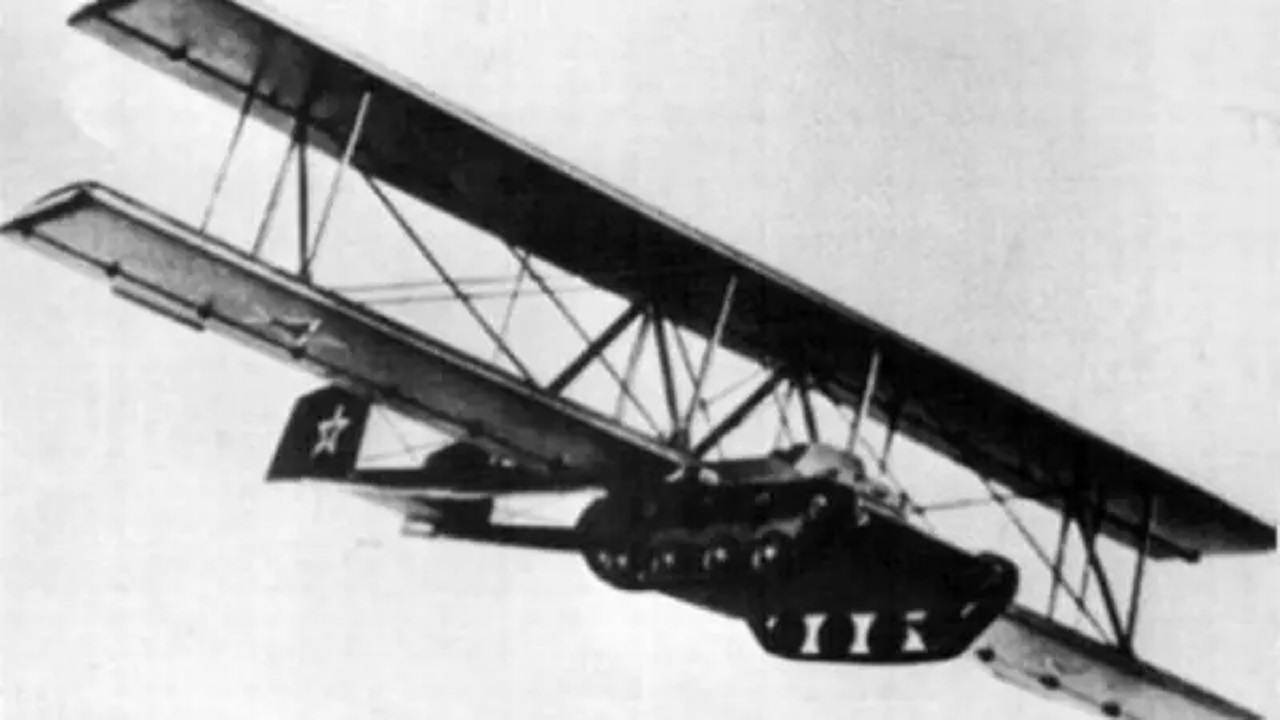
During the test, the tank did manage to fly. The wing system allowed the vehicle to glide briefly after being released in the air, and the pilot managed to land successfully. However, the flight revealed a critical problem.
The weight of the tank was too great for the bomber performing the tow. The TB-3 had tremendous difficulty maintaining altitude during the test and had to release the glider earlier than planned to avoid overload. Even so, the tank was able to land safely, demonstrating that the concept was technically possible.
The Major Problem: Insufficient Power to Tow the Tank
Despite the partial success of the test, engineers quickly realized that the project had a difficult obstacle to overcome. The Soviet aircraft available at the time did not have enough power to safely tow a combat tank.
Even with the T-60 being a relatively light tank by military standards, the complete assembly with wings and aerodynamic structure was still too heavy. A much more powerful transport aircraft would be necessary to make the system viable.
As the Soviet Union was concentrating resources on producing essential weapons and aircraft for the war effort, the project was ultimately deemed impractical.
Why the Project Was Abandoned
After the initial tests, the Red Army concluded that the concept of the flying tank was interesting but not viable in the context of warfare. The main issue was the lack of aircraft capable of safely towing the vehicle.
Additionally, the process of preparing the tank for flight was also complex and time-consuming, which would reduce its usefulness in rapid operations. As a result, the project was officially canceled shortly after the first test.
Although it never saw combat, the A-40 became one of the most curious experiments in Soviet military engineering.
The Idea of Air-Transported Tanks Continued Evolving
Although the A-40 was abandoned, the concept of airlifting armored vehicles did not disappear. Decades later, military forces began to use heavy transport aircraft capable of air-dropping armored vehicles via parachute.
Today, light tanks and combat vehicles can be transported by aircraft such as:
- C-17 Globemaster
- Il-76
- An-124
These systems allow military vehicles to be rapidly deployed to combat areas without relying on ground infrastructure. In a way, the A-40 can be seen as a precursor to these ideas.
One of the Strangest Projects of Military Engineering
Today, the A-40 is remembered as one of the most unusual experiments of World War II. Turning a tank into a glider seemed impossible, but Soviet engineers managed to prove that the idea could work, at least in limited tests.
Even without seeing combat, the flying tank remains a fascinating example of military creativity in wartime, when engineers sought radical solutions to overcome logistical and strategic challenges.
Among the many experimental projects of the time, few were as bold as the curious Soviet armored vehicle that one day truly took to the skies.









Seja o primeiro a reagir!