





 Portuguese
  English
  Spanish
  5 min of reading
  0 comments


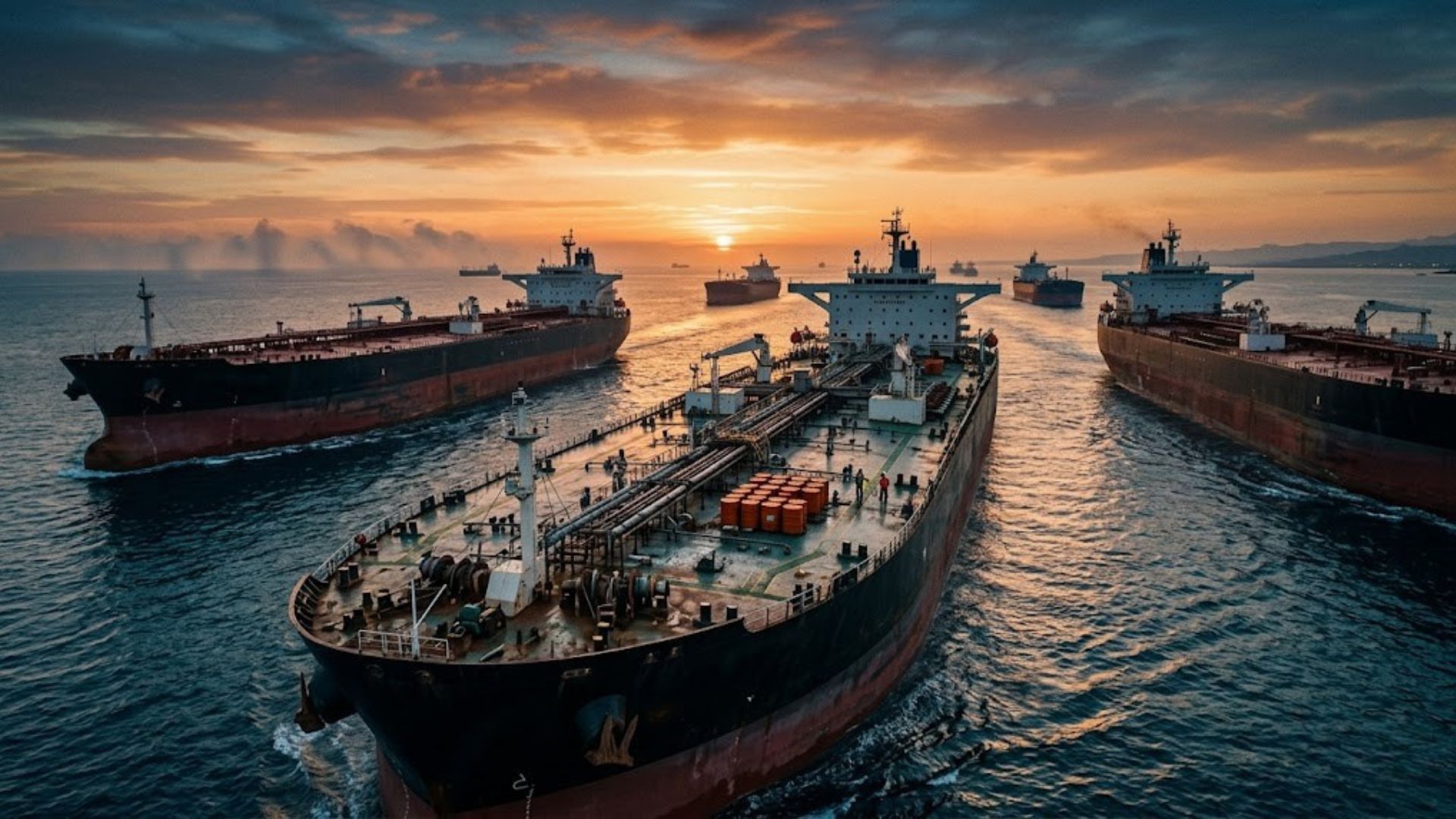
Strategic movement in the Red Sea gains strength with shipping, energy negotiations, and attempts to reduce dependence on a critical global route, amid geopolitical tensions pressuring supply and redrawing the logistical map of oil in the international scenario.
South Korea announced that it intends to send at least five ships to the port of Yanbu, Saudi Arabia, in the coming weeks to open an alternative oil transport route through the Red Sea, amid the crisis affecting the Strait of Hormuz and raising global concerns about energy supply.
The measure was reported by the South Korean government on Monday, April 6, 2026, and may be expanded as contracts with Saudi partners progress.
At the same time, Seoul has begun negotiating additional fuel supplies with Saudi Arabia, Oman, and Algeria, in an attempt to reduce dependence on a maritime corridor currently subjected to significant instability.
-
SISTAC expands contract with Petrobras for maintenance of platforms in the Santos, Campos, and Espírito Santo basins using ROV and specialized underwater operations.
-
Brazil has oil, but not gasoline: the country produces more than 4 million barrels per day, consumes less than half, but remains dependent on imports, says former CEO of Petrobras.

-
Petrobras evaluates suspension of sales to distributors and considers canceling the cooking gas auction following guidelines from the Federal Government.
-
Lula reveals a masterstroke by Petrobras to undo a deal made by Bolsonaro, which involves the return of an important refinery that currently produces less than half of what was expected and makes Brazil dependent on international diesel.
Crisis in the Strait of Hormuz pressures energy alternatives
The movement occurs at a time when the Strait of Hormuz, one of the most relevant passages for global oil trade, faces severe restrictions following military escalation involving Iran, the United States, and Israel.
For a country highly dependent on energy imports, such as South Korea, the search for alternative routes has ceased to be merely a logistical option and has become part of the national security strategy.
Yanbu has gained prominence in this scenario due to its location on the Saudi coast of the Red Sea and its function as an outlet outside the critical area of Hormuz.
The port’s infrastructure connects to the Saudi oil transport system and allows for the redirection of part of the exportable production, even though experts and market agents point to practical limits for a broad and immediate replacement of the traditional flow.
Port of Yanbu becomes a key piece in the new oil route
In recent weeks, Saudi Arabia itself has been intensifying the use of Yanbu to compensate for the difficulties of shipments through the Gulf.
Data showed a significant increase in shipments through the Red Sea in early March, although the volume was still below what was necessary to fully compensate for the loss of capacity caused by the disruption of the usual corridor.
This context helps explain why Seoul decided to accelerate the logistical and diplomatic plan simultaneously.
The strategy is not limited to sending the vessels but involves a broader diplomatic front to ensure a continuous supply of oil, liquefied gas, naphtha, urea, and other inputs considered critical for the industry and the South Korean economy.
Energy diplomacy enters the center of South Korean strategy
In the weekend prior to the announcement, South Korea’s Finance Minister, Koo Yun-cheol, met with ambassadors from Gulf Cooperation Council countries to request stability in energy supply and security guarantees for South Korean ships and crews operating in the region.
According to the government, the representatives informed that they would maintain close communication with Seoul in light of the worsening crisis.
Additionally, the debate in Seoul has begun to include emergency measures to protect the domestic market should pressure on imports persist.
Among the alternatives discussed by authorities, the possibility of using strategic oil reserves to meet private refineries emerged, with replenishment to follow once new shipments from abroad arrive in the country.
Asian dependence amplifies impact of the crisis in the Middle East
The decision to seek new pathways for oil also reflects a broader understanding of Asian vulnerability in the face of the crisis in the Middle East.
Importing countries in the region heavily depend on shipments that traditionally cross Hormuz, and any prolonged interruption affects not only prices but also freight costs, ship availability, maritime insurance, and delivery times for refineries and distributors.
In the case of Saudi Arabia, the alternative of Yanbu relies on the East-West pipeline, a structure that theoretically can redirect a significant portion of production to the Red Sea.
Still, market agents reported infrastructure obstacles, operational restrictions related to the type of oil transported, and difficulties in contracting ships willing to operate on the route amid the risk environment.
Logistical limitations and risks still challenge operation
These obstacles help to gauge the weight of the South Korean initiative.
The sending of five vessels does not represent merely an isolated commercial operation but an attempt to ensure presence on a route whose relevance has rapidly increased with the disorganization of energy traffic in the Gulf region.
Still, the effective volume that can be transported will depend on the contracts closed with Saudi partners and the availability of ships in the coming weeks.
Meanwhile, negotiation with Oman and Algeria indicates an effort to diversify suppliers and reduce risks.
This expansion of interlocutors reduces exposure to a single supplier and offers some maneuvering room to a country that needs to balance geopolitical risk and continuity of domestic supply.
South Korean President Lee Jae Myung stated, in a cabinet meeting, that the country would have to accept a certain degree of risk to maintain oil imports from the Middle East, as there are not many fully available substitute routes in the short term.
The statement summarizes Seoul’s dilemma: to avoid supply shortages without ignoring the deteriorating security conditions in the planet’s main exporting zone.
In the international market, the crisis in Hormuz has already caused a reordering among producers with and without alternative routes.
Analyses indicated that countries capable of redirecting part of their loads have gained a relative advantage, although they remain subject to operational limitations and threats to navigation.
It is in this environment that the Red Sea returns to the center of global oil geopolitics.
More than an emergency diversion, the route through Yanbu has begun to be seen by Asian importers as an alternative that can gain weight whenever the Gulf faces military or diplomatic shocks.
For South Korea, the immediate priority is to transform this alternative into a concrete supply flow, with ships, contracts, and deliveries that reduce exposure to the bottleneck of Hormuz.








Seja o primeiro a reagir!