





 English
  Francês
  Alemão
  Italiano
  Japonês
  Norueguês
  Portuguese
  Spanish
  5 min of reading


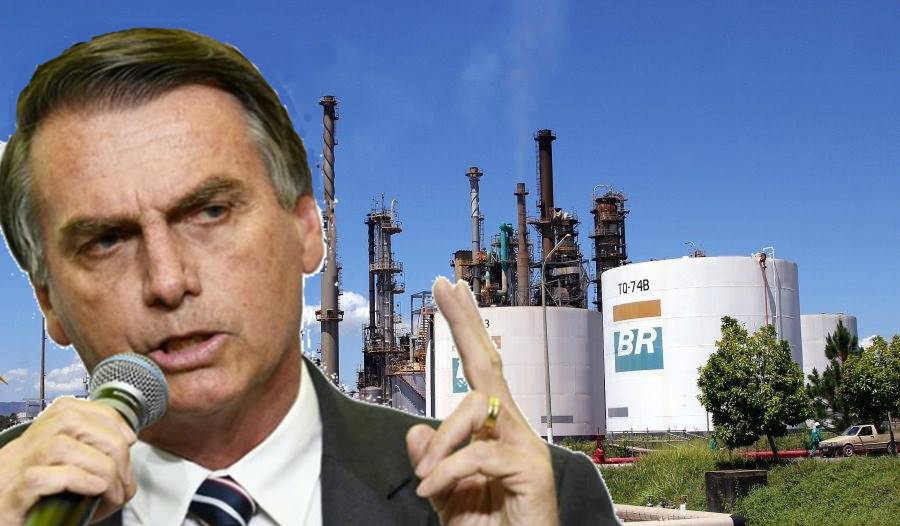
One of the main proposals is to keep Petrobras as a mixed-capital state company, but the refining, distribution, logistics, and transportation market subsidiaries will be sold
After the country elected Jair Bolsonaro, the self-proclaimed “Trump of the tropics,” the Brazilian oil and natural gas industry will likely continue with reforms aimed at attracting investment and boosting production, especially in the highly productive pre-salt frontier. The right-wing elected president, who ran on a law-and-order platform, defeated leftist Fernando Haddad of the Workers’ Party (PT) by a margin of 55% to 45%. Polls leading up to the second round indicated a win for Bolsonaro, although the final margin of victory was closer than expected.
The great reopening of Brazil’s oil patch, which began in mid-2016 after the impeachment of former president Dilma Rousseff, is expected to continue under the new government, with Bolsonaro maintaining the reforms implemented in the past two years. Brazil has established a fixed annual schedule of production-sharing auctions and bidding rounds, reduced the requirements to use locally produced goods and services in exploration and development, and allowed foreign oil companies to operate pre-salt fields sold under production-sharing agreements.
The National Petroleum Agency (ANP) already has plans to hold the country’s 16th bidding round and the sixth production-sharing auction for pre-salt in the second half of 2019, which is expected to be maintained and approved by the National Energy Policy Council (CNPE) this week. Additionally, Bolsonaro is likely to push the government to conclude the price adjustment negotiations in the areas of rights transfer with Petrobras. This would pave the way for the government to sell additional volumes of oil that Petrobras discovered in areas under government control.
-
Government unlocks R$ 554 million for a highway that has been requested for decades and accelerates the duplication of BR.
-
Without bricks, without cement, and without endless construction: the cardboard house that is assembled in modules and can be moved.

-
Billions of barrels on the equatorial margin could lead Amapá to double its oil production in Brazil — the state aims to enter the route of companies in the Campos Basin, attract investments, and boost jobs and businesses in the oil and gas sector.
-
Without bricks, without cement, and without endless construction: the cardboard house that is assembled in modules and can be moved.

A rights transfer auction would be highly anticipated by the oil industry, with the sale putting around 5 billion to 15 billion barrels of oil equivalent that have been discovered, launched, and drilled on the market. Initial estimates attribute potential signing bonuses generated by the auction at US $ 100 billion.
Petrobras already holds the rights to produce 5 billion barrels from the region, with the Búzios Field that pumped its first oil in April, with an estimated 3.1 billion recoverable barrels.
Partial Plan
Under the terms of Bolsonaro’s economic policy plan presented in early October, the new president also promised to gradually remove local content requirements, establish incentives for small businesses, and incentives for the exploration and development of unconventional deposits and open natural gas markets to competition. Petrobras will remain a mixed-capital state company, but subsidiaries that hold dominant positions in the refining, distribution, logistics, and transportation market will be sold, according to the plan.
Bolsonaro’s candidate for Minister of Finance, widely respected economist Paulo Guedes, also confirmed on Monday that the government will continue privatizing state-led industrial entities under the new government.
Government support is expected to help Petrobras advance with its often-delayed plan to sell US $ 21 billion in assets in 2017-18. Several asset sales are on hold due to the Supreme Court’s ruling that Congress must approve the sale of strategic assets, such as Petrobras’ sale of four refineries representing 25% of installed capacity and the gas pipeline network Transportadora Associada de Gas, or TAG. The sale of TAG is expected to raise more than US $ 5 billion for Petrobras.
The injunction was issued despite an improved and transparent sales methodology implemented by the Federal Court of Accounts (TCU), which acts as the government’s oversight body.
Diesel Subsidies Will Be One of Bolsonaro’s Biggest Challenges
One of the biggest challenges for the new government will be what to do with a continued subsidy on domestic diesel prices. The government agreed to lower diesel prices to resolve a brutal 10-day strike by independent truck drivers in May, but the subsidy expires on December 31. Petrobras and other distributors, importers, and refiners adhering to the subsidy will be reimbursed for the difference between international exports and domestic prices, which are expected to cost around 9.5 billion reais.
Bolsonaro will likely need to backtrack from his anti-establishment campaign rhetoric to negotiate with a Congress that is likely to be led by an opposition-controlled alliance in the first weeks of the new government, to address the issue of diesel subsidies or face a potential crisis. The recent strengthening of the Brazilian real against the U.S. dollar and lower international prices for petroleum derivatives, however, have helped to naturally reduce fuel prices, a trend that should assist negotiations.
The subsidy negotiations could also be included as part of a broader review of Brazil’s distribution segment. Bolsonaro’s economic plan included changes to how transportation fuels are taxed in Brazil, as well as the implementation of “appropriate protections” to ease the impact of fuel market volatility on domestic consumers.
Bolsonaro Will Need to Build Alliances to Approve His Energy Projects
Bolsonaro’s Social Liberal Party, or PSL, is the second largest voting bloc in the Chamber of Deputies, although the group may eventually expand its power with a possible alliance with a center group of parties. But even alone, the size of the PSL should be enough to fend off any attempts by the opposition to overturn recent reform advances, such as making Petrobras the sole operator of pre-salt fields sold under production-sharing agreements.
Few concrete details have emerged about the primary energy policy objectives and goals of Bolsonaro on Monday. Market talk late last week indicated that Bolsonaro was considering appointing a general to be CEO of Petrobras, which could be seen as a step backward given the market-oriented leadership of Pedro Parente and Ivan Monteiro. The Ministry of Mines and Energy will have the task of continuing studies on the best way to open Brazilian fuel and natural gas markets to competition, which will require competent leadership with sector knowledge.
The contract of ANP’s Director-General, Decio Oddone, a widely respected industry leader, will end in 2020, with Oddone stating that he would like to continue in the position. Oddone led the ANP through massive modernization and the large number of bidding rounds held in the past two years.








Seja o primeiro a reagir!