





 Portuguese
  English
  Spanish
  7 min of reading
  0 comments


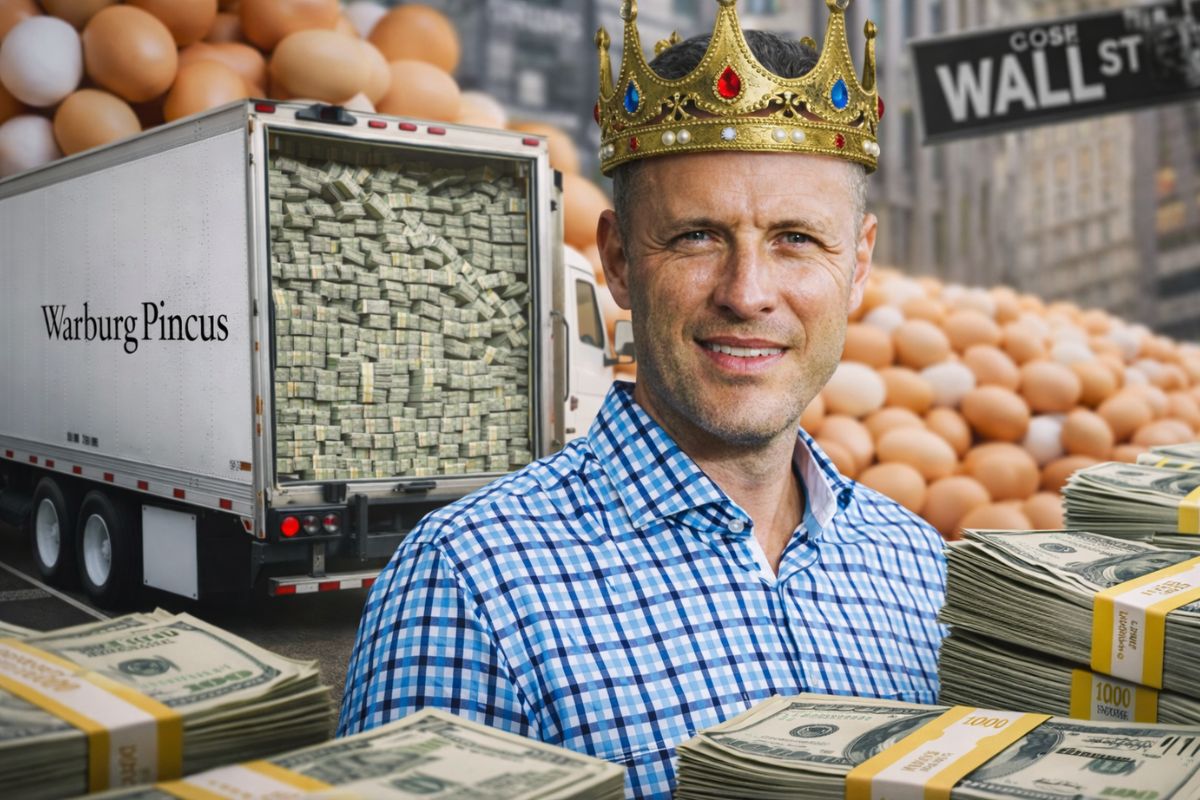
Egg King, Ricardo Faria, Negotiates Investment of Up to US$ 1 Billion from Warburg Pincus, Which Manages Over US$ 125 Billion and Invests in 215 Companies; With This, Global Eggs Is Valued at US$ 8 Billion (R$ 40.5 Billion) and Accelerates Acquisitions in the US and Europe Immediately.
The Egg King, Ricardo Faria, is about to place Global Eggs on another shelf of global capitalism with the entry of Warburg Pincus, in a move that combines planned expansion, a race for scale, and a pragmatic understanding of efficiency in the food sector.
The investment may reach US$ 1 billion (R$ 5.13 billion) and raises the company’s valuation to US$ 8 billion, about R$ 40.5 billion, while reinforcing the strategy for growth in the United States and Europe, with operations distributed between South America, the US market, and the European continent.
A “Money Truck” That Changes the Status of an Egg Company
When a company founded in 2018 is valued at US$ 8 billion, what’s at stake is not just a number, but a message: the market sees a platform ready to consolidate competitors, gain scale, and occupy space in global supply chains.
-
Larger than entire cities in Brazil: BYD is building a 4.6 km² complex in Bahia with a capacity for 600,000 vehicles per year, but the discovery of 163 workers in conditions analogous to slavery has shaken the entire project.

-
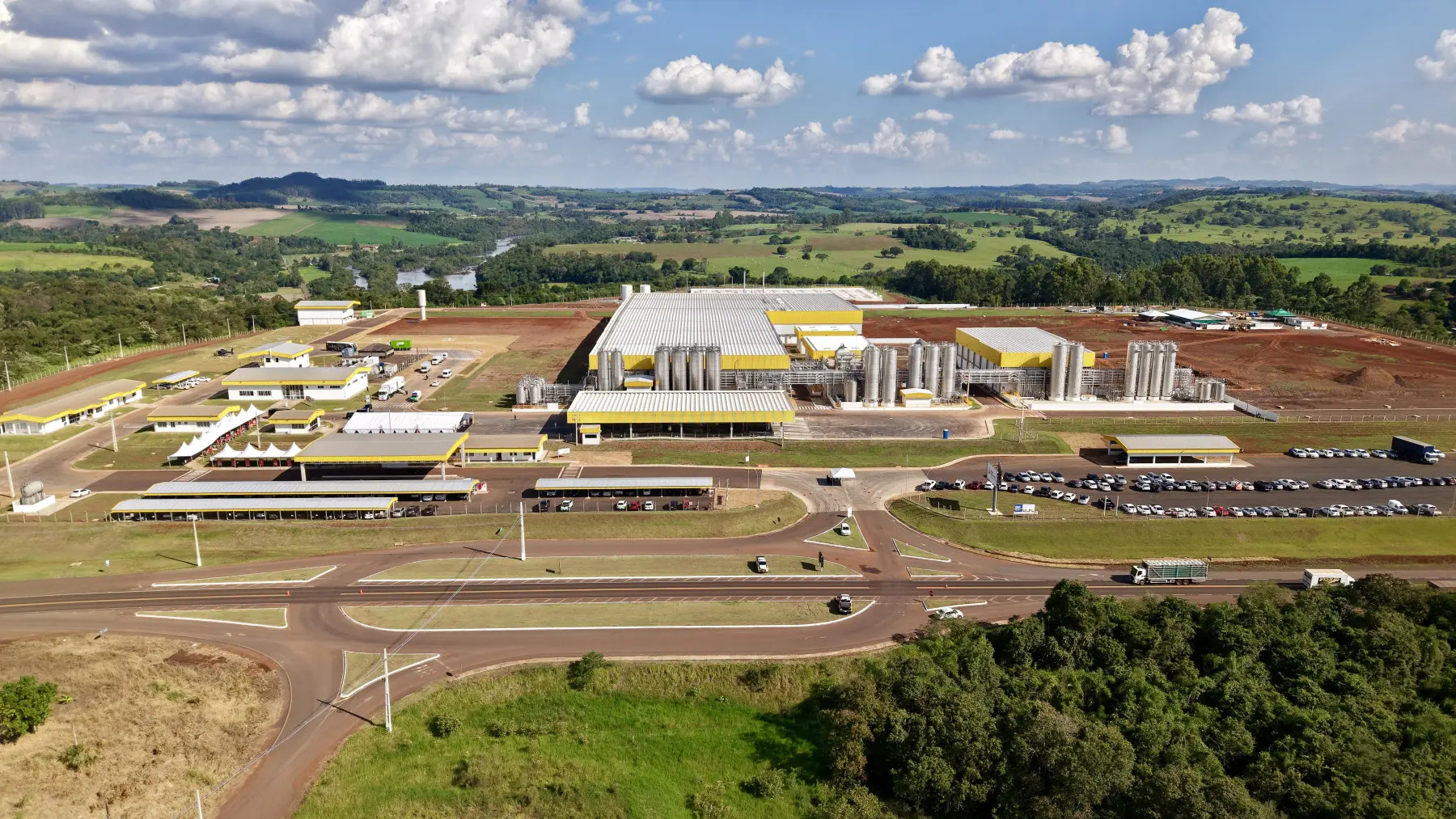
With an investment of R$ 612 million, a capacity to process 1.2 million liters of milk per day, Piracanjuba inaugurates a mega cheese factory that increases national production, reduces dependence on imports, and repositions Brazil on the global dairy map.
-
Brazilian city gains industrial hub for 85 companies that is equivalent to 55 football fields.

-
Peugeot and Citroën factory in Argentina cuts production by half and opens a layoff program for more than 2,000 employees after Brazil drastically reduced purchases of Argentine vehicles.


In the case of the Egg King, the check signals that the business has moved from being just a story of rapid growth to an international expansion thesis with financial muscle.
The practical impact appears in decisions that were once difficult to accelerate simultaneously: asset purchases, brand integration, capacity reinforcement, and operational adjustments for different regulatory requirements. Big money does not just buy volume; it buys time, and in the food sectors, time often means logistical advantage, more stable contracts, and predictability for planning the next leap.
Why Warburg Pincus Enters This Type of Operation
Warburg Pincus is described as a financial colossus for managing over US$ 125 billion in assets and holding stakes in 215 companies. This size is not a detail: it indicates the capacity to make significant investments without relying on a single bet, and the ability to follow growth with new rounds of capital if the plan requires it.
In the case of the Egg King, the transaction is structured by a specific fund aimed at capital solutions for growing companies.
In practical terms, this usually targets businesses that have already proven execution but need resources to scale faster than they could with only their own cash. The investment becomes fuel to expand presence and, at the same time, a kind of “seal” of validation in the eyes of partners, suppliers, and potential acquisition targets.
Where the Capital Goes: Grow from Within and Buy from Outside
The declared strategy involves two tracks: organic expansion and strategic acquisitions. Growing organically means increasing capacity, efficiency, and distribution within what already exists; buying, on the other hand, is shortening the path by absorbing ready-made structures, contracts, brands, and regional positioning.
The founder conducts this international expansion living between the United States and Europe, where he spends most of the year overseeing progress.
This helps to explain the “where” of the story: the center of gravity of the plan is in the US and Europe, with the company already structured in South America. In operations of this size, direct leadership presence reduces integration noise and accelerates decisions that often stall at a distance.
The Real Size of Global Eggs in Numbers and Geography
Global Eggs has built, in six years, a scale picture that is hard to ignore: 50 farms distributed across South America, the United States, and Europe, with 45 million birds in operation. For a food business, this type of productive base matters because it defines not only volume but the capacity to fulfill contracts, meet demand peaks, and maintain delivery regularity.
The company projects to deliver more than 15 billion eggs in the year and operates through brands in key regions: Granja Faria (South America), Hevo Group (Europe), and Hillandale Farms (USA). It is not just international presence; it is a multinational architecture by blocks, designed to operate locally with brands that already connect with their markets.
The Vertical Model and What It Solves in Day-to-Day Operations
The “operational secret” presented is verticalization: the company controls critical stages, from raising pullets and manufacturing feed to packaging and final logistics. This typically reduces dependence on third parties, improves cost predictability, and standardizes processes—factors that weigh heavily when the business crosses borders and needs to maintain consistency.
There is also an important technical effect: verticalizing helps to strengthen traceability and quality control, sensitive points in food. When the chain is long and fragmented, the risk spreads; when it is integrated, the risk becomes more manageable, although it requires more investment and operational discipline to avoid becoming internal inefficiency.
Animal Welfare and Modern Standards: Cage-Free and Free Range in the Portfolio
Adaptation to current requirements appears in the offering of conventional eggs and options for cage-free (birds outside cages) and free range (with outdoor access). These categories are not just labels: they respond to the purchasing standards of retail chains, corporate commitments, and consumer expectations in different countries.
For a group that wants to accelerate acquisitions and expand presence in the US and Europe, this production diversity also functions as a market access tool. Meeting international food safety and welfare standards becomes, in practice, a prerequisite for not being limited to niches or specific regions.
Hillandale Farms and the Leap of Credibility in the American Market
Global Eggs controls Hillandale Farms in the United States, acquired last year for more than US$ 1 billion. This fact carries double weight: it shows that the company has been executing relevant purchases and, at the same time, reveals the ambition to gain scale where competition is intense and logistics is decisive.
Operating with a brand of this size also strengthens the strategy of “where” growth happens: the Egg King is not just exporting an operation; he is positioning himself with local assets in strategic markets.
Buying ready-made structure reduces the time to scale, but increases the need for efficient integration so that gains do not get lost along the way.
Who Is Ricardo Faria and How the “Egg King” Was Born
Ricardo Faria, from Santa Catarina, spent his childhood in Criciúma and began early to show commercial flair: at seven, he sold popsicles and fruits on the streets of Santa Catarina. Although he prepared to pursue medicine, he chose Agronomy at UFRGS, a foundation that would support the creation of Granja Faria in 2006.
Before mastering agribusiness, he profited in the industrial sector with Lavebras, sold in 2017, and reinvested the capital in agricultural expansion.
During this period, the group’s revenue jumped from R$ 183 million to over R$ 2 billion in five years. The nickname “Egg King” becomes a shortcut to explain a trajectory of execution, but the backdrop is a sequence of reinvestment and expansion decisions.
What Changes When a Food Company Is Valued at US$ 8 Billion
A valuation of US$ 8 billion places Global Eggs at a level where governance, goals, and performance discipline gain another layer of scrutiny.
Even without delving into internal details, it is natural that operations of this size begin to demand more robust processes, clear criteria for acquisitions, and an integration that preserves efficiency without choking local brands.
It also changes the negotiating power: with available capital and a high valuation, the company tends to attract more opportunities as well as more scrutiny.
Growing fast is an advantage; sustaining growth is the challenge, especially when operating on different continents and needing to harmonize standards, logistics, and management.
Points of Attention: Integration, Scale, and the Complexity of Operating in Three Regions
Accelerating acquisitions in the US and Europe while maintaining a base in South America increases complexity. Integration of acquired companies requires alignment of processes, culture, and indicators, and any misalignment can be costly in productivity and quality.
There are also typical risks of large-scale food chains, such as logistics, operational control, and pressure for standardization.
The larger the system, the more expensive a small mistake becomes, as it multiplies. It is precisely here that verticalization and the direct presence of leadership between the United States and Europe can function as control mechanisms, as long as they are accompanied by consistent execution.
The investment of up to US$ 1 billion and the valuation of US$ 8 billion outline a new chapter for the Egg King: more purchasing capacity, faster expansion, and more responsibility to prove that global scale can go hand in hand with efficiency, quality, and adaptation to international standards.
Now it’s worth listening to those who follow agribusiness and the food sector closely: do you think that the entry of heavy capital from Wall Street tends to strengthen Brazilian companies in the world or increases risks of pressure for growth at any cost?
What, in your view, is the most critical point for Global Eggs to get right in this phase—integration, logistics, production standard, or governance?






Seja o primeiro a reagir!