





 Portuguese
  English
  Spanish
  4 min of reading
  0 comments


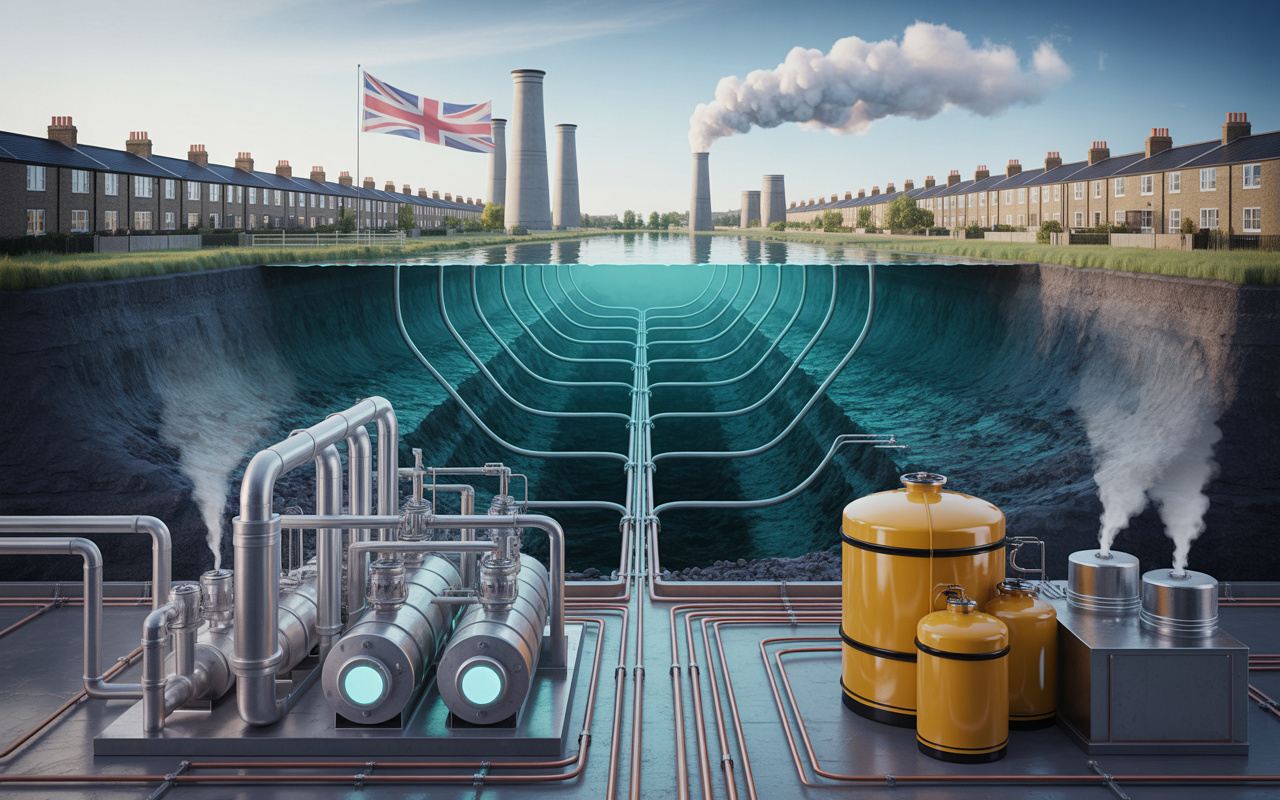
In The United Kingdom, Flooded Mine Water Treats More Than 232 Billion Liters Per Year and Feeds Projects That Extract Subterranean Heat to Warm Neighborhoods and Reduce Emissions.
When coal mines closed in late 2015, ending centuries of mining in the United Kingdom, thousands of kilometers of tunnels and galleries were abandoned. These ancient labyrinths, hundreds of meters below ground, filled with water over the years — a natural effect of the disruption of the pumping systems that kept the mines dry during operation.
What initially seemed like an industrial liability has turned into a strategic resource for water supply and energy, especially in a country seeking low-carbon alternatives and local energy solutions.
Millions of Liters Treated and a New Function for Flooded Galleries
The authority responsible for mine remediation manages more than 80 mine water treatment systems in the United Kingdom, with an installed capacity to treat more than 232 billion liters per year.
-
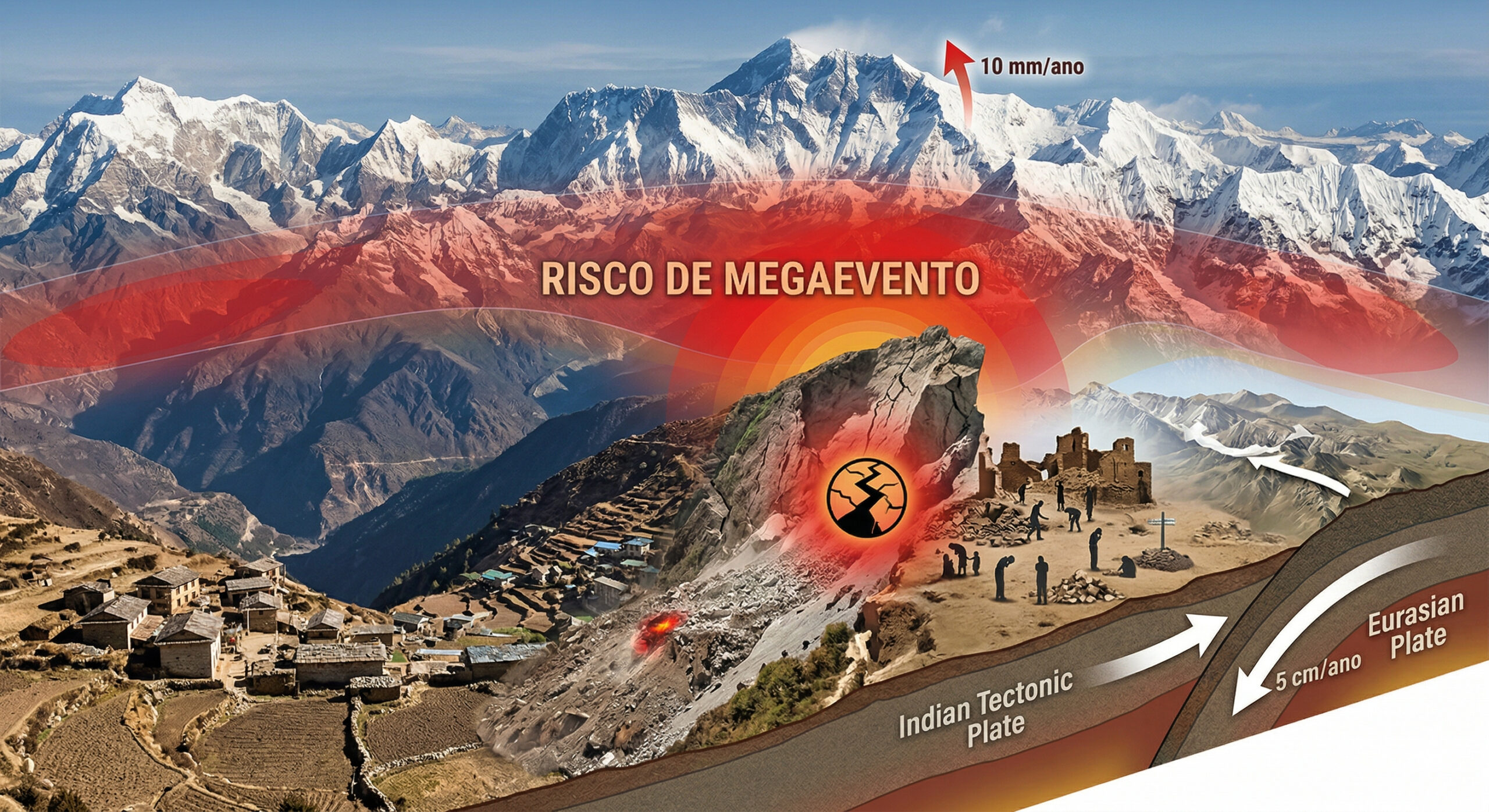
The Himalayas continue to grow to this day, with tectonic plates advancing 5 cm per year, mountains rising up to 10 mm annually, and the 2015 earthquake that killed 9,000 people may have increased the risk of an even larger seismic mega-event.
-
At an altitude of 400 km by astronauts from the International Space Station, Paris transforms at night into a golden mesh so precise that it reveals the outline of the Seine River, avenues, and entire neighborhoods like a luminous map drawn over the Earth.

-
iPhone 17 reaches historic low price with 256 GB, 120 Hz display, and drops to R$ 5,703 on Shopee, featuring A19 chip, dual 48 MP cameras, battery life of up to 30 hours, and advanced AI features.

-
Trip to Mars getting closer: Pulsar Fusion, from the UK, advances with plasma ignition in fusion engine and could drastically reduce space travel time, making crewed missions faster, safer, and economically viable.


The treatment prevents contaminated water from reaching rivers and groundwater, removing iron, metals, and sediments. In addition to protecting the environment, this process transforms a liability into a useful resource for urban geothermal energy projects.
Gateshead and the Heating of Entire Neighborhoods
The most emblematic case is that of Gateshead, in northeast England. Since 2023, the city has operated one of the largest urban heating schemes using mine water in Europe.
The water collected from the flooded galleries, over 150 meters deep, maintains a stable temperature between 10 °C and 20 °C throughout the year, thanks to the geothermal gradient. This water feeds a 6 MW heat pump, connected to a thermal distribution network with more than 5 km of piping.


The system already heats public buildings, municipal equipment, and approximately 350 residences, with public plans for expansion to new housing, a hotel, a conference center, and cultural facilities.
According to technical estimates, the project can avoid more than 72,000 tons of CO₂ in 40 years, equivalent to over 1,800 tons per year — a significant impact in a country where domestic heating is one of the largest contributors to emissions.
New Initiatives in Development
Other regions are also advancing in the use of mine water as a thermal and water source:
• In Seaham (County Durham), a mine water-based energy center is under construction to heat a new residential community and protect local water resources.
• In Wales, there are commercial schemes using mine water to heat industrial facilities, demonstrating economic viability beyond the public sector.
These cases show that the use goes beyond housing heating, reaching industries, urban equipment, and even critical municipal infrastructure.
A Source of Heat That Does Not Depend on the Climate
Unlike solar and wind energy, water in deep galleries maintains a stable temperature all year round, making it a continuous, predictable source that is not affected by the weather.
The thermal cycle works simply:
- hot water is pumped from the mine,
- transfers heat to an isolated circuit through exchangers,
- is cooled and returned to the mine,
- where it is reheated geothermally and by residual heat from the galleries.
The process is continuous and uses high-efficiency equipment, such as heat pumps and industrial exchangers.
A Solution with Urban and Environmental Impact
The British model brings together three simultaneous impacts:
- Environmental: prevents river and aquifer contamination.
- Energy: reduces the use of natural gas in urban heating.
- Industrial: repurposes abandoned infrastructure from the past.
By transforming flooded mines into urban thermal networks, the United Kingdom reduces emissions, improves water security, and converts an industrial liability into a strategic asset of the 21st century.
Why Few Know About This Model
The system is little known outside of technical circles for three main reasons:
• it requires the presence of deep mines near urban areas — something rare in many countries,
• it involves simultaneous engineering of water treatment and geothermal systems,
• it has not yet been widely replicated internationally.
The United Kingdom, having hundreds of deep mines in densely populated areas, has become a natural laboratory for this type of solution.
What was once a drainage and environmental contamination problem has become a strategic water and energy infrastructure. With real capacity to treat more than 232 billion liters of mine water per year, the country now heats neighborhoods, reduces emissions, and repositions an industrial legacy as a sustainable urban asset.
This is a rare case where energy policy, engineering, and environmental remediation converge to create an efficient, low-carbon, and scalable urban solution.







-

-

-

6 pessoas reagiram a isso.