





 Portuguese
  English
  Spanish
  5 min of reading
  0 comments


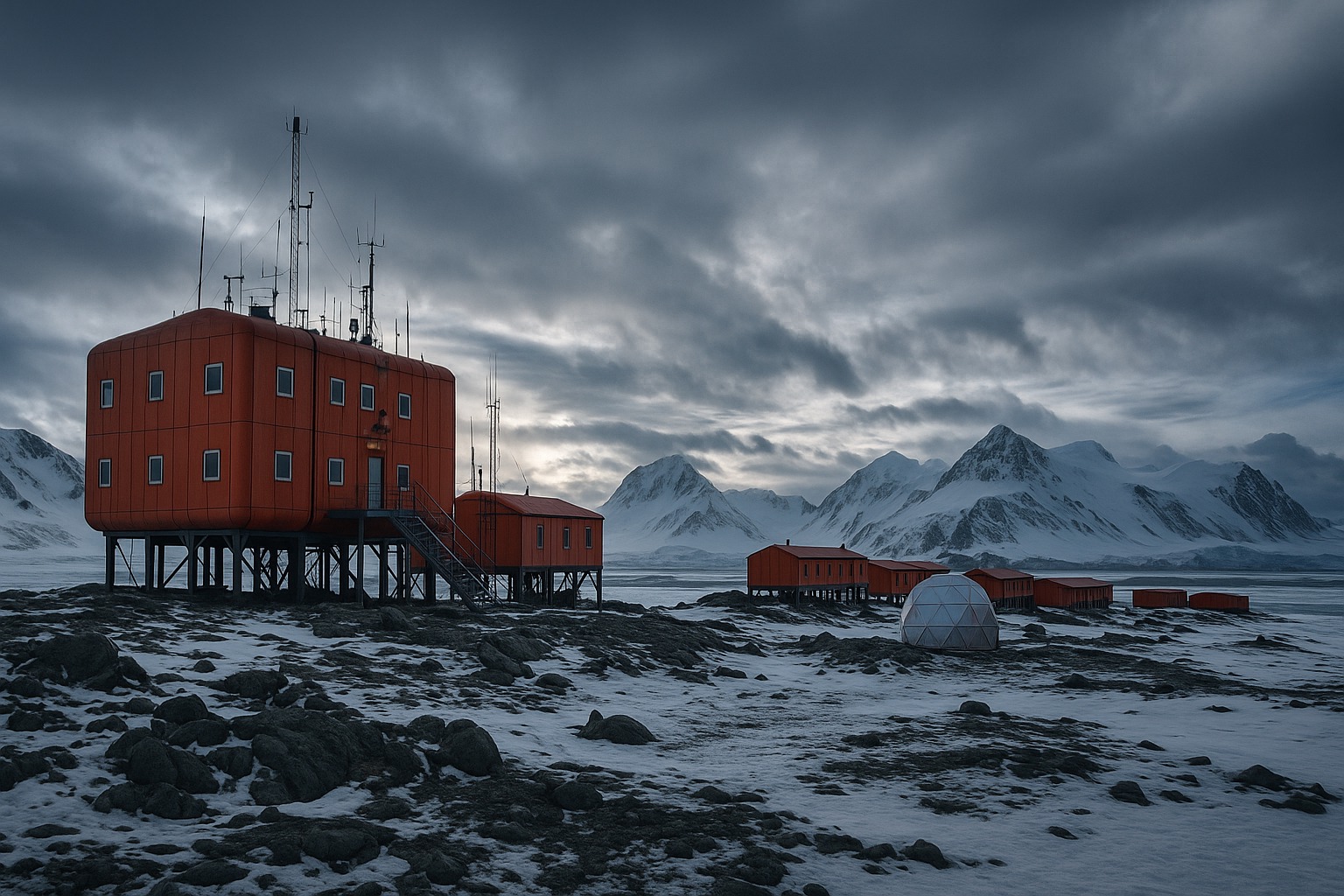
Network of Over 70 Stations Operated by 29 Countries Ensures Research on Climate, Ice, Ecosystems, and Atmosphere Amid Extreme Conditions and Ongoing Isolation
The Antarctic hosts over 70 research stations operated by 29 countries because the continent offers unique conditions for studies on climate, ecosystems, and geological processes. This network supports scientific investigations that rely on continuous presence, despite the challenges posed by extreme cold and isolation. Therefore, these bases have become an essential part of international cooperation.
The stations have existed for more than a century. Expansion began in the early 1900s, when countries recognized the scientific value of the region.
Moreover, projects have diversified as new laboratories have been built to withstand strong winds, heavy snow, and long periods of darkness.
-
Motorola launched the Signature with a gold seal from DxOMark, tying with the iPhone 17 Pro in camera performance, Snapdragon 8 Gen 5 that surpassed 3 million in benchmarks, and a zoom that impresses even at night.

-
Satellites reveal beneath the Sahara a giant river buried for thousands of kilometers: study shows that the largest hot desert on the planet was once traversed by a river system comparable to the largest on Earth.

-
Scientists have captured something never seen in space: newly born stars are creating gigantic rings of light a thousand times larger than the distance between the Earth and the Sun, and this changes everything we knew about stellar birth.

-
Geologists find traces of a continent that disappeared 155 million years ago after separating from Australia and reveal that it did not sink, but broke into fragments scattered across Southeast Asia.

Thus, the infrastructure has evolved alongside research needs.
Today, many facilities use expandable modules. These modules allow quick adaptations when specific missions arise.
Modularity also reduces operational risks because it makes repairs and expansions easier. The accommodations follow this same concept and provide minimal conditions for long stays.

Permanent and Temporary Stations
The permanent bases operate year-round. They collect continuous data that help understand slow changes in climate, atmosphere, and ice.
Each laboratory operates even during the harsh winter, when storms interrupt outdoor activities and affect researchers’ daily lives.
The routine is intense during these months. Scientists rely on stable communication systems and regular logistical support.
Small failures can compromise many days of work. Therefore, each station has strict maintenance protocols.
In addition to the permanent bases, there are temporary stations. They emerge for seasonal campaigns, usually in the summer.
The less harsh climate facilitates short missions. These bases are smaller, mobile, and set up quickly.
The temporary format also allows for testing new data collection methods. Many teams prefer this model for studies requiring mobility or quick observations.
Still, they depend on permanent structures for support and supply.
A third type is the national bases. Each country organizes its stations according to internal priorities. Argentina and Russia, for example, maintain more than five.
Other nations, such as the United States, United Kingdom, and Chile, operate their own facilities with multidisciplinary teams.
International Projects
There are also multilateral bases. They strengthen cooperation between countries and enhance data exchange.
This practice follows the Antarctic Treaty, signed by 55 nations. In 2023, nearly 30 signatories had active bases on the continent.
These collaborations reduce costs and increase the scope of studies because researchers can share equipment, laboratories, and logistics.
Joint work facilitates experiments that would be impossible without cooperation. Antarctica has thus become one of the largest examples of shared science.
Research Lines
Scientific activities in Antarctica encompass many disciplines. Each area takes advantage of the unique characteristics of the polar environment.
Glaciology, for example, relies on deep, preserved ice to study past climate. Astronomy benefits from low light interference and dry air.
Biology investigates forms of life that survive extreme cold.
These studies require special methods. Many experiments need equipment resistant to low temperatures.
Moreover, transporting instruments to Antarctica involves detailed planning, as any failure can delay entire collections.
Studies on climate change are among the most important. Researchers analyze ice cores that store information from hundreds of thousands of years.
Each layer records atmospheric variations and reveals patterns that help predict future transformations.
This work is delicate. Samples must be extracted without contamination and kept under specific conditions until they reach laboratories.
Therefore, each station follows strict protocols for storage and shipping.
Many teams also observe local ecosystems. Species like penguins, seals, and microorganisms have adapted to the extreme environment.
These adaptations are of interest to medicine, genetics, and environmental sciences. Studies show how organisms evolve under intense cold, low light, and long distances from other regions.
A growing line of research investigates astronomy and the atmosphere. Antarctica allows for the capture of cosmic rays and precise analysis of solar activities.
Scientists also monitor changes in the Earth’s atmosphere, impacting global climate and satellite communications.
Importance of the Stations
These bases sustain all this work. They provide infrastructure for experiments, shelter, and safety systems. Without these structures, it would be impossible to maintain teams in such a fragile and hostile environment.
The knowledge produced helps address global environmental issues. Climate change, biodiversity loss, and environmental degradation become more understandable when observed from Antarctica.
The data guide conservation strategies and influence international decisions.
Additionally, the bases strengthen diplomatic relationships. Joint research builds trust between countries and creates pathways for cooperation in other areas.
This model shows that science can build bridges even in distant and icy regions.
Logistics also improves with the stations. Transporting equipment, moving personnel, and supporting external operations become safer.
Therefore, the presence of these facilities reduces risks and increases the efficiency of missions.
Obstacles Faced
Despite their importance, the stations face constant difficulties. Geographic isolation is one of the main challenges.
Many bases are located in remote areas, accessible only by special aircraft or vessels prepared for heavy ice.
This isolation causes delays in the arrival of supplies. Replacement parts and instruments may take weeks to arrive.
Any logistical issue directly interferes with the study calendar.
Weather conditions intensify these difficulties. Violent storms, strong winds, and extremely low temperatures threaten everyone’s safety.
These conditions can damage structures and force prolonged interruptions.
Winter, in particular, limits external missions. Permanent darkness makes movement difficult. Therefore, much of the work occurs in the summer when there is light and less severe temperatures.
But summer is short. This requires careful planning to make the most of each day. Teams need to organize tight schedules and anticipate unforeseen events, as any delay reduces the useful collection period.
Another significant obstacle is the environmental impact. The stations must follow conservation rules to avoid damage to the ecosystem.
Waste management, emissions control, and reducing human interference are priorities.
This care is essential, as the Antarctic Treaty reinforces environmental protection. Researchers need to balance science and responsibility.
Small mistakes can have significant impacts in such a sensitive environment.
Science and Responsibility
These challenges highlight the complexity of conducting research in Antarctica. Nevertheless, scientists continue to advance.
International cooperation, forward planning, and innovation make the work possible. Each new campaign requires adjustments, logistical reinforcement, and environmental care.
Antarctic research is also an opportunity to rethink boundaries. Teams test new technologies, improve communication, and renew operational practices.
Science progresses and simultaneously seeks to reduce its footprints on the continent.
Conclusion
The presence of over 70 research stations in Antarctica demonstrates global commitment to science and environmental preservation.
Each facility contributes to expanding knowledge about climate, ice, biodiversity, and atmosphere.
The bases enable studies that influence global policies and guide environmental protection strategies.
Despite the challenges posed by extreme weather, complex logistics, and isolation, the work continues because the results are essential.
The future of Antarctic research depends on the ability to balance investments, innovation, and ecological responsibility.
This balance ensures that new discoveries occur without harming the fragile and unique ecosystem of the continent.
Antarctica will continue to reveal important answers and, perhaps, some new enigmas.
With information from Researchmate.







-

Uma pessoa reagiu a isso.