Portuguese
  Spanish


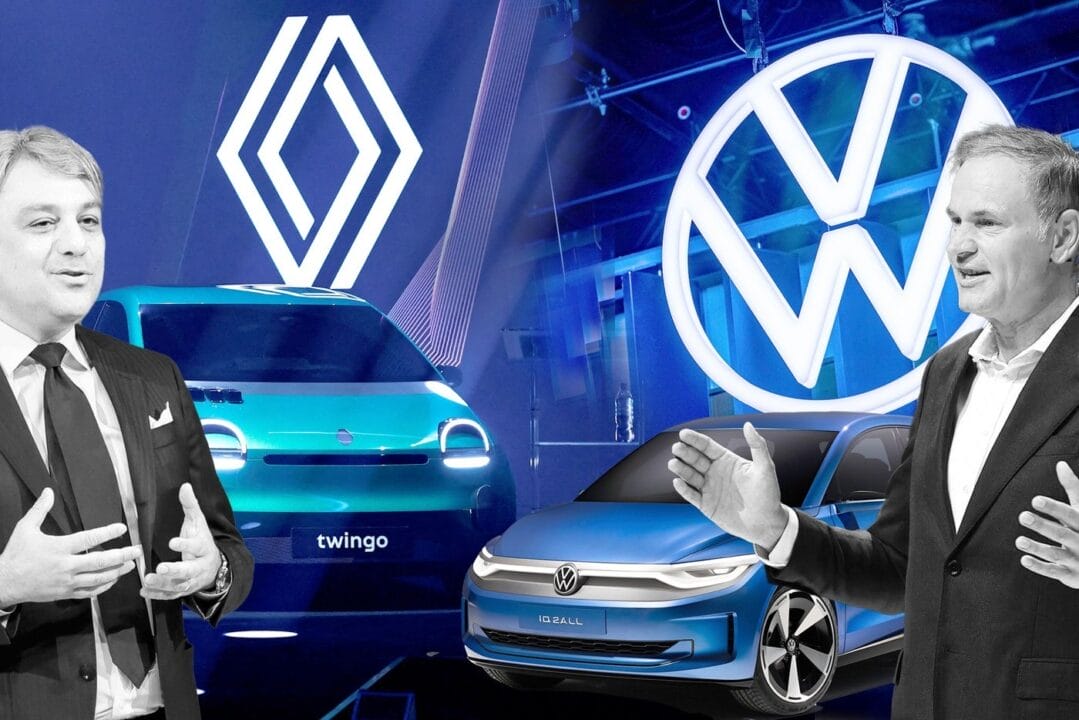

Volkswagen And Renault Promise The Right Car, At The Right Price, In The Right Place, At The Right Time. The Tiny Electric Car Will Cost Less Than The American Tesla Model And The Chinese BYD
One shocking news for the automotive market: Renault and Volkswagen are exploring an innovative partnership. The discussions between the two automotive giants aim to develop a super affordable mini electric car for the European market. Revealed at the Geneva Motor Show, the project signals a revolutionary shift in the sector. Imagine the possibilities when two giants unite with a common goal.
The CEO of Renault, Luca de Meo, shared that promising negotiations are underway with Volkswagen. The discussion is not limited to these two titans; other partners may join the game, but the focus is clear: make the electric car accessible to everyone.
As the automotive industry faces the challenge of producing economical electric vehicles, this collaboration promises to be a game changer. Renault is ready to lead, offering its expertise and production capacity.
-
2027 Toyota Corolla Cross Unveiled: New Design, Enhanced Fuel Efficiency, Reduced Maintenance Costs, Advanced Technology, Connected Services, and Up to 10-Year Warranty

-
Fiat Cronos Precision 2018: Affordable Sedan with Spacious Trunk and Reliable Maintenance
-
Volkswagen to Cut Production by 1 Million Cars by 2030, Reducing Jobs and Platforms, Focusing on More Profitable Models

-
Toyota Launches First 100% Electric Car in Brazil: bZ4X with 343 HP, All-Wheel Drive, 361 km Range, Priced at $419,990 BRL, Limited to 99 Units




Competition Will Escalate Between Giants Volkswagen And Renault Against Tesla And Chinese Manufacturer BYD, Who Are Rapidly Advancing In Europe
Pressure is mounting in the competitive landscape, where Tesla and Chinese BYD manufacturers are rapidly advancing in Europe. Renault and Volkswagen are seeking to respond to this competition by focusing on inexpensive electric cars. This joint effort could redefine electric mobility, making it accessible to a broader audience.
De Meo highlights a colossal challenge: producing affordable electric cars, yet profitable. However, Renault is not just playing the game; it is redefining the rules with the new electric Twingo.
Global Challenge And Production Strategies
The electric car market is bustling with activity, but 2024 has brought its own challenges. With government incentives dwindling and increasing political resistance, the industry is seeking to adapt rapidly. Even Tesla, the market leader, is facing turbulence, highlighting an urgent need for innovation and accessibility.
In this context, Renault’s strategy is clear: cut costs without compromising quality. The ambitious goal is to reduce the production costs of the electric Twingo by 40%. By utilizing more affordable batteries and optimizing the manufacturing process, Renault aims not only to compete with Tesla and Chinese manufacturers but also to lead the global electric vehicle sales market.
Renault looks to the future with optimism, aiming for the launch of the electric Twingo in 2026. With an irresistible target price below € 20,000, this vehicle promises to be a game changer, bringing electric mobility to the masses.
Volkswagen And Renault Want To Flood The Market With Cheap Electric Cars And Lead The Energy Transition In The Heart Of Europe
The potential collaboration between Renault and Volkswagen is not just about manufacturing an affordable electric car; it’s about leading the energy transition in the heart of Europe. While Stellantis launches its own challenger, a Citroen e-C3 below € 25,000, Volkswagen aims not to fall behind.
The history of the automotive industry is filled with collaborations, but this one between Renault and Volkswagen could redefine the future of urban transport. With a pragmatic and innovative approach, Luca de Meo is ready to move forward, with or without additional partners. “I Have No Time To Waste“, he asserts, emphasizing Renault’s urgency and determination to lead the green march.
Bold Move Between Automakers To Face Chinese Competitors Promises To Set A New Standard In Sustainable Mobility Worldwide!
The union of Renault and Volkswagen promises to accelerate global adoption of electric vehicles, democratizing access to them. Luca de Meo’s vision, which places Renault at the forefront of innovation, is complemented by Volkswagen’s pursuit of strategic partnerships, highlighting an openness to collaboration that transcends corporate boundaries.
As they advance in these negotiations, the world watches closely, anticipating the impact that such a significant partnership could have on the global landscape of electric vehicles. This potential alliance between Renault and Volkswagen is a bold move to tackle not only Chinese competitors but also to establish a new standard in sustainable mobility worldwide.