





 English
  Francês
  Alemão
  Italiano
  Japonês
  Norueguês
  Portuguese
  Spanish
  6 min of reading
  0 comments


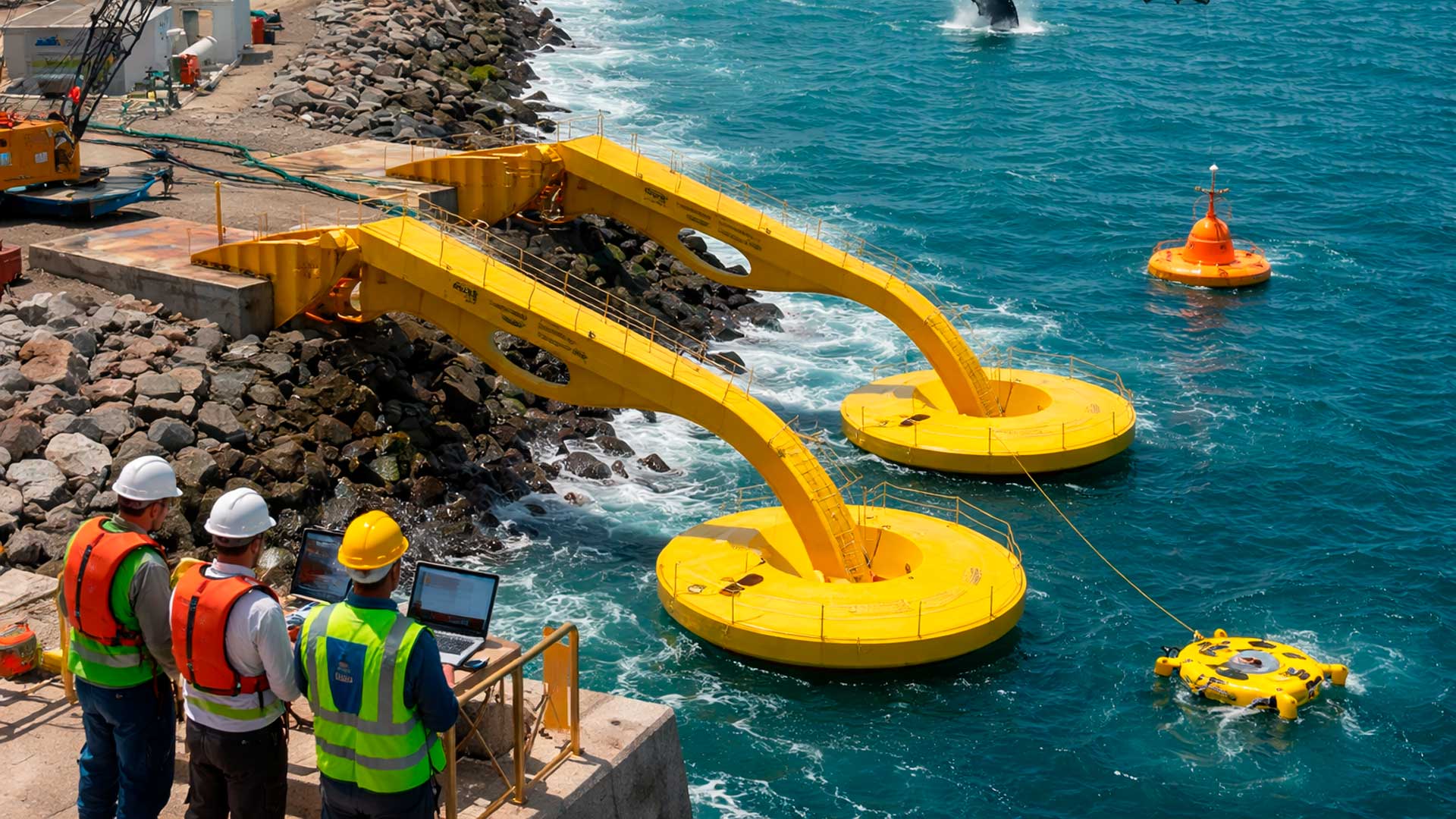
While solar and wind are still affected by intermittency, wave energy advances as an alternative and may unlock a new stage of energy transition
Wave energy has regained attention in the debate on energy transition because it offers an advantage that few renewable sources can gather so clearly: a generation capable of complementing the times and periods when solar and wind tend to fluctuate more. In an increasingly renewable electrical system, this combination can help reduce dependence on expensive storage and enhance the reliability of electricity supply.
According to the U.S. Department of Energy, marine energy can generate more electricity precisely when other sources tend to produce less, such as at night and during part of the winter. The department also states that the technology is still in the early stages of development and faces higher costs than mature sources like solar and wind, which helps explain why the sector is still progressing more slowly.
In practice, this places wave energy in a strategic position. Instead of directly competing with solar plants and wind farms, it tends to be seen as a complementary source, capable of reinforcing system stability at different times and weather conditions.
-
350-year mystery may have been solved: remains of a soldier who inspired the hero of The Three Musketeers found beneath a church in the Netherlands.

-
NASA photographed a nearly perfect square with 3 km sides on Mars, 13 times larger than the Great Pyramid of Giza, but the official explanation is natural erosion; still, no one has explained why the four sides have almost identical lengths.

-
Starlink breaks the barrier of 10,000 satellites in orbit and takes its expansion to an unprecedented level, with a direct impact on global internet, technological competition, and the race for space.

-
Japan finds an alternative to oil amid rising prices by transforming ocean balance into electricity with a new technology that maintains efficiency even when the sea changes.
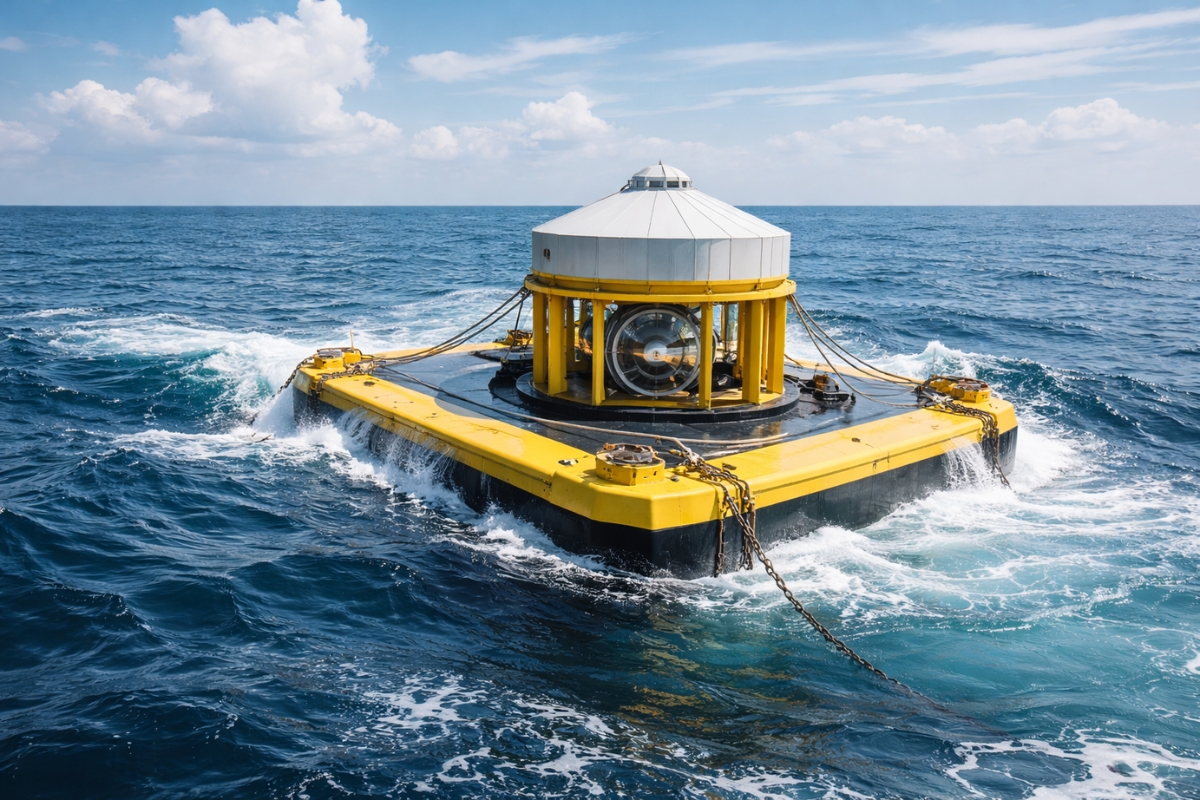
The topic gains extra weight in Brazil because the country already operates an electrical matrix with a significant presence of renewables and has a long coastline facing the Atlantic. In a scenario of increasing electrification and pressure for decarbonization, finding clean sources with less intermittent behavior can become a technical and economic differential.
Wave energy emerges as a complementary source for solar and wind


According to a report published by Exame, wave energy has been treated as a strategic alternative precisely because it offers greater generation stability and can operate alongside solar and offshore wind energy. The text highlights that international studies have already observed a more consistent production profile and better performance during nighttime, something valuable in systems with a high presence of solar panels.
The U.S. Department of Energy reinforces this view by stating that marine energy can increase the technological diversity of the grid and improve supply resilience. In other words, the more varied the available clean sources, the less vulnerable the system tends to be to failures, climatic seasonality, or localized demand spikes.
Moreover, the logic of complementarity opens up space for hybrid projects at sea. Exame itself points out that integration with offshore wind can allow for shared infrastructure, such as underwater cables and substations, which helps reduce costs and may accelerate the commercial maturation of this technology.
Brazil has significant ocean potential, but it is still underutilized
In the Brazilian case, interest is growing because there is a physical basis for it. The Ministry of the Environment reports that the country has 7,367 kilometers of coastline, while the Energy Research Company, EPE, acknowledges that ocean energy is still under development worldwide and encompasses possibilities related to waves, tides, and ocean currents.
Estimates of national potential vary according to the methodology adopted. Exame cited a technical potential between 50 GW and 70 GW for Brazil, with greater emphasis on regions in the South and Southeast, while a technical note from EPE based on studies from COPPE/UFRJ and Seahorse Wave Energy estimated a theoretical potential of 114 GW for ocean energy in the country, with 87 GW from waves and 27 GW from tides.
This difference in numbers is not necessarily a contradiction. The theoretical potential tends to be broader and indicates the gross volume of energy available, while the technical potential considers real limitations of utilization, such as depth, distance from the coast, available technology, costs, and environmental restrictions. Therefore, the main message remains the same: Brazil has significant ocean resources, but they are still underutilized.
The country has also had practical experiences. EPE records that COPPE built a scaled-down wave converter model for testing in 2010 and mentions a 100 kW onshore converter completed in 2012 at the Port of Pecém, in Pernambuco, as part of a project funded under the ANEEL R&D program.
High cost and maritime environment still hinder commercial scale
If the potential is promising, the main brake remains economic and operational. Exame highlighted that the levelized cost of wave energy is still high, driven by expensive equipment, complex installation, and maintenance in a saline, corrosive environment subject to significant mechanical wear.
EPE has already recorded, based on studies from COPPE/UFRJ, an estimated range of R$ 166/MWh to R$ 332/MWh for plants with wave converters in certain analyzed scenarios. Even when these values vary according to scale and project, the message is clear: the technology still needs to gain efficiency, manufacturing volume, and operational experience to compete broadly with already established sources.
The U.S. Department of Energy summarizes the problem directly by stating that the sector still has few devices deployed in the real world. This low deployment reduces the industry’s learning curve, complicates more accurate performance measurements, and makes investors and utilities more cautious.
There is also a significant technical obstacle that tends to receive less attention outside the sector. Unlike land projects, wave energy relies on equipment that must withstand long periods in an environment of storms, corrosion, biofouling, and more expensive maintenance logistics, which increases risk and raises costs at every stage of the venture.
Investments and pilot projects indicate that the technology has not stopped
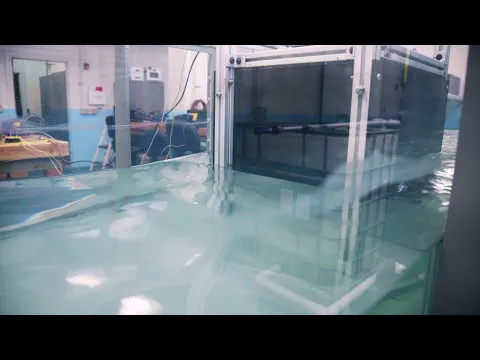
Despite the barriers, the technology is not stagnant. The marine energy program of the U.S. Department of Energy had a budget of US$ 141 million for fiscal year 2024, and Ocean Energy Systems, an international network linked to the International Energy Agency, reports that the U.S. opened a call in September 2024 that could allocate up to US$ 112.5 million for the development and testing of wave energy over five years.
In the United States, the DOE also highlighted the CalWave project in California as the first long-term test of the technology at sea in the state, a relevant step to bring wave energy closer to applications linked to the electrical grid. The agency further states that, combined with solar and wind, this source can contribute to a more reliable energy supply throughout the day and year.
In Europe, Portugal remains one of the closely monitored markets. Ocean Energy Systems reports that the Portuguese government approved in 2023 a Technological Free Zone offshore in Viana do Castelo to stimulate innovation in marine renewables, creating a regulatory environment aimed at testing and demonstrations in real conditions.
This movement shows that wave energy has not yet won the battle for scale, but it has definitely entered the phase where governments, research centers, and companies are trying to turn physical potential into a viable business. For Brazil, this means that the best time to discuss regulation, testing, and integration into the matrix may be now, before the technology fully matures in other countries and arrives here only as an imported solution.
Wave energy could become a real part of the Brazilian matrix or will it continue to be an expensive promise in the face of the faster advancement of solar and wind. Leave your opinion in the comments and say whether the country should invest in this route now or prioritize only the sources that have already become cheap.







Seja o primeiro a reagir!