





 Portuguese
  English
  Spanish
  3 min of reading
  0 comments


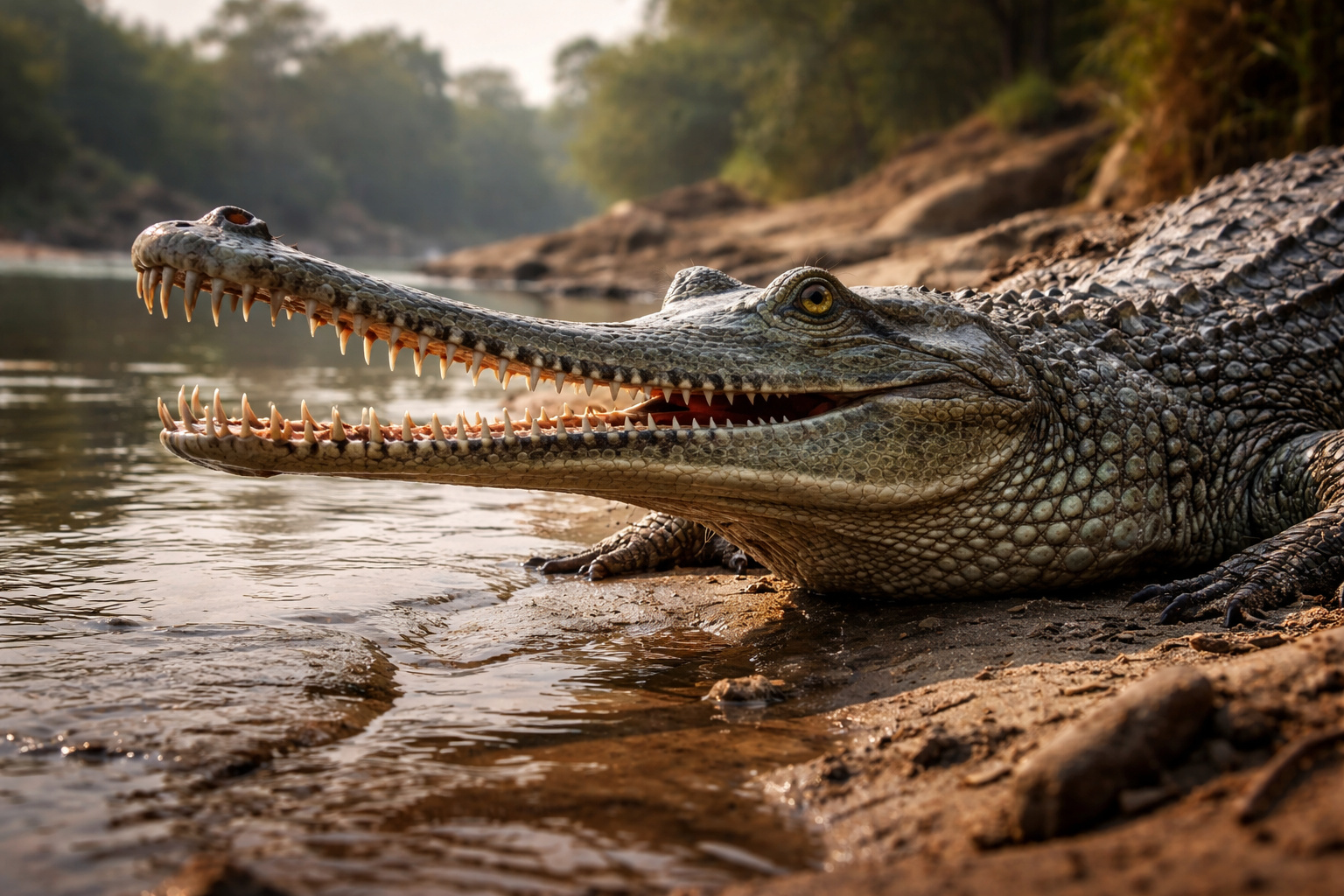
Rare Species Essential to the Rivers of India and Nepal Has Minimal Population, Depends on Preserved Environments, and Suffers Continuous Human Pressure
One of the most impressive yet most threatened reptiles on the planet returned to scientific attention in 2026. The Ganges Gavial, often confused with crocodiles and alligators, is currently in a critical situation, with occurrences restricted to a few river stretches in India and Nepal. Although images circulating on social media highlight its elongated body and extremely thin snout, experts warn that the giant reptile cousin of alligators faces a real risk of extinction.
Historical records indicate that until the mid-20th century, the gavial occupied extensive areas of the large rivers in South Asia. However, starting in the 1970s and 1980s, its distribution began to shrink rapidly, accompanying the advance of pollution, human occupation, and river fragmentation.

Scientific Investigation Explains Why the Gavial Is Different from Crocodiles
The Ganges Gavial belongs to the family Gavialidae and is part of the order Crocodylia, thus being a distant cousin of alligators. Still, it presents unique morphological characteristics. Its extremely long and narrow snout facilitates the capture of fish, while the structure called “ghara”, found in adult males, aids in vocalization and reproductive disputes.
-
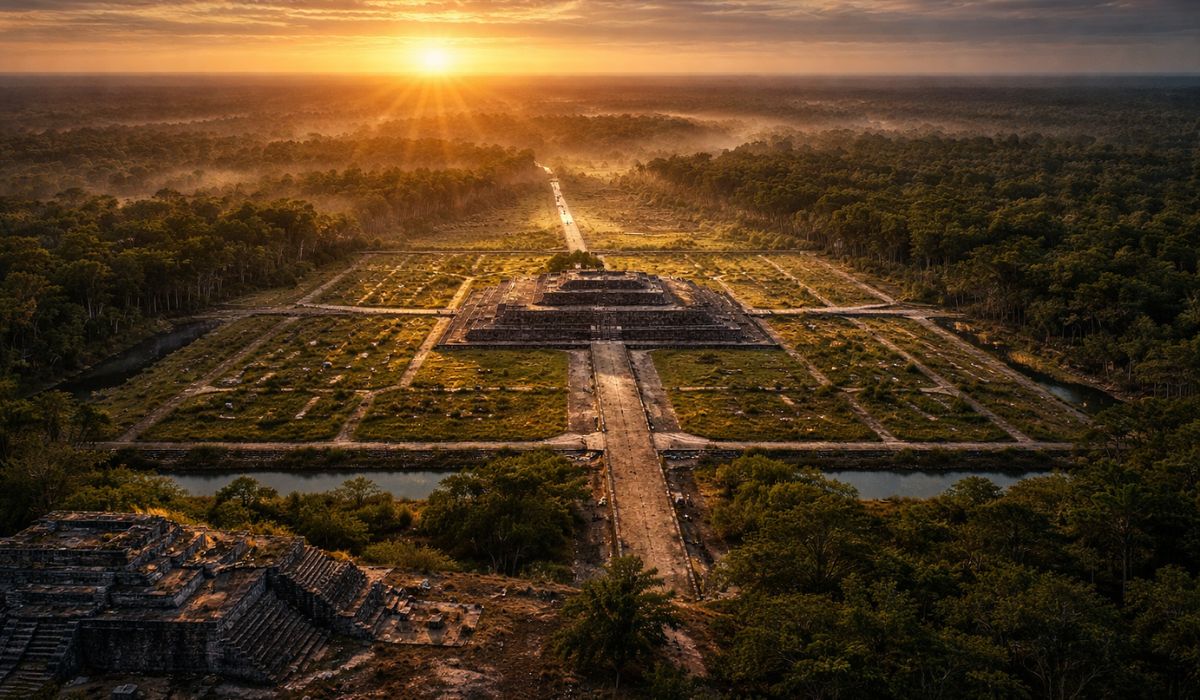
In Mexico, a 3,000-year-old Maya site with the dimensions of an entire city may have been built as a colossal map of the cosmos, created to represent the order of the universe and reveal how this people organized space, time, and rituals.
-
Japan wants to build a solar ring of 10,900 kilometers on the Moon to continuously send energy to Earth.

-
Weighing almost 1 ton, with temperatures of up to 3,000°C, the ability to launch 10,000 fragments within a radius of 1 km, capable of penetrating concrete and melting steel, Turkey’s terrifying bomb emerges as one of the most destructive non-nuclear weapons ever presented.

-
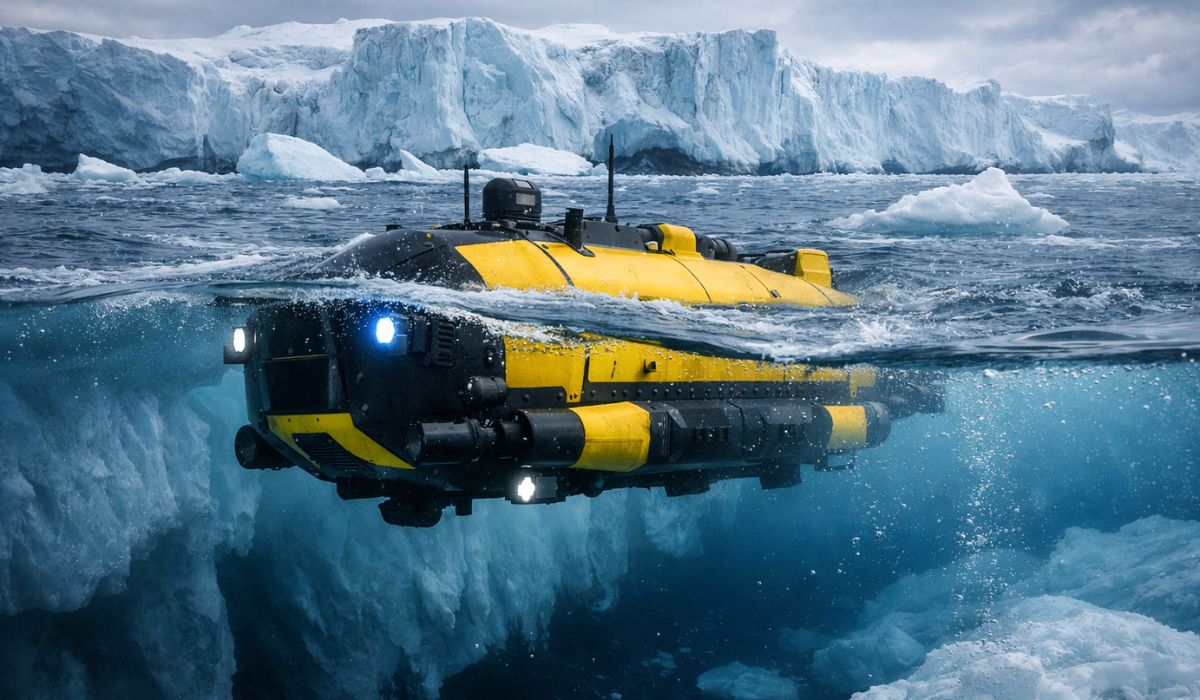
After a submarine disappeared beneath the “Doomsday Glacier,” scientists announce a new monstrous machine capable of operating at 3,000 meters depth to return to the heart of the ice and investigate a threat that could raise sea levels worldwide.

Moreover, its slender body, muscular tail, and limbs poorly adapted for land locomotion mean that the gavial spends nearly all its time in the water. In natural environments, according to measurements recorded by researchers since the 1990s, some individuals exceed five meters in length, ranking among the largest living reptiles in Asian rivers.
Reduced Population Places the Giant Reptile at Extreme Risk of Extinction
Currently, the wild population of the gavial is estimated at about 200 individuals, according to assessments consolidated by the International Union for Conservation of Nature (IUCN) released in 2024. This concentration in few river stretches makes the species extremely vulnerable to any environmental changes.
Over the past few decades, dam construction, water pollution, intensive sand extraction, and occupation of riverbanks have compromised breeding areas. Additionally, the destruction of nests by livestock and human activities has drastically reduced the survival of eggs and hatchlings, weakening the population replenishment of the giant reptile.
Differences Between Gavial and Crocodiles Help Understand Its Fragility
Despite visual similarities, the gavial exhibits decisive differences compared to crocodiles. While crocodiles have broad snouts and varied diets, the gavial is strictly piscivorous, feeding almost exclusively on fish. Its long, thin teeth reflect this extreme specialization.
Moreover, crocodiles occupy various environments, including estuaries and coastal regions. In contrast, the gavial relies on well-oxygenated rivers with little human occupation, a condition that is increasingly rare in South Asia, exacerbating the risk of extinction.
Human Pressures Accelerate the Decline of the Alligator’s Cousin
Technical reports released by the World Wide Fund for Nature (WWF) in 2023 indicate that the survival of the gavial is directly linked to the environmental quality of rivers. In polluted or heavily exploited environments, the survival rate of hatchlings plummets.
Among the main threats are the extremely reduced population, the high dependence on preserved rivers, the low survival of eggs and hatchlings, and conflicts with human activities such as overfishing, sand extraction, and urban expansion.
Preserving the Gavial Means Protecting the Rivers
The conservation of the Ganges Gavial is directly associated with the protection of river ecosystems, making the species an important ecological indicator. Where the gavial survives, there is greater pollution control, fishery management, and riverbank preservation.
Since the early 2000s, programs conducted by environmental agencies in India and Nepal have adopted captive breeding, monitored reintroduction, and protection of spawning areas.
In light of this scenario, the central question remains: is it possible to reverse the degradation of rivers in time to prevent this giant reptile cousin of alligators from disappearing completely from nature?







-

-

-

-

-

9 pessoas reagiram a isso.