





 Portuguese
  English
  Spanish
  3 min of reading
  0 comments


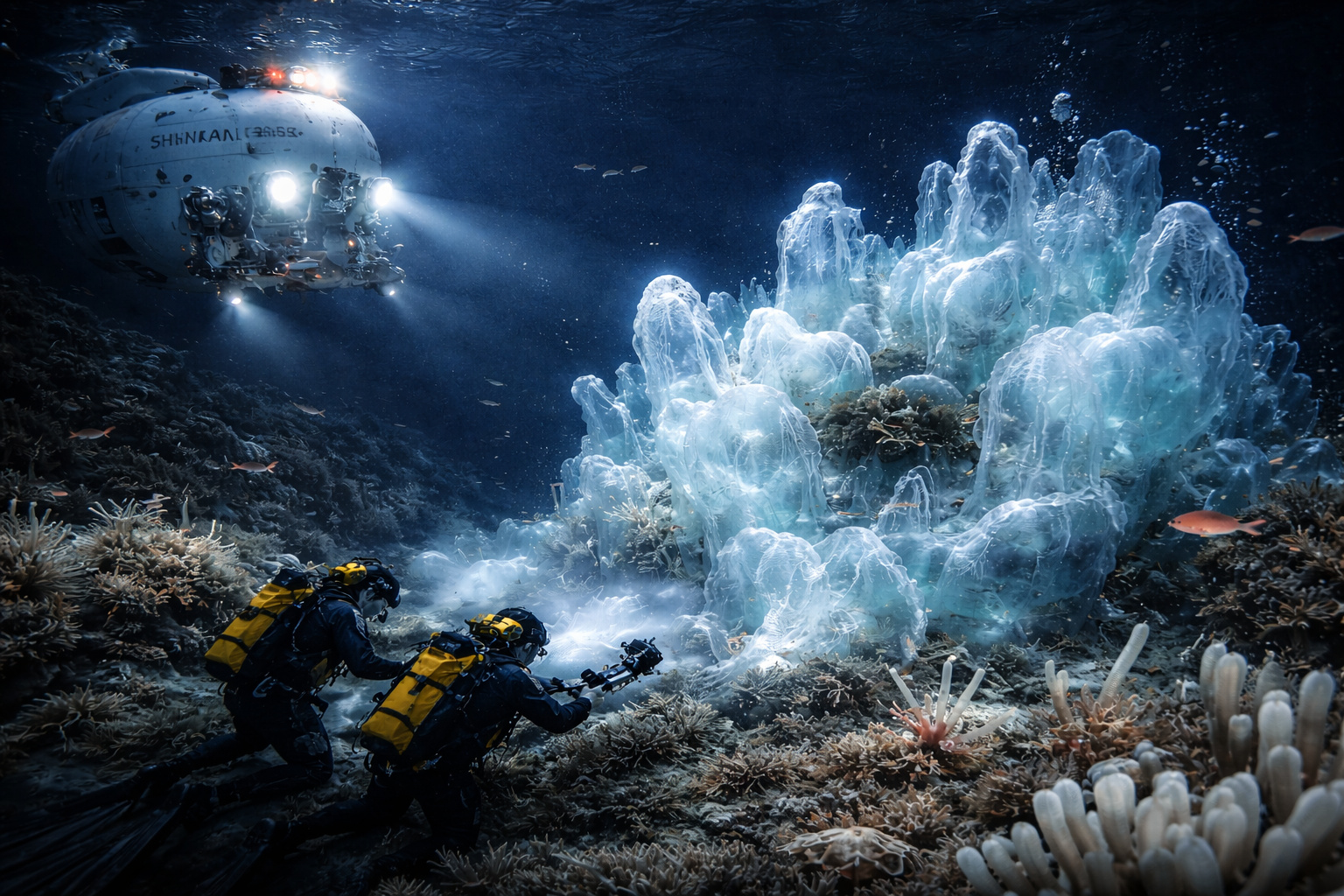
Scientific expedition identifies unprecedented forms of life and reinforces that only a small part of the oceans has been explored by modern science
A significant scientific discovery recently emerged from the depths of the ocean near Japan and caught the attention of the international community.
Researchers identified an unusual environment described as a “submarine glass castle”, along with various new niches of life in extremely deep regions, according to results released in recent studies conducted with the support of the Nippon Foundation and international scientific teams.
This advancement directly reinforces that human knowledge about the oceans remains limited, even after decades of systematic exploration.
-
Researchers in Dubai develop a solution for concrete with biodegradable plastic that resists corrosion, provides ductility comparable to that of steel, and paves the way for modular, temporary, and prefabricated structures.

-
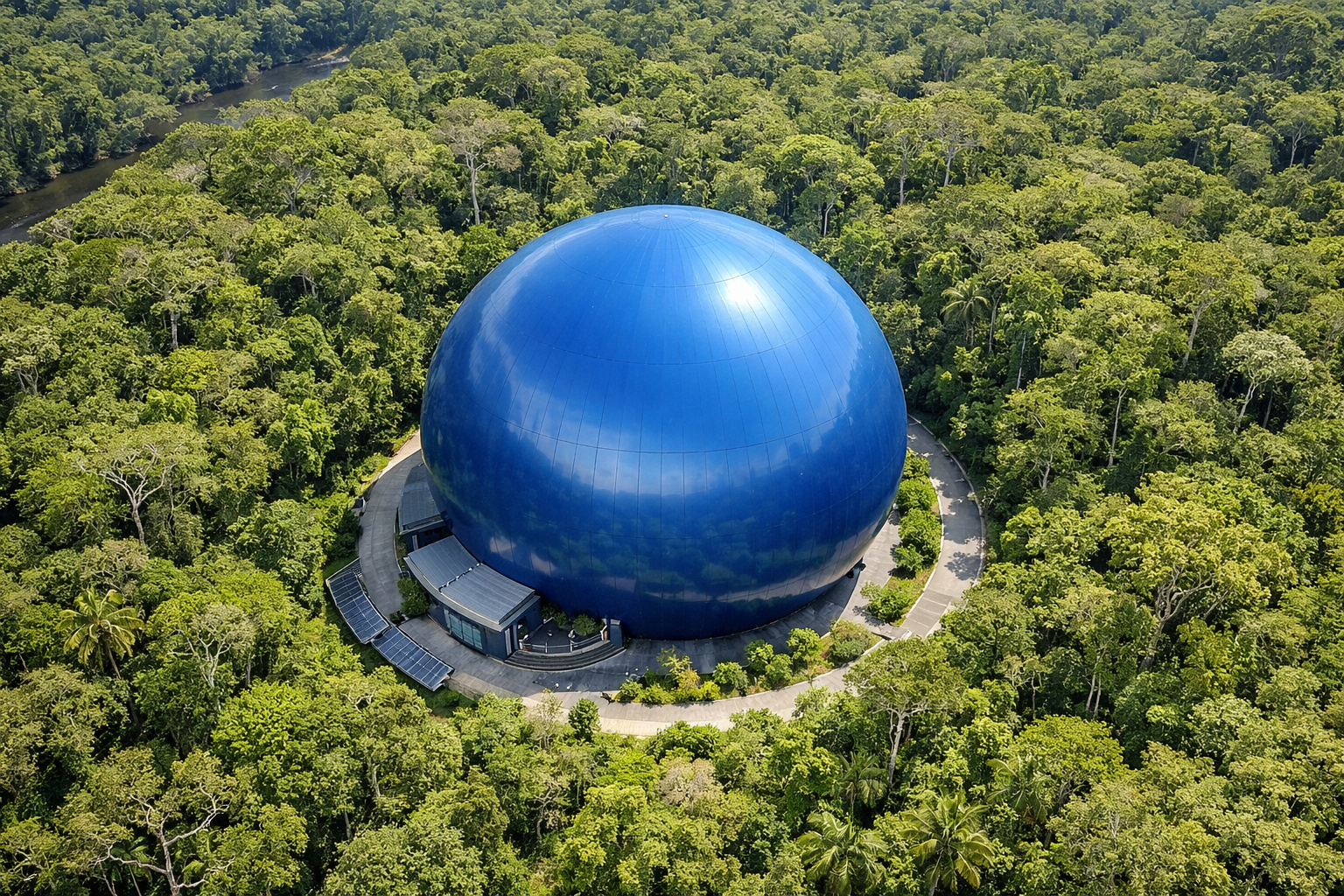
The mysterious giant blue sphere in the middle of the Amazon that went viral on the internet is the Planetarium of Médio Solimões, an impressive project that is revolutionizing access to astronomy in Brazil.
-
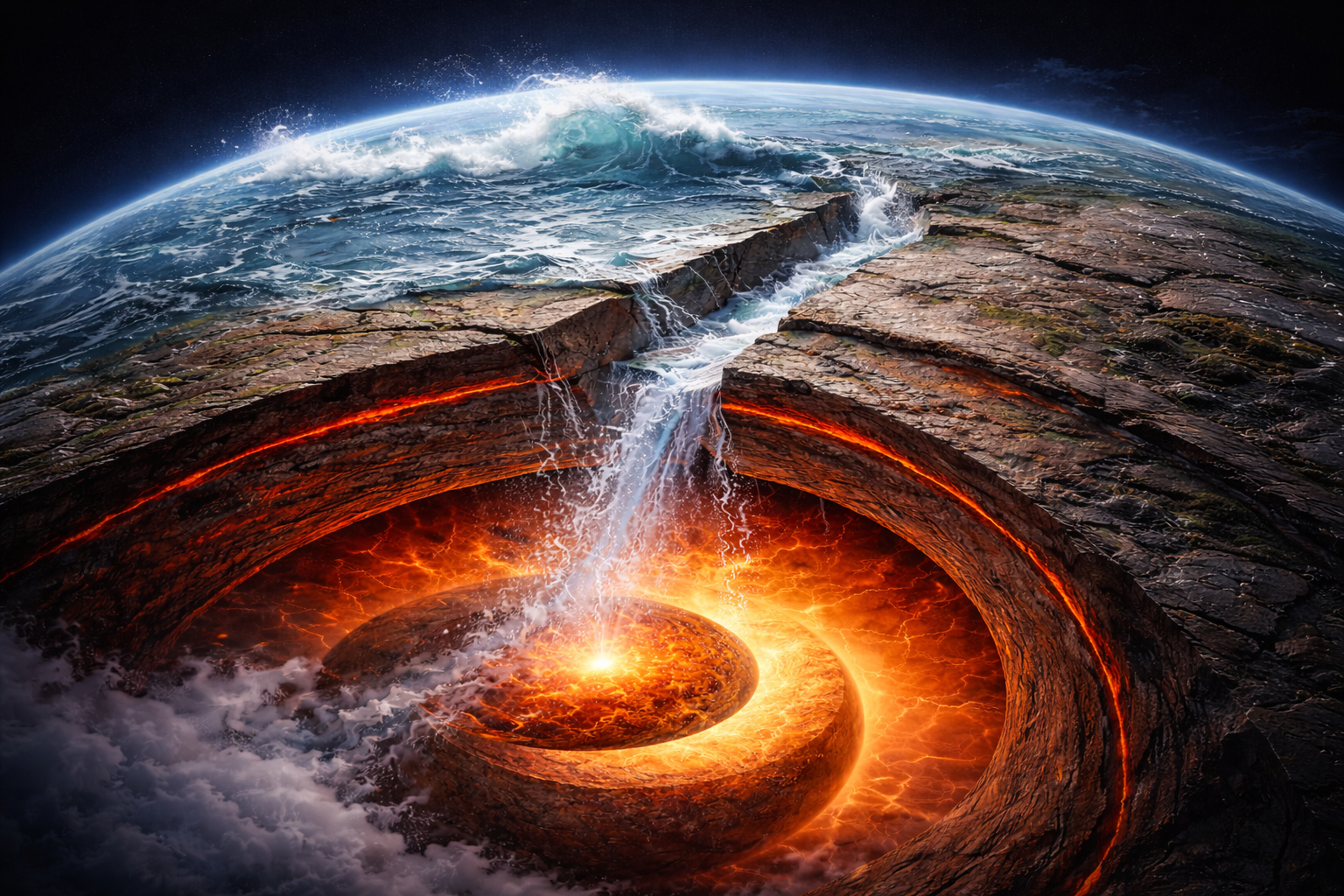
Earth is “pulling” water from the oceans into the core at nearly 3,000 km deep, and scientists finally explain how this slow and invisible process may be completely transforming the planet from the inside over billions of years.
-
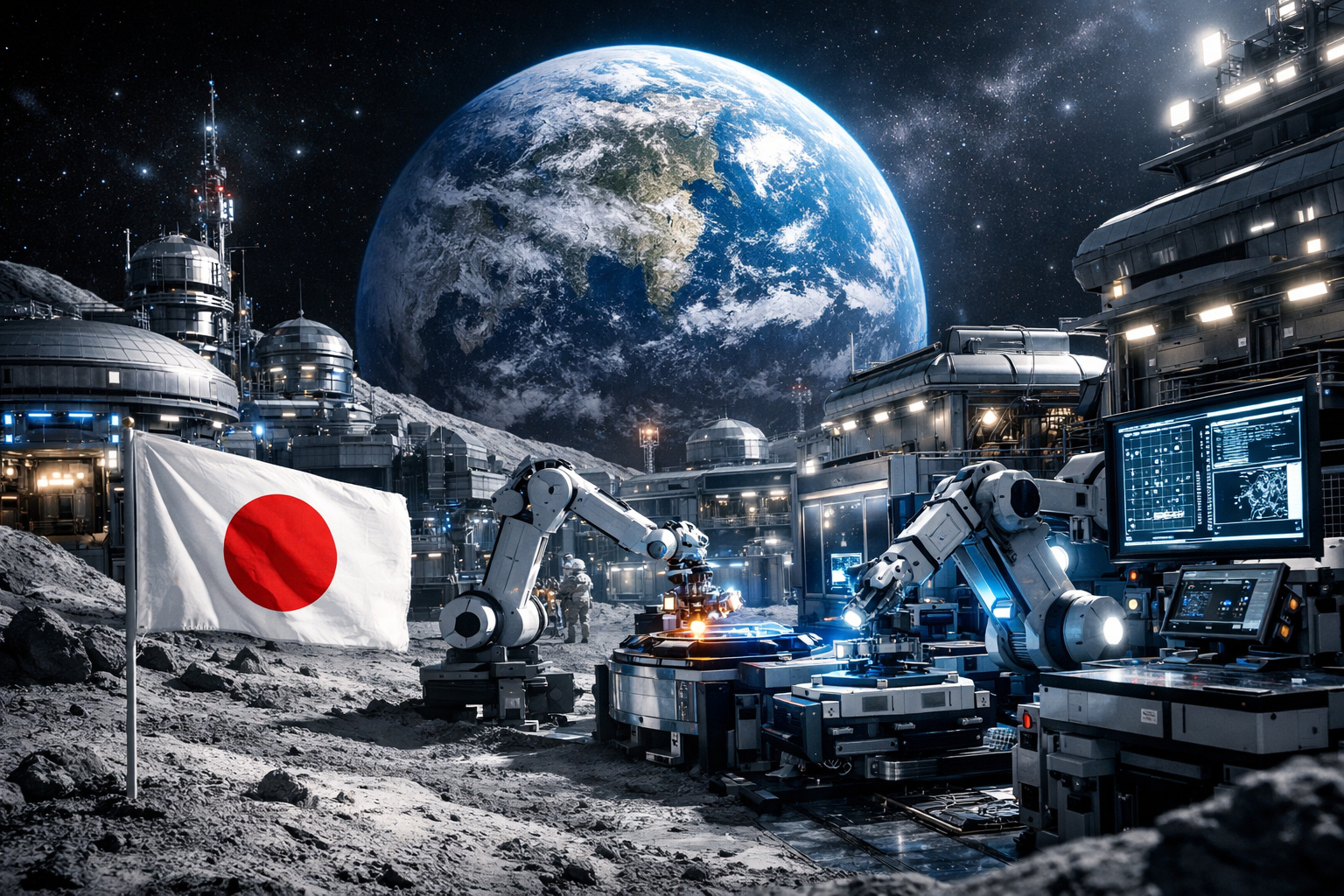
Japan shocks the world by announcing a billion-dollar plan to build a chip factory on the Moon with the support of Toyota, Sony, and the government, aiming for 2-nanometer technology and global dominance.
Investigation in the depths reveals new ecosystems
The team began research in the Nankai Trough, located in southeastern Japan, an area marked by intense geological activity.
In this location, the Philippine Plate slides beneath the Eurasian Plate, releasing gases such as methane and hydrogen sulfide at the seabed.
These compounds feed bacteria, which sustain a complete food chain and allow for the existence of complex ecosystems in extreme environments.
Currently, according to recent scientific data up to 2024, about 25 similar regions already exist, with depths ranging from 300 to 4,800 meters.
During the expedition, scientists used images, videos, and collection equipment to analyze these areas with greater precision.
As a result, researchers significantly expanded the known diversity, reaching five times more species than previously estimated, including 38 new species.
Submarine mountain reveals “living glass castle”
Next, the team advanced to the Shichiyo submarine mountain, a region still little explored until then.
Using the Shinkai 6500 submersible, scientists analyzed the slopes of the underwater volcano and found an unusual structure.
This formation corresponds to a glass sponge, composed of silicon dioxide, a material similar to conventional glass.
This structure serves as a natural habitat and houses different marine organisms.
Within it, researchers identified two new species of polychaete worms, which occupy the same environment independently.
Although they are not closely related, these species share the same ecological niche as symbionts.
This behavior reinforces the complexity of biological relationships in extreme and little-known environments.

New species expand known biodiversity
In addition to the “glass castle,” the expedition revealed several other significant discoveries.
Among the main findings are:
- Five new species of dwarf crustaceans;
- New species of corals;
- Organisms considered rare or nonexistent in Japanese waters.
According to Mitsuyuki Unno, executive director of the Nippon Foundation, these discoveries clearly show how much the oceans remain unknown.
Similarly, scientist Michelle Taylor stated that each new species identified expands understanding and strengthens the need for protection of marine ecosystems.
Limited exploration and increasing risks
The data reinforces a scenario already pointed out by recent global studies.
Estimates indicate that there are between 1 and 2 million marine species, but only about 10% have been described so far, according to scientific surveys updated until 2024.
The fact that a single expedition significantly increases the number of known species highlights how much is still to be discovered.
At the same time, this advancement raises concerns about the impacts of human activities in deep regions.
Even areas considered inhospitable harbor diverse and complex life, which increases the risks associated with uncontrolled exploration.
Conflict between exploration and preservation
The discovery also highlights a growing point of tension in the global scenario.
While scientists seek to understand these environments, industrial sectors see economic potential in the mineral deposits present in these regions.
This scenario creates a direct conflict between resource exploration and environmental preservation, which is likely to intensify throughout the 21st century.
In light of this context, the need for balance between development and conservation becomes increasingly evident.
To what extent can the exploration of ocean depths advance without compromising forms of life that have not yet been fully known?







Seja o primeiro a reagir!