





 Portuguese
  English
  Spanish
  4 min of reading
  0 comments



In 54 minutes of recording, the medium from Pedro Leopoldo described physical characteristics, behaviors, and episodes from the lives of unknown individuals who lived in remote regions of Portugal, and researchers consider it unlikely that he obtained this information through conventional means in at least 31% of the cases
A 54-minute audio tape recorded on June 3, 1955, in the city of Pedro Leopoldo, Minas Gerais, has just undergone scrutiny by researchers from the Federal University of Juiz de Fora. The result, published in the international scientific journal Explore, has brought Chico Xavier’s name back to the center of a debate that science has yet to resolve. 87.7% of the information presented by the medium during the session was classified as correct. Only 3% were wrong.
The number alone is surprising. But it is the context that makes the statistic difficult to explain.
What happened in that session of 1955
The visitor was Isidoro Duarte Santos, one of the most important names in Spiritism in Portugal. He traveled to Brazil to meet Chico Xavier in person. In the session recorded in Pedro Leopoldo, the medium did three things that researchers analyzed closely seven decades later.
-
Few people know, but potatoes: neither in the refrigerator nor next to the onion! Check out the correct way to store this vegetable.

-
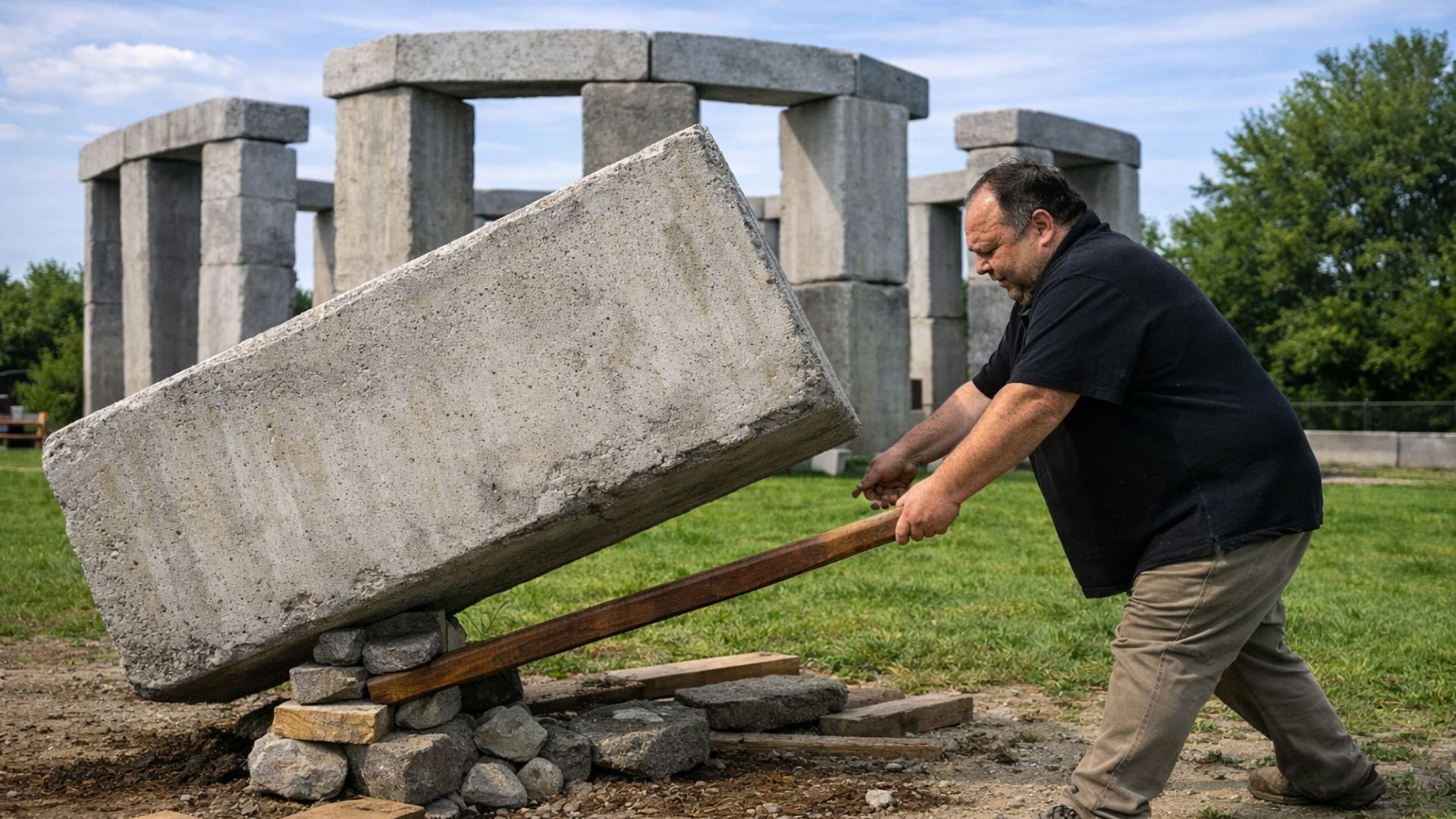
Retired from construction, he built a Stonehenge in his backyard in Michigan using wooden levers, small stones, and gravity to demonstrate how one man can move giant blocks.
-
Measuring almost 15 meters in length, with 29 watchmen and space for 6 men for 6 weeks, the Ben Franklin spent 30 days drifting in the Gulf Stream without surfacing on a mission so unusual that NASA treated it as a trial for a space station.

-
China debuted a new platform at its first commercial spaceport, a structure 83 meters tall designed to launch rockets at a high cadence, divert flames without an underground trench, and dump 500 tons of water in 15 seconds.

First, he psychographed a letter attributed to Isidoro’s deceased first wife. The visitor recognized the signature and the style of the text as belonging to his wife.
Second, he described in sequence 18 deceased individuals who would have been part of Isidoro’s life. For each one, Chico mentioned physical characteristics, behaviors, specific episodes, and personal circumstances. Details that, according to the researchers, pertained to individuals who lived in remote regions of Portugal, with scarce documentation and almost no circulation in Brazil during the 1950s.
Third, he psychographed two poems attributed to the Portuguese poets Antero de Quental and João de Deus, who died decades earlier. The researchers pointed out that the verses exhibited rigorous meter, stylistic marks compatible with the authors, and, in one case, the use of archaic Portuguese.
What science measured
The study was conducted by the Center for Research in Spirituality and Health (NUPES) at the Medical School of UFJF, in partnership with researchers from Portugal. The article, titled “Analysis of the Occurrence of Anomalous Reception of Mediumistic Information: The Case of Chico Xavier and Isidoro Santos,” identified 65 verifiable items throughout the recording.
The numbers:
87.7% were classified as correct. Only 3% as incorrect. The remainder fell into the category of unverifiable or ambiguous information.
But the most intriguing data is another. In 30.8% of the cases, researchers considered it unlikely that Chico Xavier obtained the information through conventional means. There was no way he could have spoken to someone who knew those details. There were no accessible publications in Brazil at the time that contained that data. The information was too specific, too personal, too local.
“They were very specific information about people’s lives, very specific information about regions of Portugal, very little known, all related to the visitor”, explained Alexander Moreira-Almeida, psychiatrist and director of NUPES, to the newspaper O Globo.
Why this study is different from previous ones
Chico Xavier has had psychographed letters analyzed before. What makes this study unique is the existence of the original audio recording. It is not a reconstruction of memory. It is not testimony decades later. It is the raw record, 54 minutes long, made in 1955, preserved and now subjected to contemporary verification methods.
The researchers cross-referenced each piece of information mentioned by Chico with historical documents, civil records, publications from the time, and accounts from descendants of those mentioned. The work took years. “We conducted a thorough survey to understand how this information could have reached Brazil,” said Moreira-Almeida.
The conclusion is not that mediumship was proven. The conclusion is that the conventional explanation does not account for 31% of the data. And that the body of evidence produced by Chico Xavier throughout his life remains one of the most difficult to dismiss in the scientific literature on the subject.
What the study does not say
The article is cautious. The authors themselves acknowledge that research on mediumship faces limitations and controversies. A meta-analysis cited in the work points out that, in most cases, mediums tested under controlled conditions cannot maintain accuracy above chance.
Chico Xavier, according to the researchers, is the exception. “Without a doubt, he is among the mediums who produced the greatest diversity of phenomena that have been studied and for which it is very difficult to find conventional explanations,” said Moreira-Almeida.
The study does not prove life after death. It does not prove communication with spirits. What it proves is that, in 1955, a man from Pedro Leopoldo described with 88% accuracy the lives of 18 unknown Portuguese individuals he had never seen, at a time when there was no internet, accessible telephone, or any database that could provide that information.
And 71 years later, science still has no satisfactory explanation for this.
With information from O Globo, Aventuras na História, and the scientific journal Explore.






Seja o primeiro a reagir!