





 Portuguese
  English
  Spanish
  6 min of reading
  0 comments


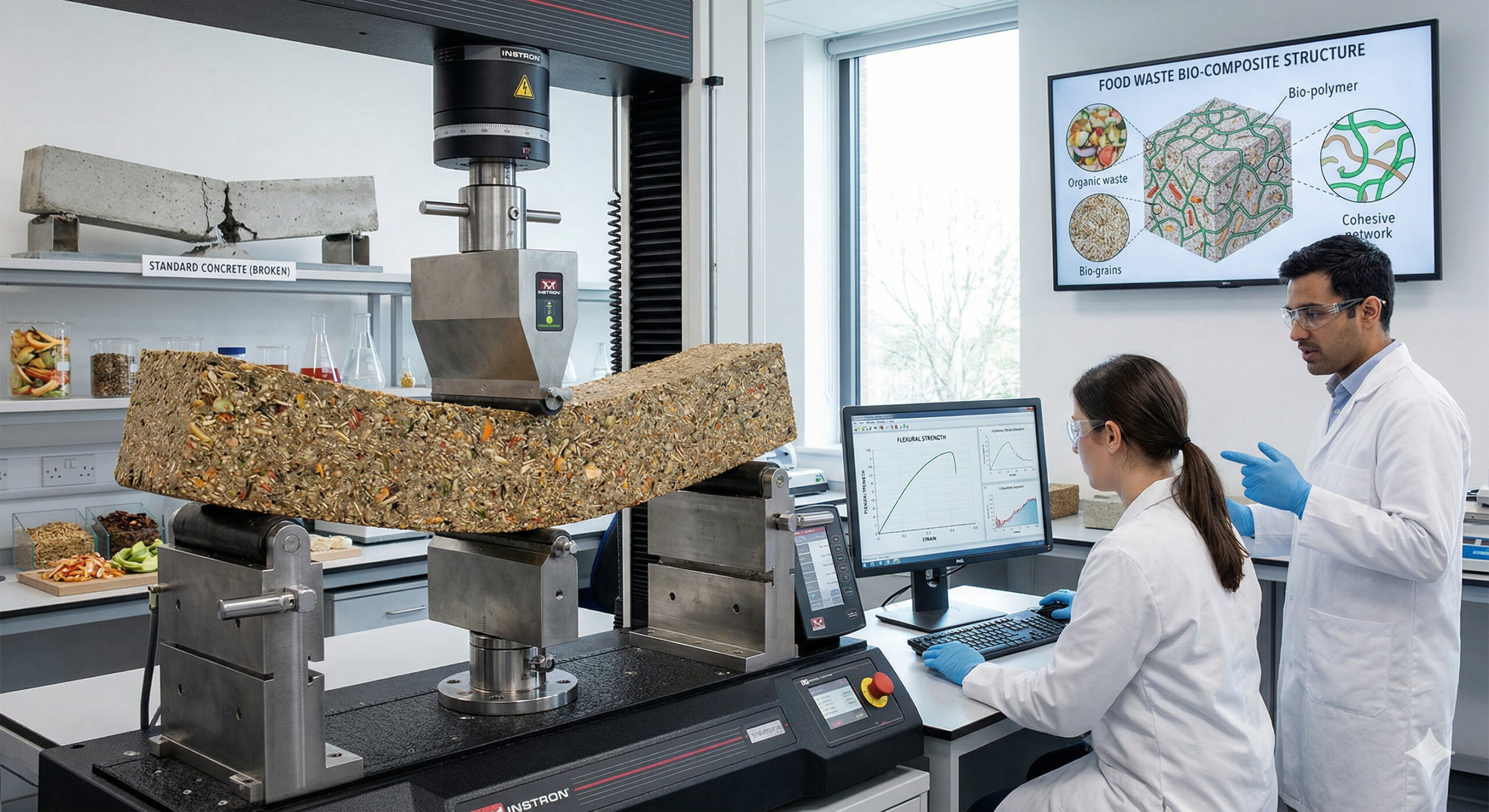
Scientists create material from food waste that surpasses concrete in flexural tests and can even be consumed in extreme situations.
In 2021, a study conducted by researchers from the University of Tokyo, with participation from Yuya Sakai, presented an experimental material produced from food waste, such as Chinese cabbage, fruit peels, and other vegetable by-products. According to the scientific preprint “Development of Novel Construction Material from Food Waste”, the research investigated the production of construction materials from organic waste subjected to drying, pulverization, and thermal compression molding, without resorting to conventional cement use.
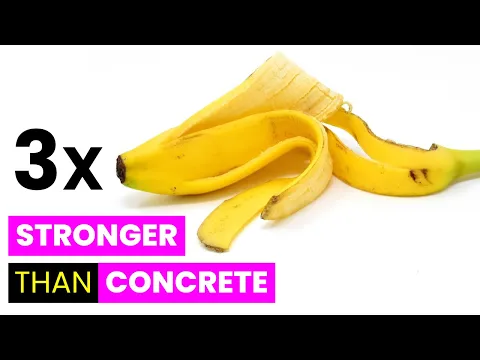
What surprised most was not only the origin of the material but the performance observed in laboratory tests. In the formulation made with Chinese cabbage, the compound reached 18 MPa of flexural strength, a value that the University of Tokyo itself describes as four times higher than that of conventional concrete in this metric. Furthermore, the university reports that the materials were obtained from 30 types of food waste, preserving characteristics such as original color and aroma, which reinforced the potential of the technology as a biological-based alternative within discussions on sustainability in construction.
Process uses dried food waste, pulverized and pressed at high temperature
The method developed by the researchers is based on a relatively simple principle but executed with rigorous technical control. The food waste undergoes a process that involves complete drying, pulverization, and compression under high temperature and pressure.
-
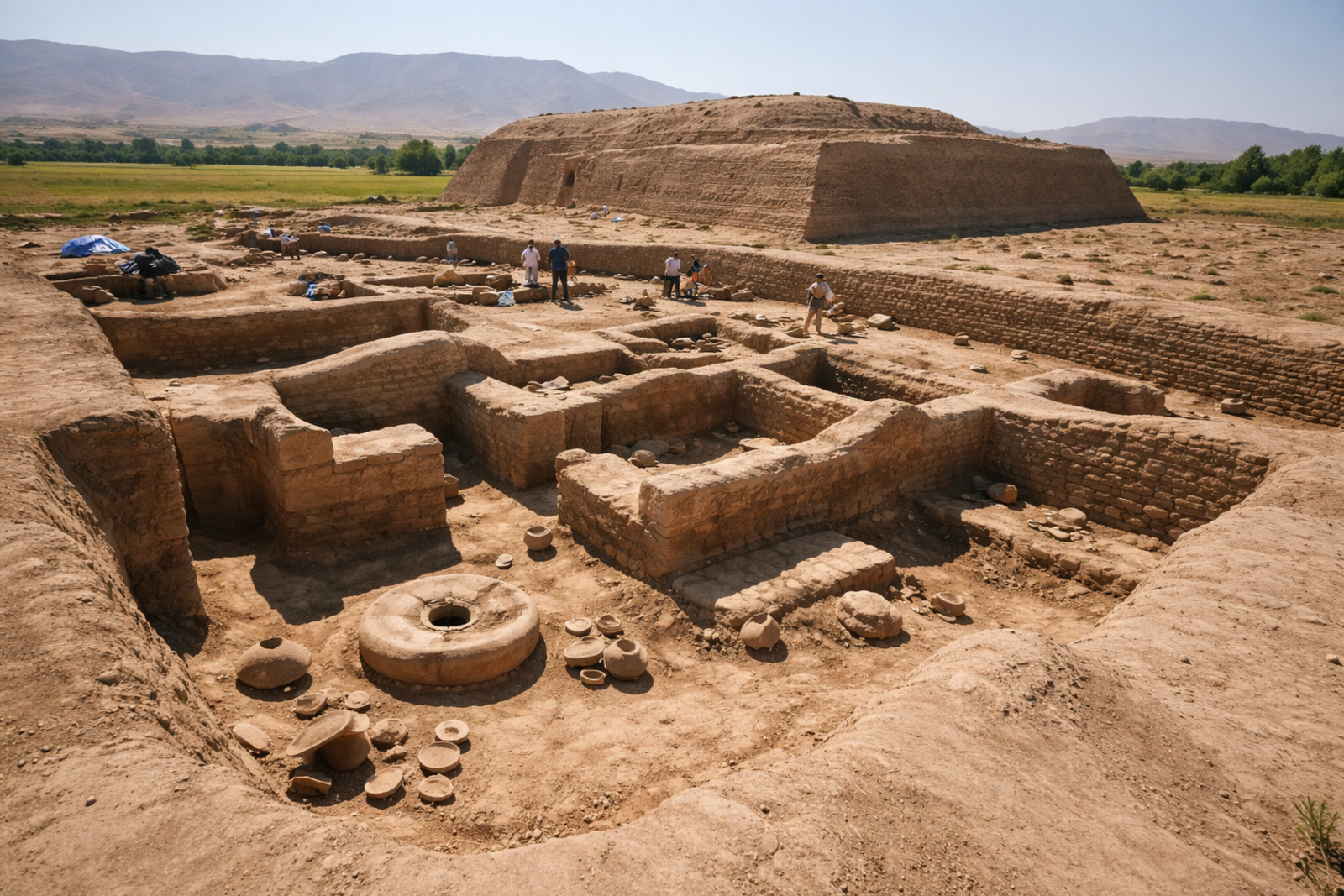
A 3,000-year-old city found in a “hidden treasure” in Uzbekistan reveals a preserved wall, interconnected rooms, and artifacts that help explain how urban life emerged along the ancient Silk Road.
-
Central Asian country will install devices capable of inducing artificial rain to combat drought and extreme heat, and the project could completely change the air quality in the region by 2027 using large-scale cloud seeding.

-
Rare phenomenon of silent electric flashes in trees on the east coast of the United States intrigues researchers, confirms century-old suspicion, and raises alarm about invisible environmental impacts.

-
A leak shows that Sony is preparing a more ambitious PlayStation in the PS6, with a handheld running current games natively.

During this process, there is a structural rearrangement of the natural fibers present in the food, especially compounds like lignin and cellulose, which act as binding agents. The result is a solid, rigid material with measurable mechanical properties.

The production occurs at temperatures close to 180°C, which allows for the compaction of particles without the need for artificial binders. This point is central, as it eliminates the dependence on chemical components traditionally used in construction.
The final result is a block with an appearance similar to industrial materials but with a completely organic origin.
Flexural strength draws attention and places material in an uncommon level for biological compounds
The data that propelled the research’s impact was the flexural strength. In controlled tests, some variations of the material, especially those produced with Chinese cabbage, showed significantly superior performance to traditional concrete in this specific metric.
It is important to highlight that flexural strength measures the material’s ability to resist deformation when subjected to forces attempting to bend it. This property is particularly relevant in structures that undergo distributed stresses, such as slabs and horizontal surfaces.
Conventional concrete, although extremely efficient in compression, has natural limitations in flexure, which typically requires the use of metal reinforcements. In this context, the new material shows a differentiated behavior, even in an experimental environment.
This result places the compound in a rare category for materials derived from organic waste, increasing scientific interest in its possible applications.
Material can be consumed after boiling, but was not developed as food
One of the most curious aspects of the research is the theoretical possibility of consuming the material. Since it is composed exclusively of organic matter and does not contain toxic substances, the researchers indicated that it could be fragmented and boiled for consumption in extreme situations.

However, this point requires contextualization. The material was not developed as food, does not have in-depth nutritional analysis, and does not meet conventional food standards. The mention of consumption is associated with hypothetical scenarios, such as emergency situations where there is no access to food resources.
Even so, the fact that a structural material presents this characteristic broadens the debate about new possibilities in extreme environments or specific applications.
Sustainability and reuse of waste are at the center of the research
The central motivation of the study is directly linked to sustainability. Food waste is a global problem, with millions of tons discarded annually. By transforming this waste into material with technical value, the researchers propose a new approach to reuse. The developed material presents some relevant characteristics in this context:
it is produced from waste that would be discarded, reducing environmental impact
it does not use cement, the production of which is highly CO₂ emitting
it is biodegradable, unlike conventional materials
These factors place the study within a growing line of research focused on the circular economy and efficient resource use.
Material is still in the experimental phase and does not replace structural concrete
Despite the promising results, the material is not yet ready for large-scale application in construction. The compressive strength, which is the main metric for structures such as buildings and bridges, has not been presented as superior to concrete.
Additionally, factors such as durability, moisture resistance, behavior in outdoor environments, and load capacity still need to be evaluated in greater depth.
This means that, at the current stage, the material should be seen as an experimental prototype with development potential, and not as an immediate substitute for traditional concrete.
Research opens the way for new hybrid materials and sustainable solutions in construction
Even with limitations, the study represents an important advance in the search for sustainable alternatives in materials engineering. The possibility of using organic waste as a basis for resistant structures opens the way for new lines of research.
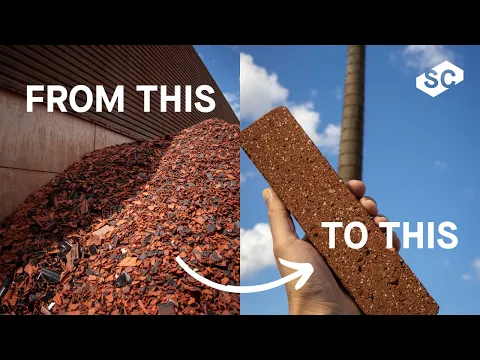
These initiatives could lead to the development of hybrid materials that combine natural components with modern technologies to achieve technical performance and sustainability.
The research also reinforces a global trend: the search for solutions that reduce dependence on resource-intensive processes and expand the reuse of discarded materials.
Global interest grows as construction seeks to reduce environmental impact
The construction industry is responsible for a significant share of global carbon emissions, primarily due to cement production. In this context, any alternative that reduces this dependence gains international relevance.
Studies like the one conducted by the University of Tokyo are being analyzed not only as scientific curiosities but as possible starting points for structural transformations in the sector.
The interest in sustainable materials has been growing, driven by environmental policies, regulations, and demand for more efficient solutions.
Technical limitations are still a barrier to large-scale practical application
Despite the potential, there are technical challenges that need to be overcome before the material can be used in real applications. Among them are weather resistance, stability over time, and the ability to support high loads.
Additionally, industrial-scale production has not yet been demonstrated, raising questions about economic viability and logistics. These factors are part of the natural process of developing new materials and indicate that the project is still in its early stages.
The main contribution of the research lies in demonstrating that food waste, traditionally seen as disposal, can be transformed into materials with relevant structural properties. This shift in perspective broadens the field of possibilities for engineering and waste management, showing that innovative solutions can arise from simple elements.
The idea of transforming food waste into functional construction material represents a break from traditional models and points to alternative paths.
Do you believe that materials made from waste can become common in construction in the future?
The advancement of research like this raises a central question about the future of construction. As the pressure for sustainability increases, new solutions may gain ground and redefine established standards.
In light of this scenario, an inevitable debate arises: can materials produced from organic waste evolve to the point of competing with traditional ones and transform the construction industry in the coming decades? Leave your opinion in the comments.







Seja o primeiro a reagir!