





 Portuguese
  English
  Spanish
  4 min of reading
  1 comment


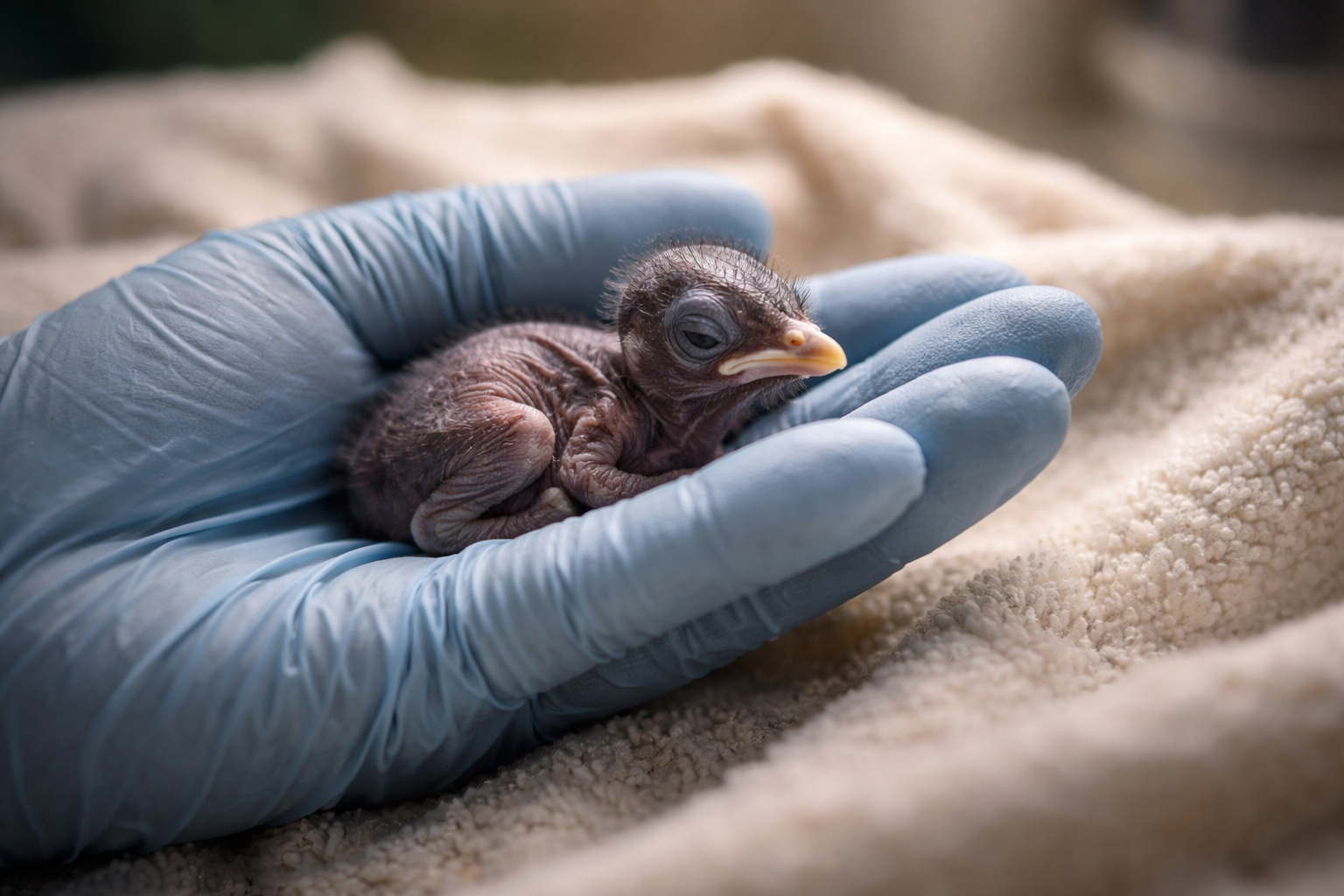


The Rescue Involved Biologists, Environmental Teams, and a Rehabilitation Center That Now Works Day and Night to Ensure the Survival of 47 Eggs and 12 Chicks Fully Dependent on Specialized Human Care
What seemed like just another structural problem in a California park quickly turned into a large-scale environmental rescue operation. A eucalyptus tree severely damaged by wind, located in a park in Marina del Rey, began to pose an imminent risk not only to pedestrians and vehicles but also to an entire colony of wild birds that used the site as a breeding area.
The information was disclosed by The Guardian, which closely followed the work of the environmental authorities of Los Angeles County and the team from the International Bird Rescue. According to the report, after the partial collapse of one of the tree trunks — which even crushed a trash structure — technicians found that the rest of the tree showed growing cracks and clear signs of imminent collapse.
According to Nicole Mooradian, spokesperson for the Los Angeles County Department of Beaches and Harbors, the situation worsened day by day. The cracks in the trunk visibly increased, making it only a matter of time before the tree completely fell. In this context, the decision to intervene had to be made urgently to avoid a greater tragedy.
-
Friends have been building a small “town” for 30 years to grow old together, with compact houses, a common area, nature surrounding it, and a collective life project designed for friendship, coexistence, and simplicity.

-
This small town in Germany created its own currency 24 years ago, today it circulates millions per year, is accepted in over 300 stores, and the German government allowed all of this to happen under one condition.

-
Curitiba is shrinking and is expected to lose 97,000 residents by 2050, while inland cities in Paraná such as Sarandi, Araucária, and Toledo are experiencing accelerated growth that is changing the entire state’s map.

-
Tourists were poisoned on Everest in a million-dollar fraud scheme involving helicopters that diverted over $19 million and shocked international authorities.


Rescue Operation Required Precision, Time, and Improvisation
In light of the risk, a task force was assembled on March 10. For at least five consecutive hours, specialized tree handling teams worked with extreme care to remove the 20 nests installed in the tree, one by one. Each branch was cut separately, in a slow and meticulous process, to avoid any damage to the eggs and chicks.
On the ground, biologists awaited each removal with adapted boxes, using egg trays and improvised thermal boxes with heated blankets that functioned as temporary incubators. In total, 47 eggs and 12 chicks were rescued, all belonging to the species double-crested cormorant, which is quite common in Southern California.
According to Kylie Clatterbuck, manager of the bird rehabilitation center, this species usually forms large colonies and concentrates many nests in a single tree, which explains the high number of eggs and chicks found on-site. Still, the volume of the rescue surprised even experienced professionals.
Chicks Require Extreme Care and Intense Feeding Routine
After the rescue, the eggs and chicks were taken to the rehabilitation center in San Pedro, where a new and equally delicate phase began. For approximately a month in the wild, parents incubate the eggs and, after hatching, feed the chicks with regurgitated food several times a day.
Without their parents, this responsibility fell entirely to the humans. The chicks, described as “small balls of nearly naked skin,” are completely dependent and require frequent feeding. At the center, they need to be fed every hour, from 8 AM to 8 PM, in an exhausting routine for the staff.
Moreover, to prevent the birds from forming bonds with humans — which could jeopardize their survival in the wild — caregivers wear black clothing, face masks, puppets, and even decoy birds during handling. The strategy aims to ensure that, even receiving intensive human care, the chicks do not associate people with protection or food.
Rehabilitation May Last Months Before Release into the Wild
The team’s expectation is that the chicks will remain under care for at least three months. This period is necessary for them to develop feathers, learn to feed themselves, gain muscle strength, and become capable of flying and independently hunting fish.
According to Clatterbuck, all the rescued chicks are healthy and responding well to treatment. Some, at around two weeks old, have already begun to consume whole fish, which is considered an extremely positive sign in the rehabilitation process.
Despite the initial success, the challenge is far from over. Raising wild birds outside their natural environment is a complex process filled with uncertainties. As the expert herself summarizes, the work involves applying all available technical knowledge and hoping that, at the moment of release, the birds will be able to adapt and survive on their own.
In light of such a delicate rescue and the human effort involved in saving each chick, to what extent are cities and parks prepared to protect wildlife when natural structures collapse?









Que humanos abençoados por DEUS 🙏🏻