





 Portuguese
  English
  Spanish
  2 min of reading
  0 comments


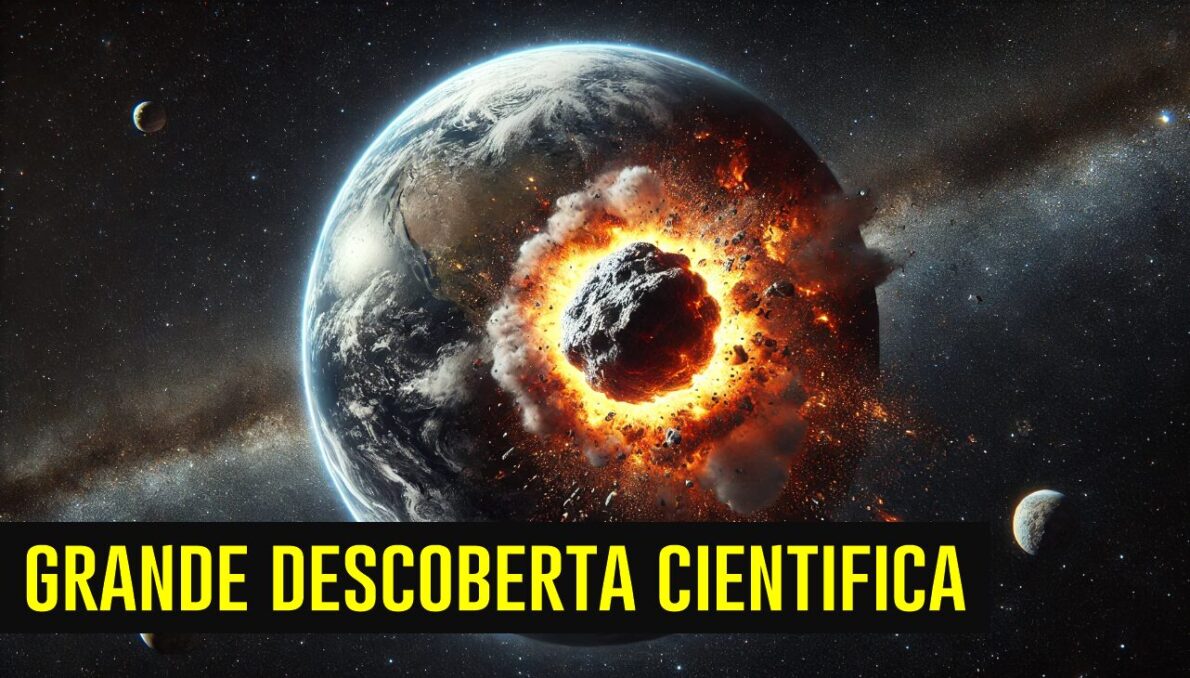
The Origin Of The Asteroid That Exterminated The Dinosaurs Is Finally Revealed By Scientists, Bringing New Discoveries About The Impact That Transformed The Earth And Changed The Course Of Life On The Planet
A team of scientists has finally revealed the true origin of the asteroid that caused the mass extinction about 66 million years ago, resulting in the extinction of non-avian dinosaurs and around 60% of the species on Earth.
A recent study identified that the impactor Chicxulub, responsible for this catastrophe, came from a rare carbonaceous C-type asteroid, originating from beyond Jupiter.
This finding puts an end to decades of speculation and challenges alternative hypotheses, such as the possibility that the event was caused by intense volcanic activity or by the collision of a comet.
-
Furniture made with aluminum and glass does not warp and has become an alternative to replace MDF in Brazil.

-
Finland, the happiest country in the world, wants to hire 140,000 technology professionals and is eyeing Brazilians: visas are issued in just two weeks and salaries with a 37-hour workweek are surprising.

-
Mr. Mário reveals the technique of the caipira papaya: he cuts the fruit in half, discards the seeds from the tip, and plants the ones from the back to increase the chance of a productive female tree.

-
Few remember, but the submarine that disappeared in 1968 with 52 crew members was found after 51 years at the bottom of the sea at more than 2,000 meters, intriguing the entire world.

The Extinction Of The Dinosaurs
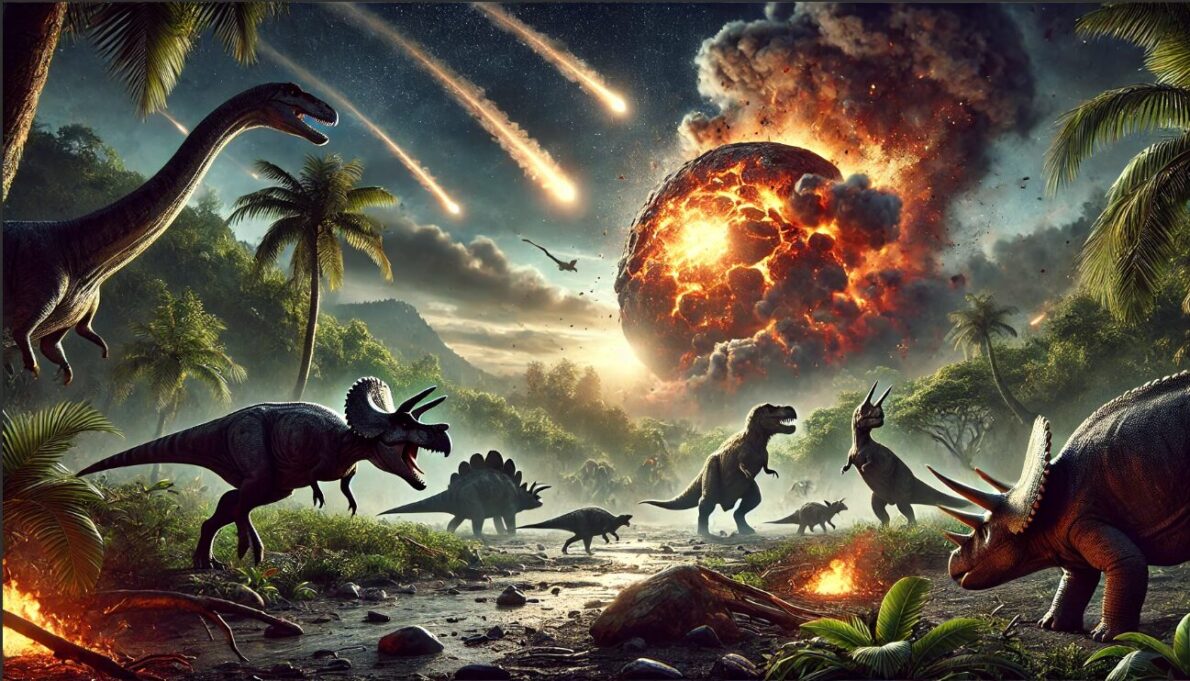
The Chicxulub asteroid collided with Earth in what is now the Gulf of Mexico, marking the end of the age of dinosaurs and the beginning of a new phase in the planet’s geological history.
This devastating impact launched enormous amounts of debris into the atmosphere, blocking sunlight and causing prolonged global cooling that resulted in the extinction of numerous species.
The strongest evidence of this collision comes from platinum group elements (PGEs), such as iridium, ruthenium, osmium, rhodium, platinum, and palladium, which are extremely rare on Earth but common in meteorites.
These elements were found in elevated concentrations in rock layers at the Cretaceous-Paleogene (K-Pg) boundary, at sites around the globe, suggesting that the debris from the collision was dispersed worldwide. This reinforced the hypothesis that an extraterrestrial body played a decisive role in the extinction of the dinosaurs.
Differentiating The Chicxulub Impact From Volcanic Activity
Over the years, some scientists have suggested that the massive eruption of the Deccan Traps volcanic province in India could have been an alternative source for the extinction of the dinosaurs, due to the release of gases and particles into the atmosphere.
However, new isotope analyses indicate that the proportions of PGEs in the K-Pg layer correspond more closely to an asteroid impact than to volcanic activity.
In a study conducted by Mario Fischer-Gödde and his team, samples from the K-Pg boundary were analyzed for ruthenium (Ru) isotopes, comparing them to other samples from known impacts and carbonaceous meteorites.
The isotopic signatures found at the K-Pg boundary showed great similarity to carbonaceous chondrites (CCs), indicating that the Chicxulub asteroid did not come from anywhere in the Solar System, but rather from a region beyond Jupiter, where C-type asteroids form.









Seja o primeiro a reagir!